

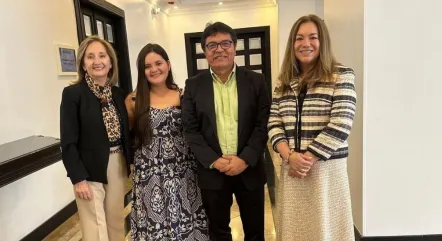
 Presentation of the AMAZONAS Project's findings to institutions in the province of Orellana
FICT and CIPAT shared the findings of the AMAZONAS Project to strengthen inter-institutional cooperation and promote sustainable land-use management strategies that contribute to environmental conservation and the development of communities in the Ecuadorian Amazon.
 ESPOL's Sustainable Development Club Strengthens Partnerships and Inspires Action Through Sostenia by ESPOL
ESPOL’s Sustainable Development Club (CDS) participated in SostenIA by ESPOL 2026 with an interactive booth where it presented the initiatives it has been promoting since 2019 related to the Sustainable Development Goals (SDGs). Through activities such as calculating ecological footprints and strengthening strategic partnerships, the Club promoted reflection, student leadership, and a commitment to sustainability.
 Q1 Magazine (SJR 2025) | The Most Reliable Soccer Predictions: Preventing Information Leaks
FICT research published in a Q1 scientific journal proposes a reproducible methodology for developing more reliable predictive models in data science, thereby strengthening the integrity and validation of information in artificial intelligence and sports analytics applications.
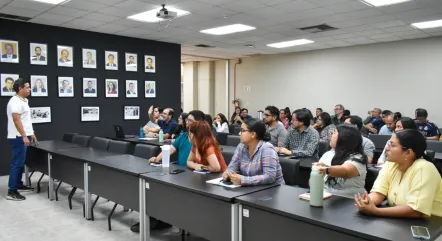 FICT leads ESPOL's scientific output and presents its 2026 research results (as of July 2026)
FICT presented an analysis of its research metrics as of July 2026, highlighting that it ranked first in scientific output at ESPOL with 66 published articles, including 21 in Q1-D1 journals and 19 in Q1 journals. The results will help strengthen strategies aimed at increasing the quality, visibility, and impact of the faculty’s research.
 The FICT community reinforces its commitment to sustainability through its participation in Sostenia by ESPOL 2026
FICT participated in Sostenia by ESPOL 2026, an event that brought together representatives from academia, the business community, the public sector, and civil society to promote sustainable development initiatives. The faculty’s delegation took part in lectures, panel discussions, and interactive activities related to innovation, sustainability, and inter-institutional collaboration.
 Project Led by FICT Researchers Secures International Funding to Strengthen Conservation Efforts in the Amazon
The project “Multicriteria Spatial Analysis for Zoning Illegal Mining Pressure and Forest Degradation in the Southern Ecuadorian Amazon,” led by researchers from FICT–ESPOL, was selected to receive funding from the Amazonía+ Program. The initiative will promote the development of geospatial tools to support Amazon conservation and strengthen applied research on illegal mining and forest degradation.
 FICT's Petroleum Engineering Program Enhances Academic Training with a Technical Lecture on Well Evaluation and Intervention Using Wireline Technology
The FICT–ESPOL Petroleum Engineering Program, in collaboration with Pacifpetrol S.A. and WellPerf, hosted the technical seminar “Wireline Well Evaluation and Intervention,” where students deepened their understanding of electrical logs, data interpretation, and shot design in oil well operations. The event fostered collaboration between academia and industry.
 Bringing Geosciences Engineering to Students at the Babahuyus High School
FICT introduced high school students to the world of Geosciences through hands-on experiences in its laboratories, promoting career guidance and awareness of academic and professional opportunities that contribute to the country's sustainable development.
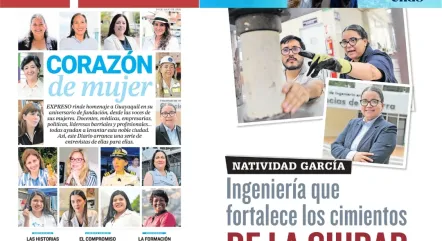 A FICT researcher is highlighted for her academic and scientific career in EXPRESO’s “Corazón de Mujer” special feature
The academic and scientific career of Natividad García, Ph.D., an engineer and researcher at FICT, was recognized by a national media outlet, which highlighted her contributions to applied research, sustainable construction, and the development of human talent, as well as the impact of women’s leadership on the advancement of engineering and science in the city of Guayaquil.
 FICT Students Enhance Their Training in Industrial Floor Protection During a Technical Visit to SIKA Ecuador
As part of the SIKA Chair, civil engineering students from FICT–ESPOL took a technical tour of SIKA Ecuador to learn about industrial floor protection technologies. The activity reinforced their practical training through plant tours, technical presentations, and real-world case studies applied to construction and infrastructure.