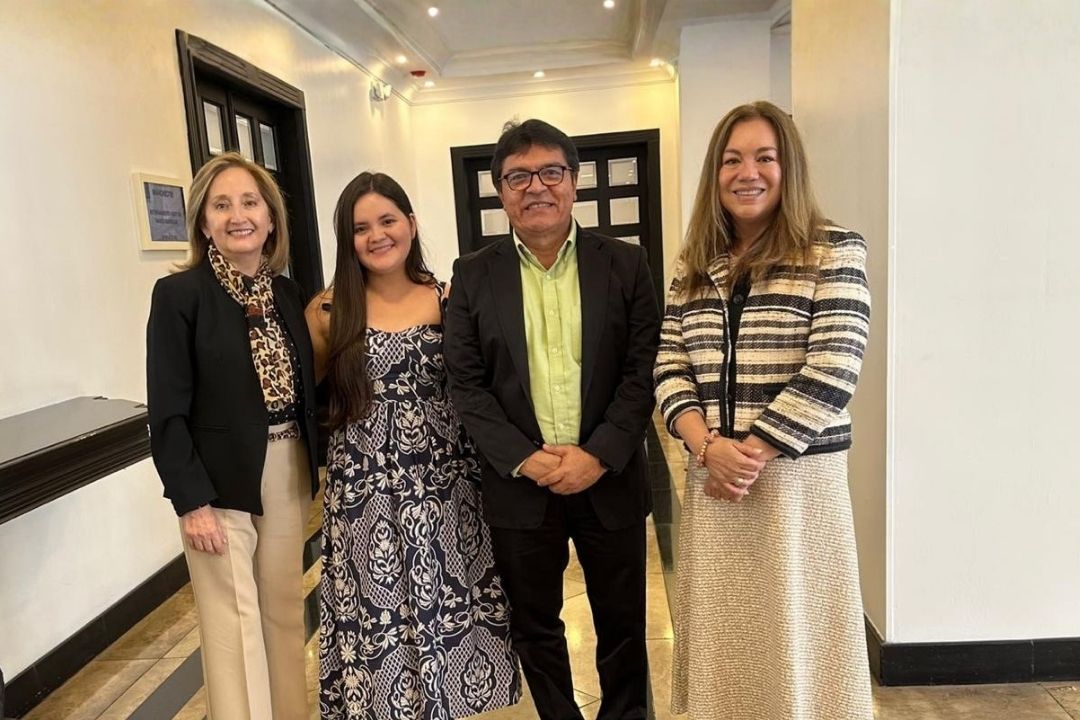

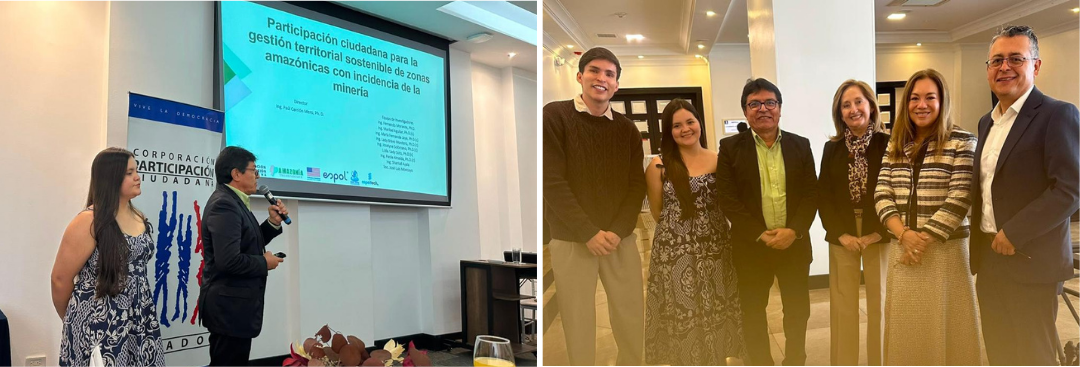
Researchers and professors from the Faculty of Geosciences Engineering (FICT) and the Center for Research and Applied Projects in Geosciences (CIPAT) at the Escuela Superior Politécnica del Litoral (ESPOL) presented the main findings of the project “Citizen Participation for Sustainable Land Management in Amazonian Areas Affected by Mining,” developed in collaboration with the Corporación Participación Ciudadana, with the aim of strengthening inter-institutional coordination, identifying opportunities for cooperation, and promoting future proposals for national and international funding calls.
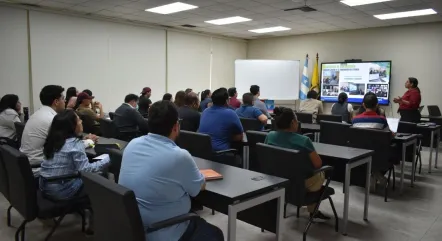
The dissemination event, held on July 8, 2026, in Quito, brought together various strategic stakeholders involved in territorial and environmental management. During the meeting, results were presented regarding the territory’s ecotourism potential and opportunities for the sustainable use of the natural, water, landscape, and geological resources of the Francisco de Orellana canton.
The results presented are a continuation of the project “AMAZONAS: Multitemporal Analysis in the Amazon for the Zoning of Environmental Impacts from the Mining Sector,” carried out in 2024 in the western sector of Francisco de Orellana. This new phase aims to transform the scientific knowledge generated by academia into actionable proposals and strategies for the conservation of the territory and the sustainable socioeconomic development of Amazonian communities.
To this end, the research team presented alternatives aimed at mitigating the environmental impacts associated with illegal mining, territorial monitoring, environmental education, ecosystem conservation, and the strengthening of local capacities, while promoting the exchange of experiences and opportunities for dialogue to identify areas of common interest and establish mechanisms for technical and institutional cooperation.
Sharing these findings with government institutions represents an important step for FICT and CIPAT in consolidating strategic partnerships, strengthening territorial governance, and ensuring the continuity of actions that contribute to environmental protection and the sustainable development of the Ecuadorian Amazon.
People who participated in the project:
Eng. Paúl Carrión Mero, Ph.D. – Dean of the FICT and Project Director
Eng. Maribel Aguilar Aguilr, Ph.D.(c) – FICT professor and project coordinator
Eng. Fernando Morante, Ph.D. – Director of the Center for Research and Applied Projects in Geosciences (CIPAT). And co-director of the project
Eng. María Fernanda Jaya, Ph.D.(c) – Researcher at the CIPAT-ESPOL
Eng. Lady Bravo, Ph,D,(c) – Researcher at the CIPAT-ESPOL.
Lcda. Lady Soto, Ph.D.(c) – professor of FCSH
Soc. José Luis Mocayo – Specialist in citizen participation issues
Institutions that endorse and support the project:
Citizen Participation Corporation.
UNESCO MAB Program, Amazon Biosphere Reserves Project.
UNESCO Chair in Tropical Freshwater Management at the Ikiam Amazon Regional University.
Rey Juan Carlos University, Spain.
Geological and Mining Institute of Spain, IGME-CSIC.
Santa Elena Peninsula State University (UPSE).
SbN-GIA Network: Nature-Based Solutions for Integrated Water Management in Vulnerable Communities.
Orellana Prefecture.
Napo Galeras National Park.
University of Colorado.
Sustainable Development Goals (SDGs)
SDG 6: Clean Water and Sanitation. By promoting strategies for the sustainable management of water resources and the conservation of Amazonian ecosystems.
SDG 11: Sustainable Cities and Communities. By strengthening land-use planning and promoting sustainable development models for Amazonian communities.
SDG 12: Responsible Consumption and Production. By promoting the responsible use of natural resources and sustainable alternatives to mining.
SDG 13: Climate Action. By promoting mitigation measures, environmental monitoring, and the conservation of vulnerable ecosystems.
SDG 15: Life on Land. By contributing to the protection of biodiversity and Amazonian ecosystems.
SDG 17: Partnerships for the Goals. By strengthening cooperation among academia, public institutions, international organizations, and civil society organizations.