

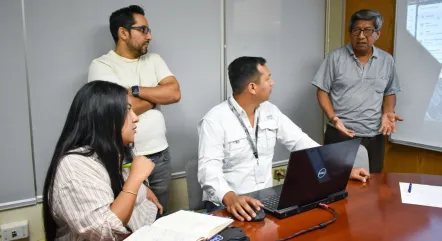
 FICT Strengthens Collaborative Efforts for the Sustainable Development of Ayangue
Faculty members from FICT-ESPOL reviewed the initial results of the surveys conducted in the municipality of Ayangue, identifying findings that will guide the next stages of analysis and the development of technical proposals. The project is being carried out through a partnership between ESPOL, the municipality of Ayangue, APESPOL, and retired ESPOL faculty members, bringing together academic knowledge, professional experience, and local expertise. This collaboration aims to generate information that will help strengthen the sustainability and resilience of the region and serve as a foundation for future actions that benefit the community.
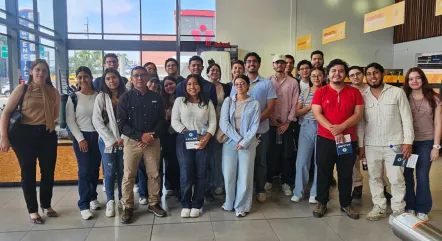 Civil Engineering Students Learn About Pumping Systems for Buildings
Civil engineering students from FICT-ESPOL took a technical tour of La Llave’s facilities in Guayaquil as part of the “Building Systems / Installations” course. The tour provided an opportunity to learn about equipment and solutions for pumping systems, as well as technical criteria related to their selection, application, and installation in buildings. The tour, coordinated by Ingrid Orta Zambrano, M.Sc., and led by La Llave’s Omar Rodríguez, strengthened the connection between academic content and the technologies used in professional practice.
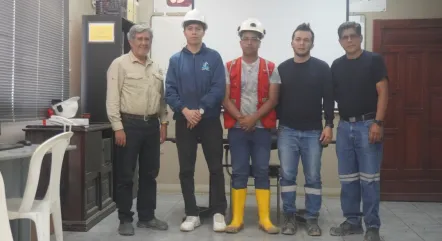 FICT Strengthens Mining Training Through a Technical Visit to Bira
FICT-ESPOL conducted a technical visit to the Bira Mine and its processing plant in Zaruma to learn about operational practices related to water management, mine water treatment, and tailings management. During the visit, the group observed processes such as the neutralization of acidic water, metal precipitation, solid sedimentation, and industrial water recirculation. Of particular note was the 100% reuse of process water in the grinding and flotation stages. The experience provided students and professionals with firsthand exposure to technologies applied in a real mining operation and generated insights for training and applied research in mining environmental management.
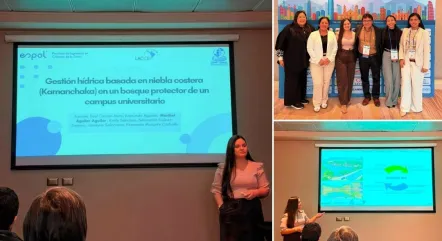 FICT Presented Research on Coastal Fog-Based Water Management at LACCEI 2026
A researcher and professor at FICT presented a study at LACCEI 2026 on water management based on coastal fog (KamanchaKa), linked to sustainability and ecohydrology initiatives, thereby strengthening applied research and the development of solutions for responsible water management and community resilience.
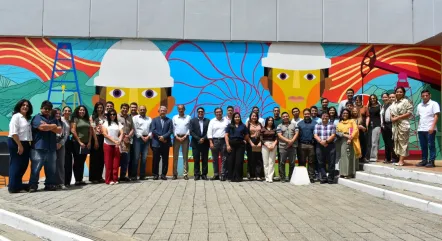 ESPOL Strengthens Its Proposal to Become a UNESCO Ecohydrology Demonstration Site
FICT-ESPOL is promoting the nomination of the Gustavo Galindo campus as a UNESCO Ecohydrology Demonstration Site (SDE) through the proposal “ESPOL’s Ecohydrological System: Lakes and Albarradas in a Protective Forest Environment.” The initiative aims to highlight the value of these systems and the research, teaching, community engagement, environmental monitoring, and water management activities carried out on campus. To strengthen the nomination, professors, researchers, and various ESPOL units are working collaboratively to refine the proposal.
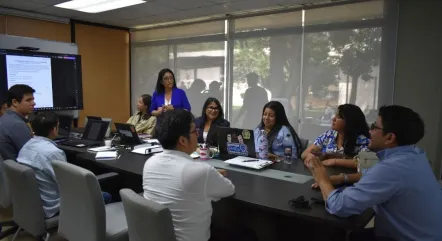 FICT reviewed 28 applications for its international exchange program
FICT evaluated 28 applications for the “VIVA Engineering Pioneers” International Mobility Program, taking into account academic excellence, leadership, research, social commitment, and extracurricular activities to select students who will represent the School in academic and professional experiences in Spain.
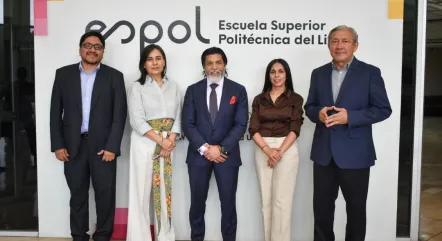 ESPOL and the Ecuadorian Chamber of Mining Strengthen Ties Between Academia and the Private Sector
ESPOL and the Ecuadorian Chamber of Mining strengthened their cooperation to link academic training with the mining sector, promoting pre-professional internships, research, innovation, and outreach projects that contribute to a more technically advanced, sustainable, and responsible mining industry.
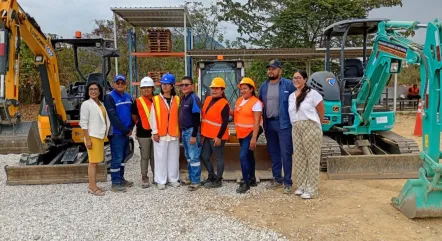 FICT, CONDUESPOL, and the Guayas Prefecture are promoting research on women's participation in the road sector
FICT-ESPOL, CONDUESPOL, and the Guayas Citizen Prefecture are conducting applied research to analyze the recruitment and retention of women in technical and operational roles in the road sector. The study will follow 31 participants from the start of their training to establish a baseline and subsequently evaluate factors such as motivations, barriers, gender stereotypes, autonomy, employability, and job placement. The initiative draws on international experiences and aims to generate evidence to strengthen future training and workforce inclusion programs for women in road infrastructure projects in Ecuador.
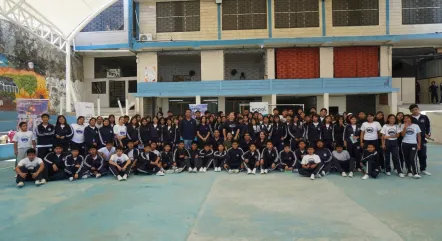 FICT promotes college degree programs in Olón and Santa Elena.
FICT-ESPOL presented its Geology, Mining, and Petroleum Engineering programs to students at the Santa María del Fiat School in Olón. Through workshops and hands-on demonstrations, the students learned about applications of Geosciences, career paths, and job opportunities, strengthening the bond between the college and the educational community of Santa Elena.
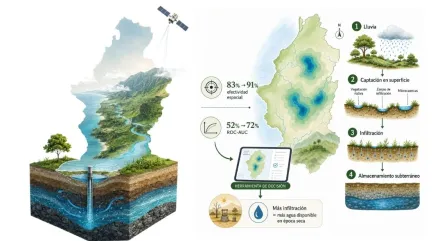 ESPOL Research Provides a Tool to Strengthen Sustainable Water Management in Manabí
A study by ESPOL published in a Q1 scientific journal developed a model to identify areas with high groundwater potential in Manabí, providing information to guide the exploration, monitoring, and conservation of this resource in the face of drought challenges.