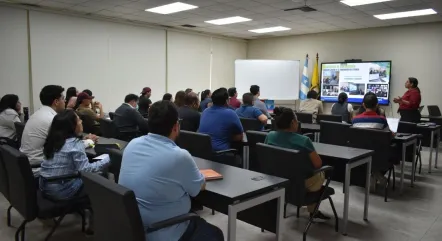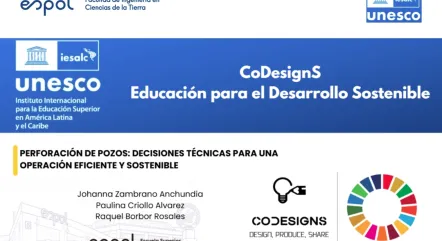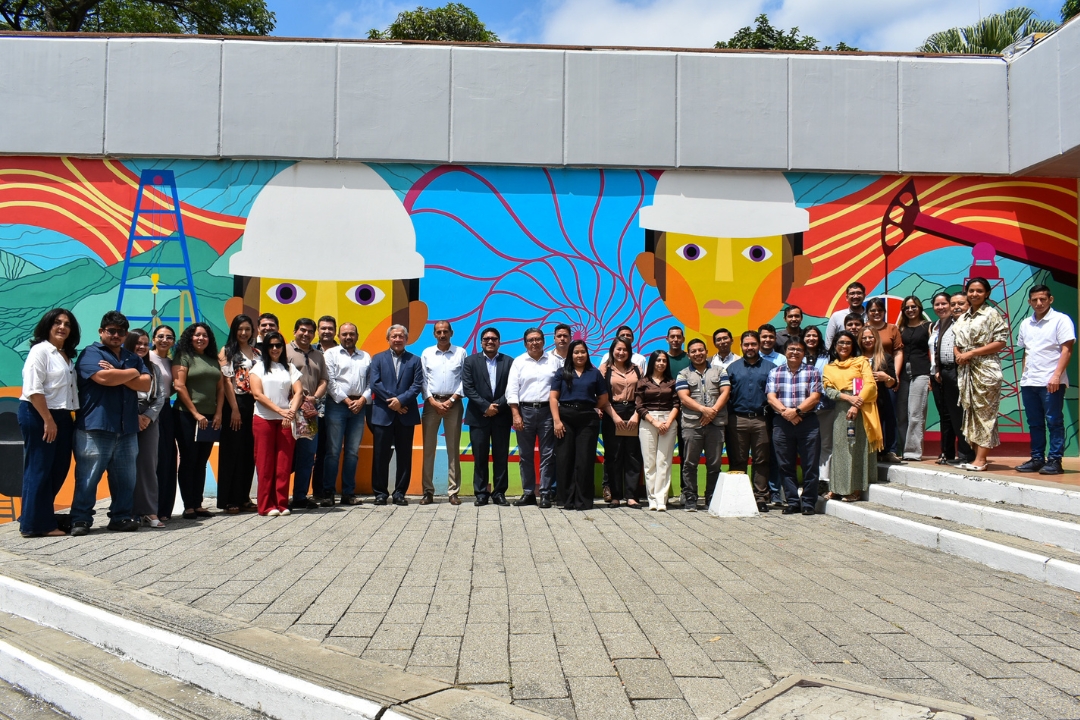

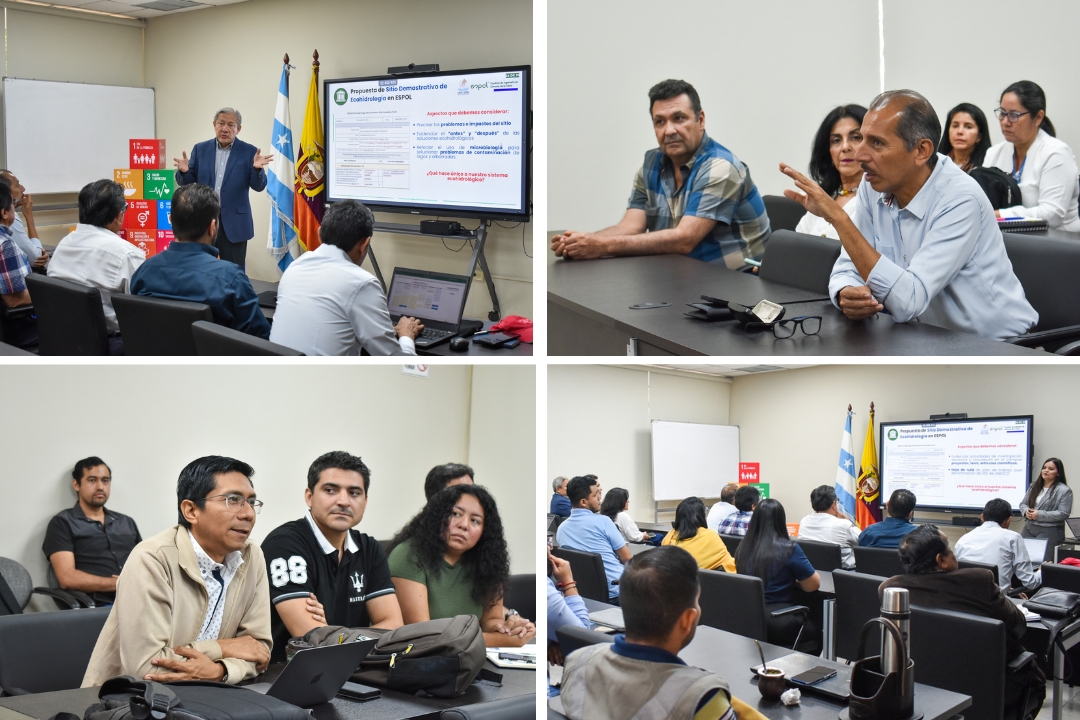
The ESPOL's Faculty of Geosciences Engineering (FICT) is promoting the proposal “ESPOL’s Ecohydrological System: Lakes and Albarradas in a Protective Forest Environment,” aimed at securing recognition of the Gustavo Galindo campus as a UNESCO Ecohydrology Demonstration Site (SDE). Within this framework, a working meeting was held on Wednesday, August 5, 2026, in the FICT Conference Room.
The purpose of the meeting was to strengthen ESPOL’s candidacy by bringing together faculty and researchers from different centers and institutional units. This forum allowed for the integration of expertise, experiences, and initiatives that contribute to the consolidation of the proposal.
Ecohydrology Demonstration Sites are part of the initiatives promoted by UNESCO’s Intergovernmental Hydrological Program and seek to highlight areas where solutions are developed and applied that integrate hydrological and ecological processes to address environmental and social issues related to water.
ESPOL’s nomination aims to highlight the system consisting of artificial lakes and earthen dams, located within a protective forest environment. The proposal seeks to highlight the functions these systems fulfill on campus, as well as the research, teaching, community engagement, environmental monitoring, and institutional management activities associated with them.
The initiative brings together various units and research centers at ESPOL, whose participation allows for the integration of diverse expertise and experience related to sustainable water resource management and ecosystem conservation. This collaboration also helps strengthen the institution’s work in the field of ecohydrology and its applications.
ESPOL'S PARTICIPATION:
Research Center:
Center for Research and Applied Projects in Geosciences (CIPAT)
Center for Water and Sustainable Development (CADS)
Center for Rural Research (CIR)
Participating colleges:
Faculty of Life Sciences (FCV)
Faculty of Maritime Engineering and Marine Sciences (FIMCM)
Faculty of Geosciences Engineering (FICT)
Faculty of Natural Sciences and Mathematics (FCNM)
Faculty of Mechanical Engineering and Production Sciences (FIMCP)
Faculty of Social Sciences and Humanities (FCSH)
Faculty of Art, Design, and Audiovisual Communication (FADCOM)
Participating Department:
UNESCO Chair in Geosciences Applied to Sustainable Development.
Program:
ESPOL Sustainability Program
Participating club:
Sustainable Development Club
Related SDGs
SDG 4: Quality Education. For integrating teaching, research, and training activities related to water resource management and ecosystems.
SDG 6: Clean Water and Sanitation. For promoting sustainable water management through the integration of hydrological and ecological processes.
SDG 11: Sustainable Cities and Communities. For contributing to the conservation of ecosystems and the development of initiatives aimed at sustainable land management.