

ESPOL’s Faculty of Geosciences Engineering (FICT), CONDUESPOL, and the Guayas Prefecture are coordinating efforts to conduct applied research aimed at analyzing the inclusion of women in technical and operational activities related to the construction, rehabilitation, and maintenance of road infrastructure.
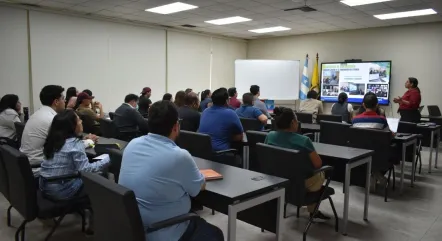
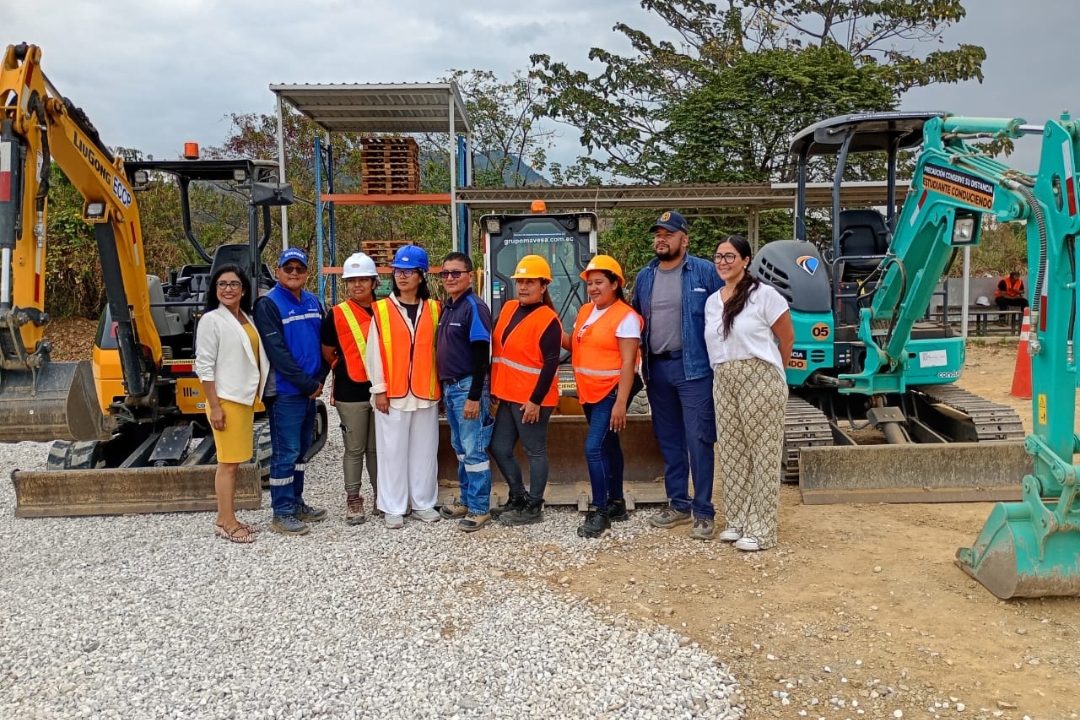
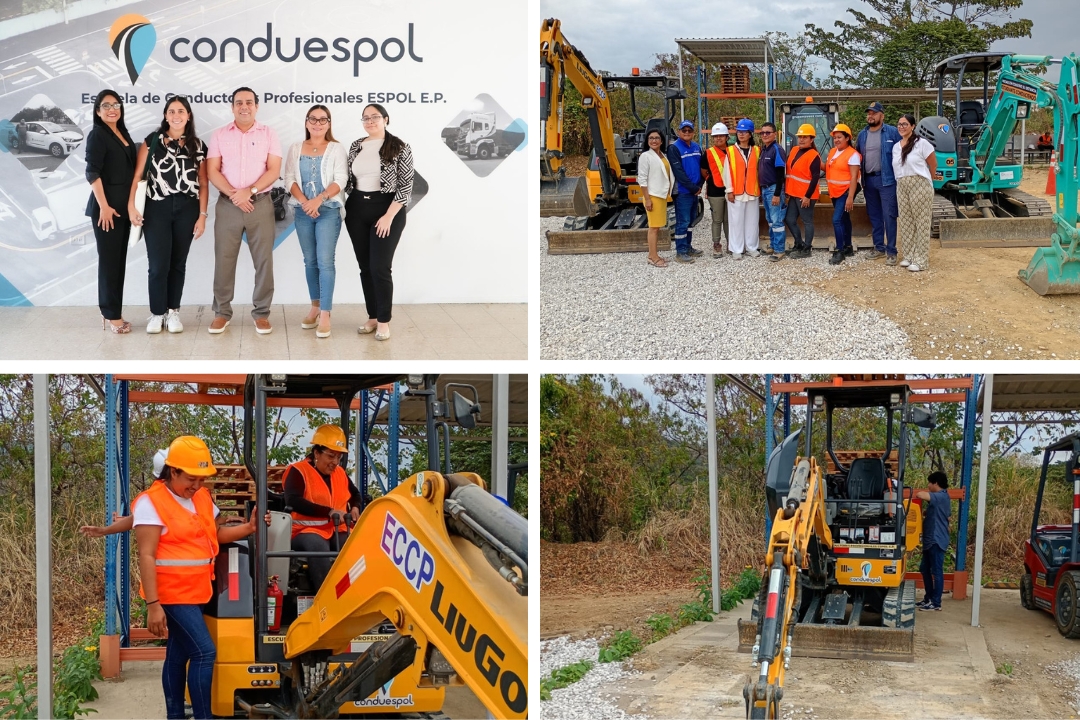
As part of this initiative, representatives from the three institutions held a working meeting on August 7, 2026, at CONDUESPOL’s facilities in Guayaquil to make progress on defining the research’s methodological design. In addition, on August 8, the group of women currently undergoing training participated in a hands-on session on heavy equipment operation, where they strengthened their knowledge and skills for the safe and proper operation of this equipment.
The study is part of the project “Training for Obtaining Type E and G Driver’s Licenses, Aimed at Women’s Employment Inclusion in Road Infrastructure Rehabilitation and Maintenance Projects,” corresponding to Contract EC-PREFGUAYAS-525961-NC-DIR, implemented by CONDUESPOL as part of the Guayas Prefecture’s Resilient Rural Roads project, with funding from the World Bank.
The training aims to strengthen the participants’ professional skills so they can perform tasks related to driving heavy vehicles and operating heavy machinery and road construction equipment. Building on this experience, the research seeks to go beyond simply counting the number of women trained and analyze which factors promote or hinder their effective entry into and retention in traditionally male-dominated jobs within the road construction sector.
Among the dimensions to be examined are motivations for entering the sector, perceived barriers, social norms and gender stereotypes, perceptions of their own abilities, personal and economic autonomy, as well as opportunities for employability, job placement, and job retention.
As part of the research design, the plan is to establish a baseline with the second group of 31 women who recently began the training program. This will provide insight into their circumstances, perceptions, and expectations at the start of the training and, subsequently, allow for an analysis of their progress during and after the process, including their transition into the labor market.
Research with international benchmarks
The initiative draws on international experiences that have studied women’s participation in road infrastructure projects. Among these is “Roads to Agency,” a World Bank study that analyzed rural transportation projects in Argentina, Nicaragua, and Peru and examined how the inclusion of women in road construction-related activities can influence not only their economic opportunities but also their ability to make decisions and achieve personal and professional goals.
International evidence shows that access to non-traditional jobs and independent income, combined with technical training and skills development, can be linked to changes in women’s self-confidence, self-efficacy, leadership, autonomy, and participation. At the same time, it identifies barriers associated with social norms, domestic responsibilities, and the conditions for accessing and remaining in these workplaces.
This background reinforces the importance of generating evidence specific to Ecuador. In fact, the international study highlights the need to supplement qualitative findings with quantitative data that allows for estimating the magnitude of the changes associated with women’s participation in road projects.
From Training to Employment
One of the main expected contributions of the research will be to support the participants from the start of their training and subsequently analyze whether the skills they acquire translate into effective opportunities for entering and remaining in the workforce.
In this way, the initiative will generate evidence applicable to the Ecuadorian context and formulate recommendations to strengthen future training programs, hiring mechanisms, and strategies for the labor market inclusion of women in infrastructure projects.
The results may also serve as input for future research and scientific publications, as well as for technical discussions on the incorporation of women into operational activities in the road sector that have traditionally been carried out by men.
The collaboration between academia, the public sector, and vocational training will thus make it possible to document an Ecuadorian experience from a perspective that integrates civil engineering and the social sciences, with the potential to contribute to the design and eventual replication of similar initiatives in future infrastructure projects.
Key individuals and institutions:
Faculty of Geosciences Engineering (FICT)
Eng. Carola Gordillo – Paving Instructor
Eng. Valeria Romero – Research Technician
Guayas Prefecture
Psyc. Johanna Intriago – Especialista de género.
CONDUESPOL
Eng. Ricardo Moncayo – Manager.
Eng. Maite Olmedo – Academic Director.
Institutions and organizations involved
Faculty of Geosciences Engineering – FICT
CONDUESPOL
Guayas Prefecture
Related Sustainable Development Goals
SDG 5: Gender Equality. For generating evidence on women’s access to, retention in, and participation in traditionally male-dominated jobs.
SDG 8: Decent Work and Economic Growth. For analyzing employment opportunities and the conditions that can promote women’s entry into the road sector.
SDG 9: Industry, Innovation, and Infrastructure: Developing human capacities related to the construction, rehabilitation, and maintenance of road infrastructure