

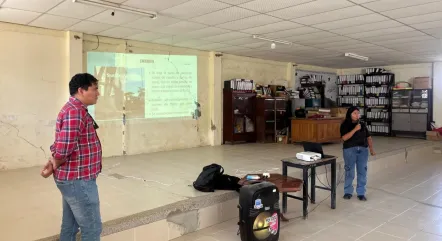
Here is the translation of the summary into English: "Students from the Petroleum Engineering program at ESPOL carried out a community service initiative in the San José de Ancón parish, where they trained students from the Ancón Educational Unit and local residents on the history and operational infrastructure of the sector's oil wells. Under the guidance of professors Danilo Arcentales and Freddy Carrión, and with the support of the local Parish GAD, this activity strengthened the transfer of technical knowledge and the faculty's social commitment to the development of oil-producing communities.
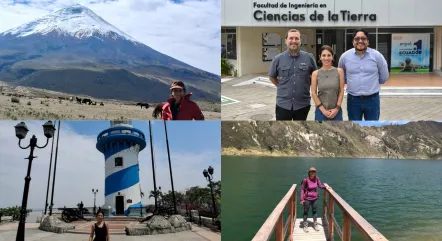
FICT-ESPOL hosted Dr. Marisa Giuffrida, a researcher from the University of Catania (Italy), for a scientific stay focused on the mineralogical study of rocks on Santa Cruz Island, Galapagos. This collaboration, carried out under the Climred and Peligal projects alongside Dr. Maurizio Mulas' team, seeks to decipher the geological origin of the archipelago. In addition to the scientific contributions, this alliance with the University of Catania —the oldest in Sicily— strengthens the Faculty's internationalization, paving the way for future exchange programs for students and researchers.
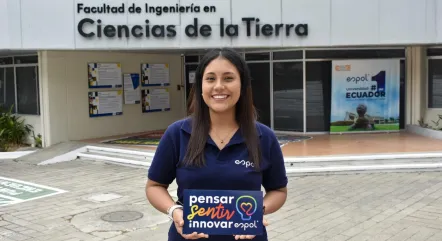
Karolayn Gaibor Yambay, a student at FICT-ESPOL and President of the ASCE ESPOL student chapter, has been selected for a four-month research internship at the École de Technologie Supérieure (ÉTS) in Montreal, Canada. At this prestigious institution, a leader in applied engineering, Karolayn will work on a regenerative infrastructure project focused on developing low-carbon permeable concrete mixes to optimize their strength and sustainability.
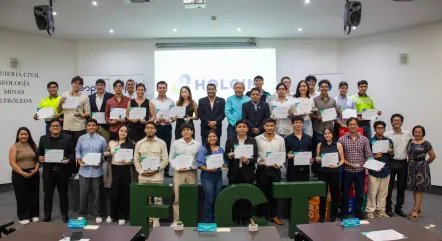
The Holcim Academy 2025 – II PAO successfully concluded after three months of hands-on training in concrete technology, solidifying the long-standing strategic alliance between Holcim and ESPOL. This academy-industry partnership boosted technical knowledge transfer and professional skill development for engineering students, preparing them with high standards of sustainability and efficiency to meet the current challenges of the country's construction sector.
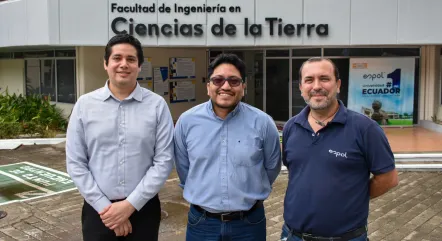
ESPOL's FICT obtained external funding from CELEC E.P. to develop an 18-month project that will apply DInSAR techniques with Sentinel-1 images to monitor ground deformations in the area of influence of CELEC SUR. The research will support risk management and energy infrastructure.

FICT-ESPOL and the Jujan GAD (Alfredo Baquerizo Moreno canton) have launched a technical cooperation phase following the signing of an inter-institutional agreement. During this first working meeting, territorial needs were analyzed to structure projects focused on risk management and flood mitigation. Through this alliance, the Faculty reaffirms its commitment to community engagement, putting its scientific capacity and expertise at the service of territorial resilience and the sustainable development of the locality.

ESPOL’s FICT welcomed Luke Bockelmann, a student from Universidad del Norte (Colombia), to share innovations in pavement diagnostics through video processing. This technical and academic activity optimizes road conservation while strengthening the Faculty’s internationalization and global collaboration indicators.

This study, published in ACS Sustainable Resource Management (2025) by researchers from ESPOL in collaboration with Ghent University and FujiFilm, demonstrates that the use of elevated temperatures and homogeneous bipolar membranes significantly optimizes seawater acidification via electrodialysis, facilitating a faster and more efficient CO₂ extraction as a key strategy to mitigate climate change.
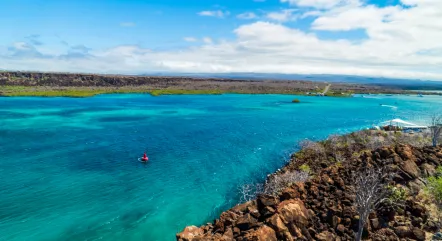
A top-decile (Q1) scientific study analyzes 24 sub-watersheds on Santa Cruz Island (Galápagos) to prioritize those with the most favorable conditions for sustainable water management and agriculture, identifying five key watersheds with high water-retention capacity. Published in Environmental & Sustainability Indicators, the study provides high-impact scientific evidence to support territorial planning and climate change adaptation in volcanic island environments.

Ecuador faces significant risks to public health and the economy due to its high volcanic activity, particularly from ash fall. The study proposes an integrated One Health approach to strengthen risk management and the health system’s response.