

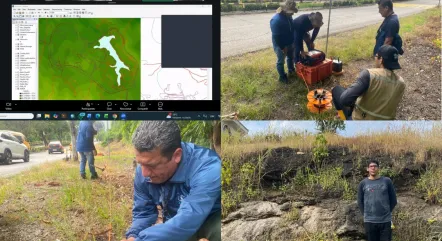
 ESPOL Water: Exploring the Subsoil to Build Sustainability
The Agua ESPOL project transforms the Gustavo Galindo campus into a living laboratory for the study of groundwater resources. Using engineering, geophysical, and hydrogeological tools, the team conducts non-invasive research to identify water potential, generate technical data, and strengthen the sustainable management of this resource. The initiative also integrates Water Harvesting and Storage (SyCA) techniques, consolidating a vision that connects science, the local environment, and evidence-based decision-making.
 Master's Program in Civil Engineering Hosts a Talk on Digital Construction Tools
The Master’s Program in Civil Engineering at FICT-ESPOL organized a seminar on digital tools used for recording and monitoring construction processes, aimed at students, professionals, and alumni; the event strengthened technical skills, promoted collaboration between academia and industry, and highlighted the importance of technological innovation in optimizing management and quality in construction projects.
 The engineering behind strategic infrastructure
CIPAT and FICT held a follow-up meeting for the applied research project focused on geological and geotechnical studies for monitoring CELEC-SUR’s hydroelectric power plants. During the meeting, participants reviewed the progress made in the second year, the deliverables produced, and the technical reports, with the aim of integrating results, strengthening technical criteria, and optimizing decision-making. The initiative highlights the value of applied research in ensuring the safety and sustainability of strategic infrastructure.
 CDS promotes women's participation in STEM through an academic visit to the ESPOL campus
The ESPOL Sustainable Development Club organized a campus tour for students from the Nia Kali Foundation, with the aim of introducing them to the academic environment and opportunities in fields such as geology, mining, and petroleum engineering. The event included tours of laboratories and hands-on learning spaces, as well as a discussion with STEM professionals who shared their experiences. The initiative promoted scientific vocations, equitable access to higher education, and the strengthening of female participation in strategic fields.
 International Model Class Enhances Sanitation Training in Civil Engineering
FICT-ESPOL held an international mirror class in collaboration with the University of Commercial Sciences (UCC) in Nicaragua, promoting academic exchange in civil engineering and the analysis of wastewater treatment systems; the activity strengthened technical skills, fostered dialogue on regional issues, and reinforced internationalization and collaboration between the two institutions.
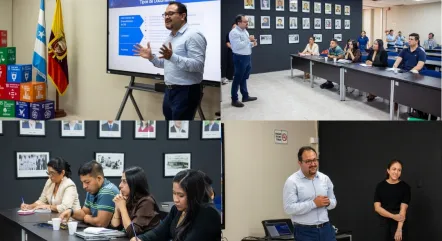 FICT hosts RELEX to strengthen agreement management and foster strategic partnerships
FICT, in collaboration with RELEX, held an informational session on grant management, during which institutional guidelines, categories, and procedures for proper administration were shared. The session highlighted the strategic value of these agreements for teaching, research, and community engagement, as well as the importance of orderly, traceable management that complies with regulations. The event also facilitated the exchange of experiences among agreement administrators, thereby strengthening institutional processes.
 ESPOL promotes employability with smart AI-based tools
ESPOL's FICT held a workshop to share updates on the 1Mentor platform and employability tools. During the event, AI-based solutions were presented to identify in-demand skills, bridge skill gaps, and build personalized learning paths. Additionally, global labor market trends and the evolution of professional profiles were analyzed. The initiative strengthens students’ preparation for a dynamic work environment by integrating technology, data, and strategic vision into their education.
 FICT is strengthening its academic and technical operations with a focus on teamwork
On April 8, 2026, the dean of FICT, Paúl Carrión, led a meeting with the academic support technical team to strengthen institutional coordination. During the session, key topics were addressed, including personnel regulations, scientific output, the organizational chart, and core functions. The strategic role of technical staff in academic quality was highlighted, and research goals were reviewed, particularly in graduate programs. The meeting reaffirmed the importance of teamwork and close collaboration in achieving institutional objectives.
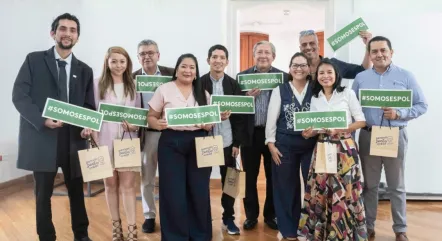 FICT Strengthens Ties with Graduates at Alumni Gathering Held in Quito
FICT participated in the ESPOL Alumni Gathering in Quito, strengthening ties with its graduates and promoting the exchange of professional experiences; during the event, FICT officials shared academic progress and facilitated opportunities for dialogue to gather feedback, thereby consolidating the ESPOL Alumni Network as a key player in continuous improvement and institutional outreach.
 This is how excellence is built: from the classroom to the future
At FICT, faculty members from the Geotechnical Engineering program participated in a workshop focused on reviewing and strengthening the curriculum, with an emphasis on updating key course content such as Soil Mechanics, Surveying, Pavements, and Foundation Engineering. The work focused on aligning learning outcomes with professional competencies, improving academic quality, and adapting the curriculum to current industry demands. This process reflects a commitment to continuously improving education, aimed at producing better-prepared and more competitive engineers.