
The Faculty of Earth Sciences Engineering (FICT) at the Escuela Superior Politécnica del Litoral (ESPOL) obtained external research funding from the Ecuadorian Electricity Corporation (CELEC E.P.) for the development of the research project “Study of ground deformation using DInSAR in the CELEC SUR area of influence,” with a duration of 18 months.
The main objective of this project is to apply Differential Interferometric Radar Altimetry (DInSAR) techniques to perform multi-temporal, historical, and current satellite monitoring of surface ground deformation, as well as to design a future monitoring scheme and zone unstable areas with the greatest displacement within the area of influence of the CELEC SUR Business Unit.
Technical approach and scope of the project
The research will be based on the analysis of Sentinel-1 satellite images, using advanced DInSAR techniques that will enable the identification of areas with unstable behavior and greater ground displacement. The results of the satellite analysis will be integrated with in situ monitoring information and conditioning variables in order to generate technical inputs that strengthen the planning, prevention, and mitigation of risks associated with critical infrastructure.
This comprehensive approach will support technical and strategic decision-making related to land management and energy infrastructure security, contributing to the development of solutions based on science, technology, and innovation.
Research team
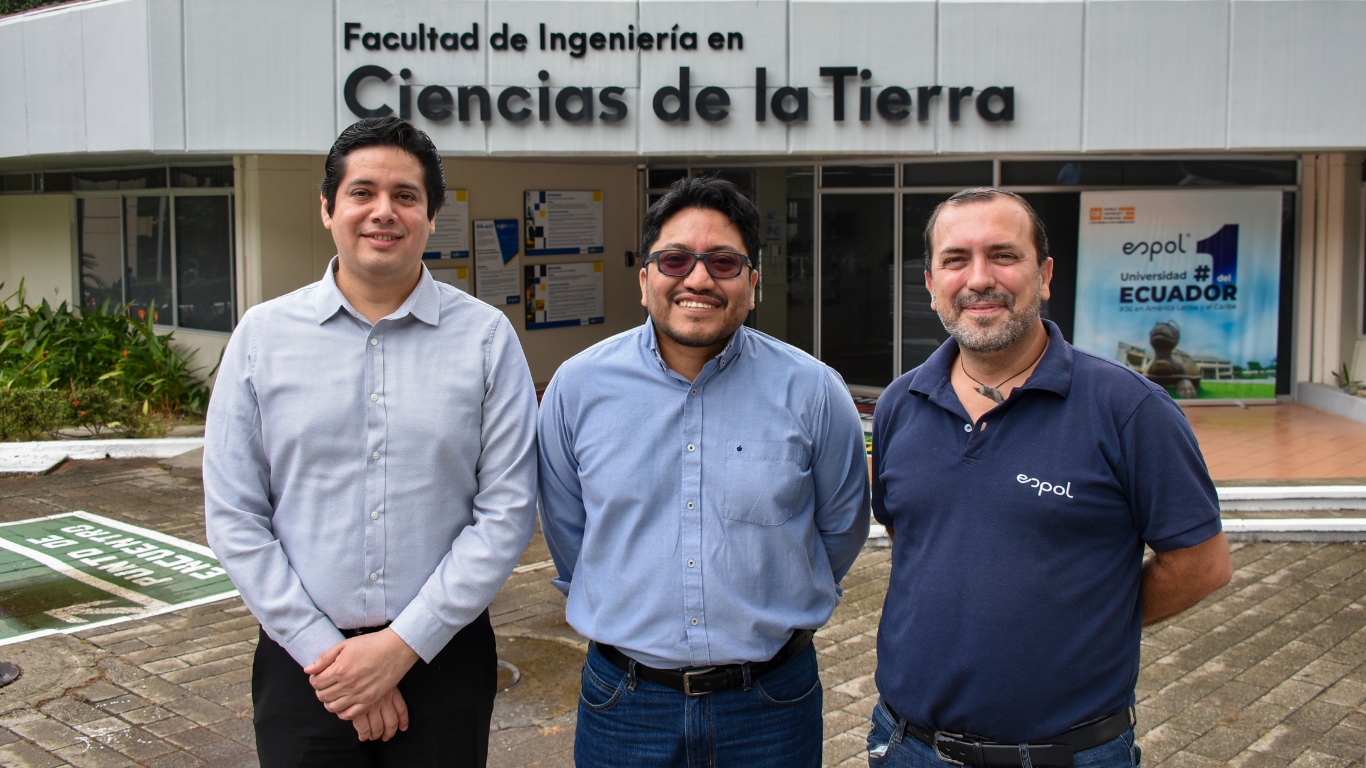
The project is led by Kenny Escobar Segovia and co-directed by Daniel Garcés León and Maurizio Mulas, together with a multidisciplinary team of researchers, technicians, and students:
Diego Capa Sarango
Daniela Paz Barzola
Pedro Ramírez Correa
Astrid Ramírez López
Victoria Rosado Zambrano
Valeria Vaca Molina
David Altamirano Morán
Gianella Bravo Murillo
Edgar Cando Narváez
José Cuervas-Mons González de Sela
Nadia Lagasca Loaiza
Institutional impact and alignment with the SDGs
Obtaining these external funds reaffirms the role of FICT as a key player in applied research in cooperation with the strategic sector. In addition, the project is aligned with the United Nations Sustainable Development Goals (SDGs).
ESPOL's FICT highlights this achievement as a significant step in strengthening scientific research, linking with the productive sector, and generating technical solutions aimed at the country's sustainable development.