

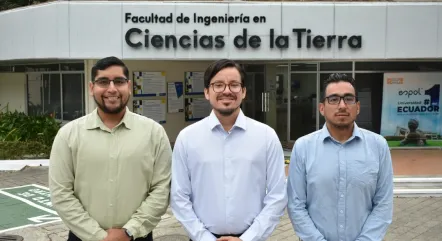
 Researchers from ESPOL's Geoinformation and Remote Sensing Laboratory Receive CAPES Grants for Doctoral Studies in Brazil
Researchers from the Geoinformation and Remote Sensing Laboratory at FICT-ESPOL were awarded an international CAPES fellowship to pursue doctoral studies in Brazil, thereby strengthening their expertise in remote sensing, geoinformation, and environmental monitoring; this achievement promotes academic internationalization and scientific cooperation between Ecuador and Brazil for the development of innovative solutions in land management and sustainability.
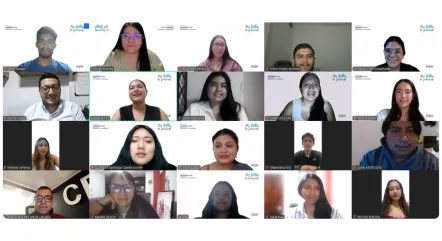 FICT Welcomes the 8th Cohort of the Master's Program in Civil Engineering
A new cohort of the FICT-ESPOL Master’s in Civil Engineering program, consisting of 22 professionals, will strengthen their skills in construction, sanitation, and applied innovation; the program continues to establish itself as a center for advanced training that promotes the development of sustainable solutions for infrastructure and water management in the country.
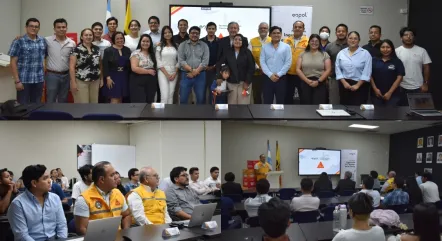 FICT Strengthens Academic-Industry Ties with the Inauguration of the SIKA Chair
FICT ESPOL launched the SIKA 2026 Chair to strengthen ties between academia and industry, offering civil engineering students access to specialized knowledge, technical training, and hands-on experience in the construction sector; the initiative promotes an education aligned with the needs of today’s professional and technological environment.
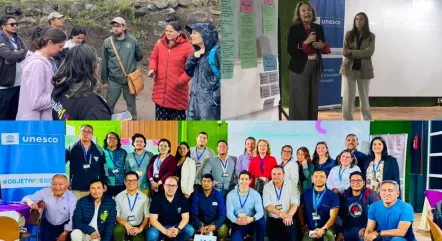 FICT and CIPAT Strengthen International Cooperation with UNESCO on Resilience and Risk Management
Researchers and technical staff from FICT and CIPAT participated in an international event organized by UNESCO and the European RESILIAGE project at the Tungurahua Volcano Geopark. The event fostered the exchange of knowledge on community resilience, heritage, risk management, and climate change adaptation through workshops and visits to vulnerable areas.
 FICT and CIPAT Strengthen Cooperation with the Santa Elena Prefecture on Risk Management and Territorial Development
FICT and CIPAT strengthened their cooperation with the Santa Elena Prefecture to promote risk management and land-use planning initiatives, working on the development of maps showing susceptibility to flooding and landslides; they also presented the progress made on the Santa Elena Peninsula Geopark project and highlighted initiatives that promote conservation, research, and sustainable development in the province.
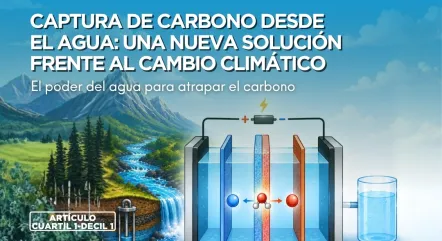 Article (1st Quartile–1st Decile) | Carbon Capture from Water: A New Solution to Climate Change
Researchers at FICT-ESPOL published a study proposing bipolar membrane electrodialysis as an innovative alternative for capturing CO₂ from various types of water; the results show lower energy consumption compared to conventional technologies and open up new opportunities for sustainable applications and carbon reuse in the face of climate change.
 SPE-ESPOL Student Chapter Begins a New Era of Leadership at FICT
The SPE–ESPOL student chapter ushered in a new era of leadership at FICT with the election of a new executive board for the 2026–2027 term, highlighting its members’ commitment to academic excellence, collaborative work, and engagement with the energy industry; the event also reaffirmed the institution’s support for student training and leadership opportunities.
 Research Proposes the Use of Drones and Artificial Intelligence for More Sustainable Potato Production
FICT research has developed a model based on neural networks and life-cycle analysis to assess the environmental impacts of potato production in Ecuador. The study found that the use of drones for agricultural monitoring and fertilization reduces emissions, fossil fuel consumption, and eutrophication, promoting more sustainable and efficient agriculture.
 ESPOL Promotes Water Management in Vulnerable Communities in Manglaralto and Bulubulu
ESPOL, through the FCV, CIPAT, and FICT, conducts water monitoring activities in communities in Manglaralto and the Bulubulu River basin, enhancing knowledge about water quality and availability. These efforts promote the sustainable management of water resources and strengthen the ties between academia and the community.
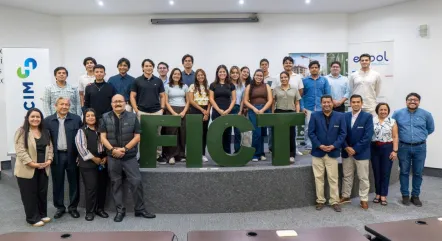 Holcim Academy launched its eighth cohort with a module on sustainability
FICT ESPOL launched the eighth cohort of the Holcim Academy, an initiative developed in partnership with the industry to strengthen the training of future civil engineers in sustainability and responsible construction; the first module focused on the circular economy and waste management, promoting skills geared toward innovation and sustainable development in the construction sector.