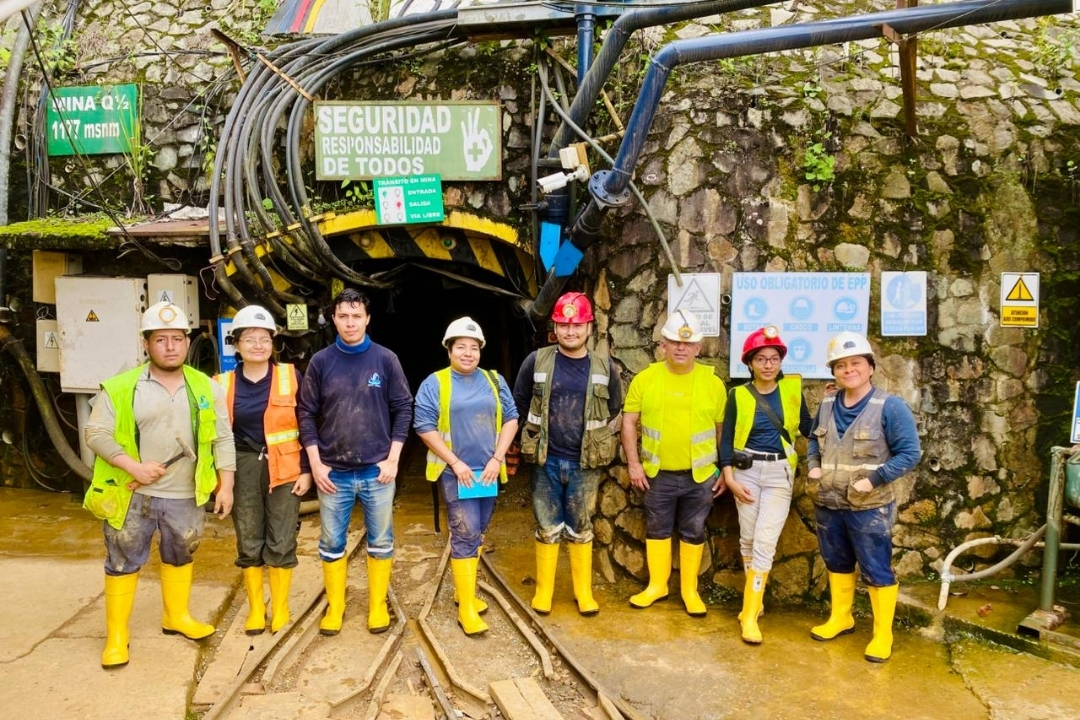


The Escuela Superior Politécnica del Litoral (ESPOL), through the Center for Research and Applied Projects in Earth Sciences (CIPAT), is conducting a technical study of the “La Esperanza II” and “Palacios” mining concessions, operated by the companies Minerales del Ecuador MINECSA S.A. and Bira Bienes Raíces S.A. This initiative is being carried out in response to a request from the Mining Regulation and Control Agency (ARCOM) and aims to assess the geomechanical and hydrogeological conditions of the rock masses inside and outside the mines, with the goal of strengthening operational safety in the Zaruma Special Mining Control Zone.
The project seeks to identify potentially unstable areas through structural analysis of the rock mass and evaluation of the influence of groundwater on its behavior. To this end, CIPAT’s technical team conducts fieldwork using specialized methodologies that enable the assessment of safety conditions within the mine tunnels and the generation of key information for decision-making.
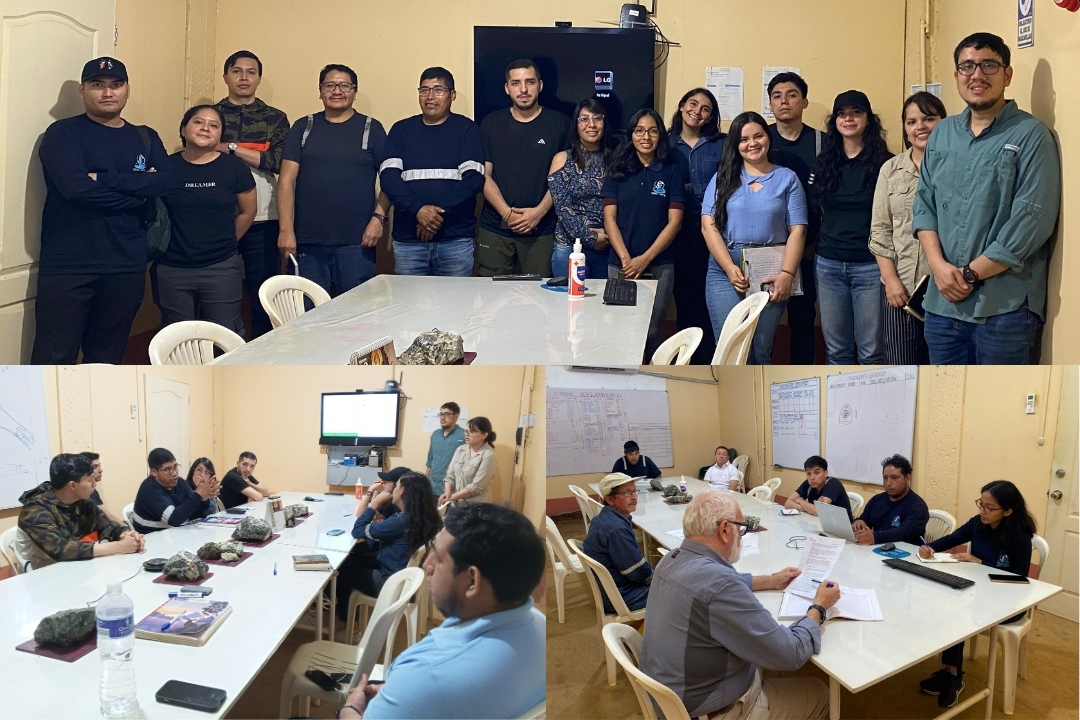
As part of the study, geophysical techniques such as geoelectric tomography (GET) and vertical electrical soundings (VES) are used, which allow for the analysis of the subsurface without the need for drilling. These tools facilitate the detection of saturated zones and potential water ingress into the tunnels, contributing to the planning of drainage systems and risk prevention.
The results will enable the creation of geomechanical and hydrogeological maps, as well as the identification of areas requiring structural reinforcement and those suitable for safe operation. In this way, ESPOL directly contributes to worker safety and the sustainability of mining operations.
Furthermore, the information generated will strengthen academic training by serving as a basis for the development of undergraduate and graduate theses, as well as for the production of scientific publications. This collaboration between academia, the productive sector, and regulatory entities reaffirms ESPOL’s commitment to applied research and knowledge transfer for the benefit of the country.
Related SDGs:
SDG 4: Educación de calidad, al fortalecer la formación práctica y la generación de conocimiento científico.
SDG 9: Industria, innovación e infraestructura, mediante el desarrollo de soluciones técnicas para la seguridad en infraestructura minera.
SDG 11: Ciudades y comunidades sostenibles, al contribuir a operaciones mineras más seguras y responsables.
Published articles:
Ore petrography using optical image analysis: Application to zaruma-portovelo deposit (Ecuador)
Geomining heritage as a tool to promote the social development of rural communities
Worldwide Research on Geoparks through Bibliometric Analysis
Geodiversity and Mining Towards the Development of Geotourism: A Global Perspective
A Mineralogical Museum as a Geotourism Attraction: A Case Study
Evaluation of a Paleontological Museum as Geosite and Basis for Geotourism. A Case Study
Inventory and characterization of Geosites in Ecuador. A Review
Geotouristic route proposal for touristic development in a mining area. Case study
Geoheritage and geosites: A bibliometric analysis and literature review
A Bibliometric Analysis of the Scientific Research on Artisanal and Small-Scale Mining
Geodiversity assessment of a country on a regional scale. A case study.
Systematic review on the relationship between geotechnics and disaster
Stakeholders’ engagement to strengthen the sanctioning process in the mining legislation of Ecuador
Assessment of UNESCO Global Geoparks websites for a public geocommunication