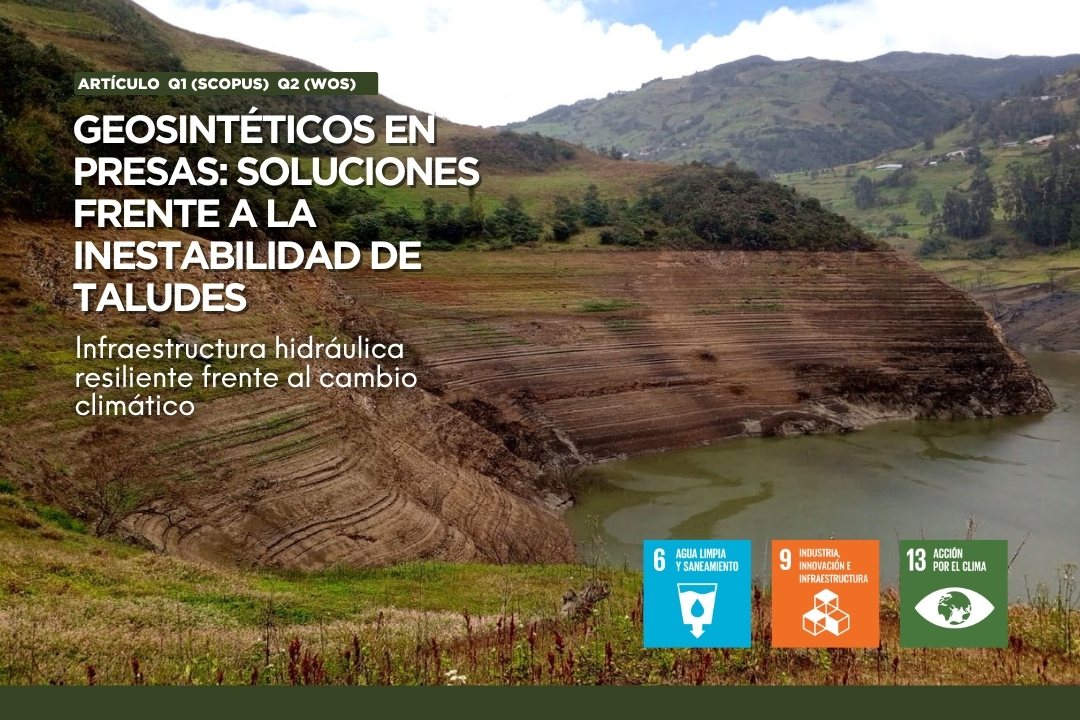


Geosynthetics are polymeric materials used in dams to improve impermeability, structural stability, and sustainability. This study presents a systematic review of the scientific literature on their application in hydraulic structures subjected to slope instability conditions, such as rapid water level decline and transient seepage. It also considers liquefaction and seismic load scenarios using the PRISMA method and bibliometric analysis, evaluating key variables such as geosynthetic type, configuration, selection criteria, and mechanical performance.
The results show that geomembranes, particularly HDPE and PVC, are the most widely used due to their high impermeability and strength. More than 30% of cases use single-layer systems, while multi-component configurations offer higher levels of sustainability. Furthermore, it was found that geosynthetics improve slope stability, reduce the risk of seepage and structural failure, and represent a new generation of infrastructure adapted to climate change.
The study also identifies significant challenges in geotechnical engineering, such as limitations in traditional models for assessing actual stability and the need to account for behavior at soil-geosynthetic interfaces. Furthermore, it highlights the lack of long-term studies on durability and degradation. Future lines of research are proposed, such as continuous monitoring using sensors and remote sensing, the development of hybrid materials using recycled polymers and natural fibers, and sustainability and life-cycle assessments.