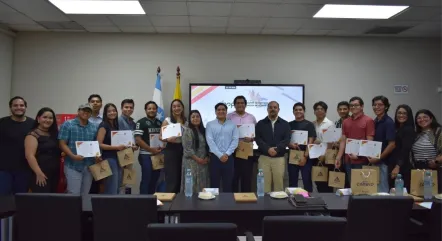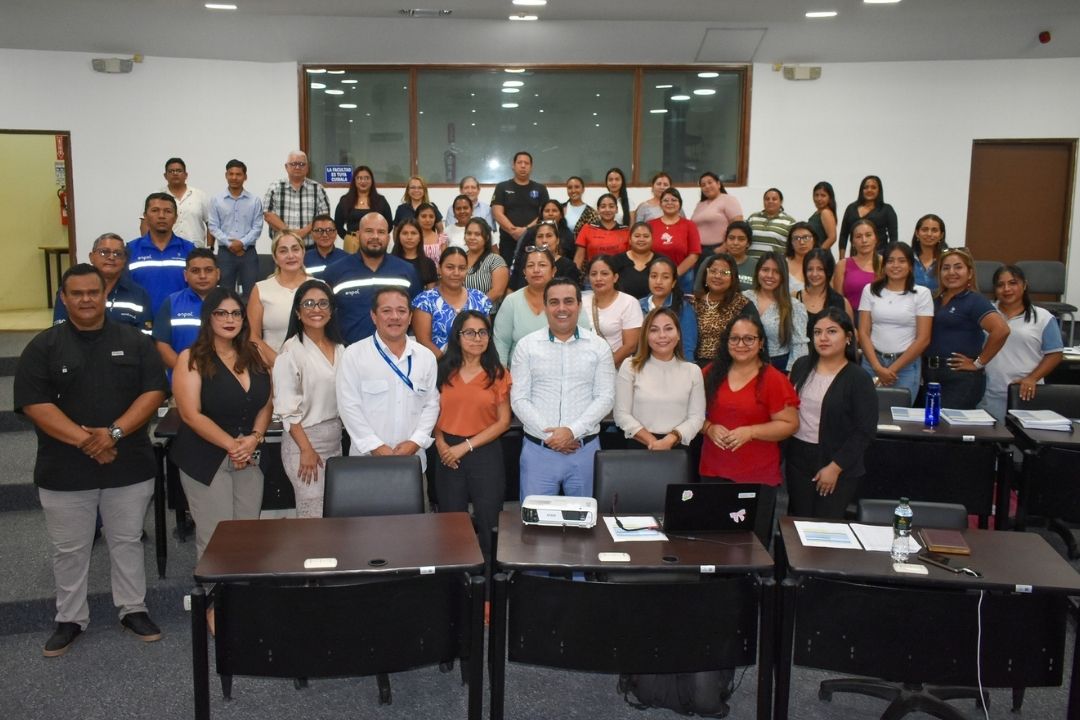

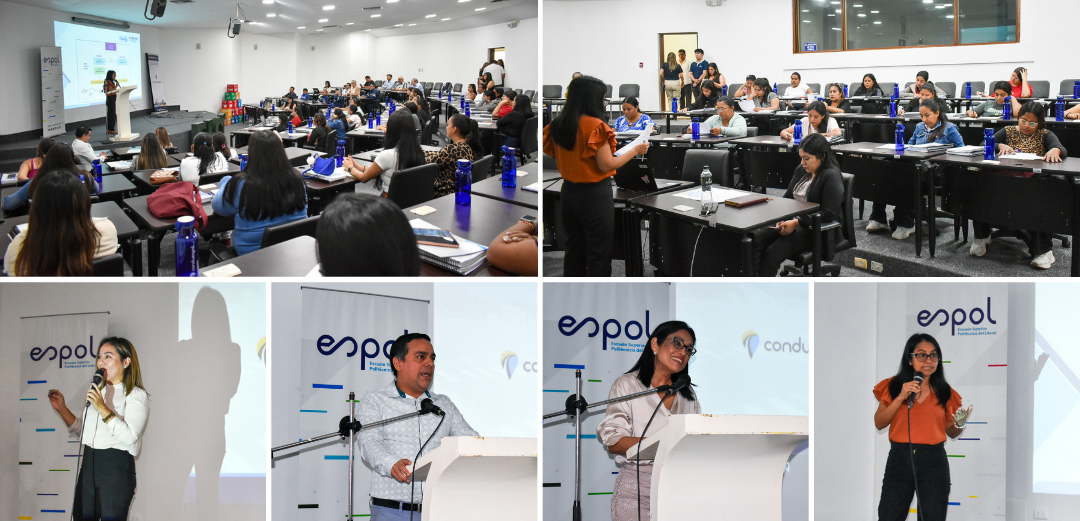
On Thursday, July 30, 2026, ESPOL’s Faculty of Geosciences Engineering (FICT) hosted an orientation session for 31 participants in the fourth cohort of the training program to obtain a Type G professional license, an initiative aimed at expanding opportunities for women to participate in activities related to road infrastructure.
The training is part of the project “Training for Type E and G Driver’s Licenses, Aimed at Women’s Employment in Road Infrastructure Rehabilitation and Maintenance Projects,” under Contract EC-PREFGUAYAS-525961-NC-DIR.
This initiative is being carried out within the framework of the Resilient Rural Roads project, implemented by the Guayas Prefecture with funding from the World Bank, and aims to strengthen the technical and professional skills of women interested in joining activities related to the operation of machinery used in the road sector.
A Type G professional license authorizes the driving and operation of agricultural machinery, heavy machinery, and road construction equipment. Obtaining this license therefore represents a concrete opportunity for more women to develop specialized skills and gain access to new job opportunities related to the rehabilitation and maintenance of road infrastructure.
During the event, the scope of the program, its objectives, the responsibilities associated with the training process, and the job opportunities that may arise from these new skills were discussed. In addition, participants were provided with guidance and support as they began their training process.
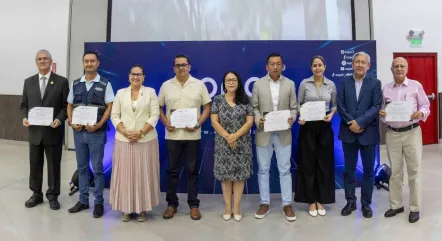
Participants in the event included Ricardo Moncayo, manager of CONDUESPOL; Maite Olmedo, academic director of CONDUESPOL; Angélica Pacalla, representative of the Resilient Rural Roads project of the Guayas Prefecture; and Carola Gordillo, outreach coordinator at FICT–ESPOL, who accompanied the participants throughout this orientation session.
The training is led by CONDUESPOL, a public enterprise of ESPOL with experience in training and certifying professional drivers. The institution also has specialized technology to support these learning processes, including a heavy-duty vehicle simulator. Its previous experience with programs aimed at professional female drivers is now expanding to include training in the operation of heavy machinery and road construction equipment.
The event helped strengthen coordination among the public sector, vocational training, and academia around a common goal. For FICT–ESPOL, welcoming the participants and the institutions involved represents an opportunity to support initiatives that link technical training with labor market inclusion, promoting greater participation by women in activities related to road infrastructure and helping to expand their opportunities for employment and economic autonomy in traditionally male-dominated fields.
Related Sustainable Development Goals
SDG 5. Gender Equality. The training promotes women’s participation in professional and operational activities where they have historically had limited representation.
SDG 8. Decent Work and Economic Growth. The project strengthens professional skills that can facilitate access to decent, specialized jobs in the road infrastructure sector.
SDG 10. Reduced Inequalities. The initiative helps reduce barriers to access to technical training and employment, promoting inclusive job opportunities.