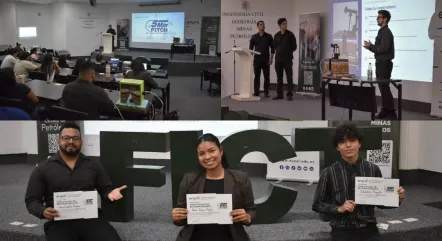


Training future professionals requires going beyond the development of technical knowledge. In the face of increasingly complex scenarios, it is essential to strengthen skills such as critical thinking, reasoning, effective communication, and decision-making—skills that enable students to analyze a problem from different perspectives, evaluate its potential implications, and support their decisions with sound reasoning.
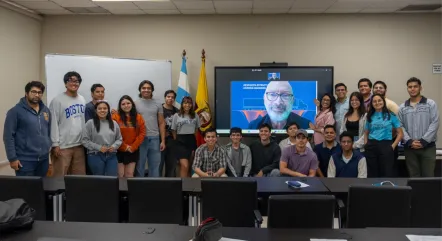
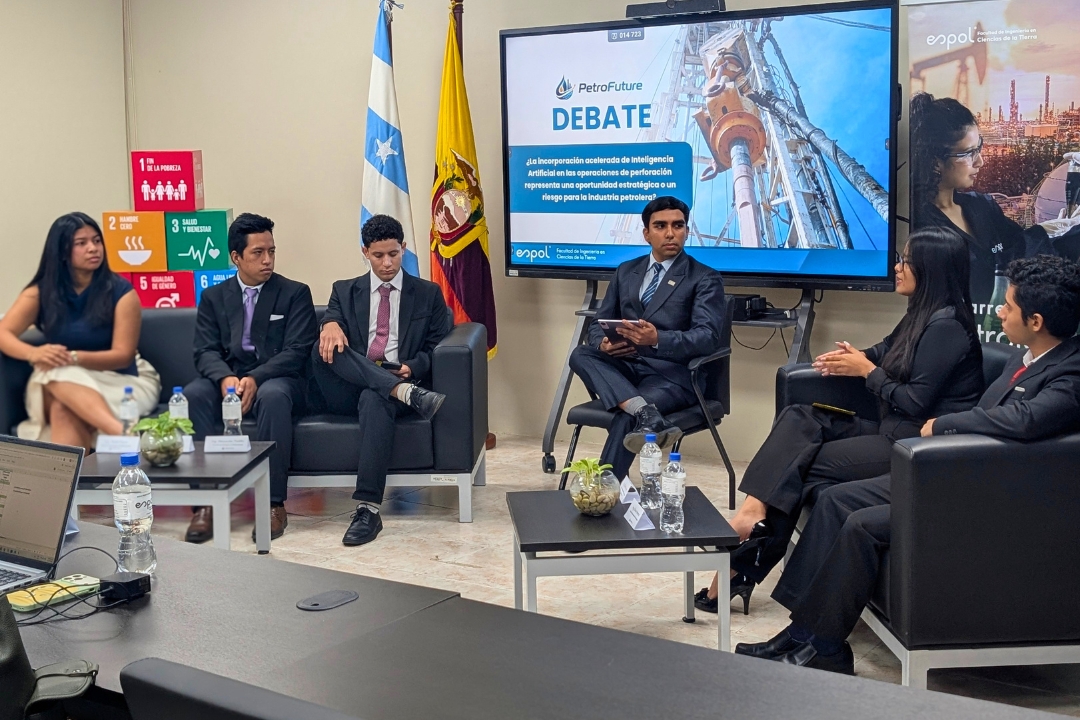
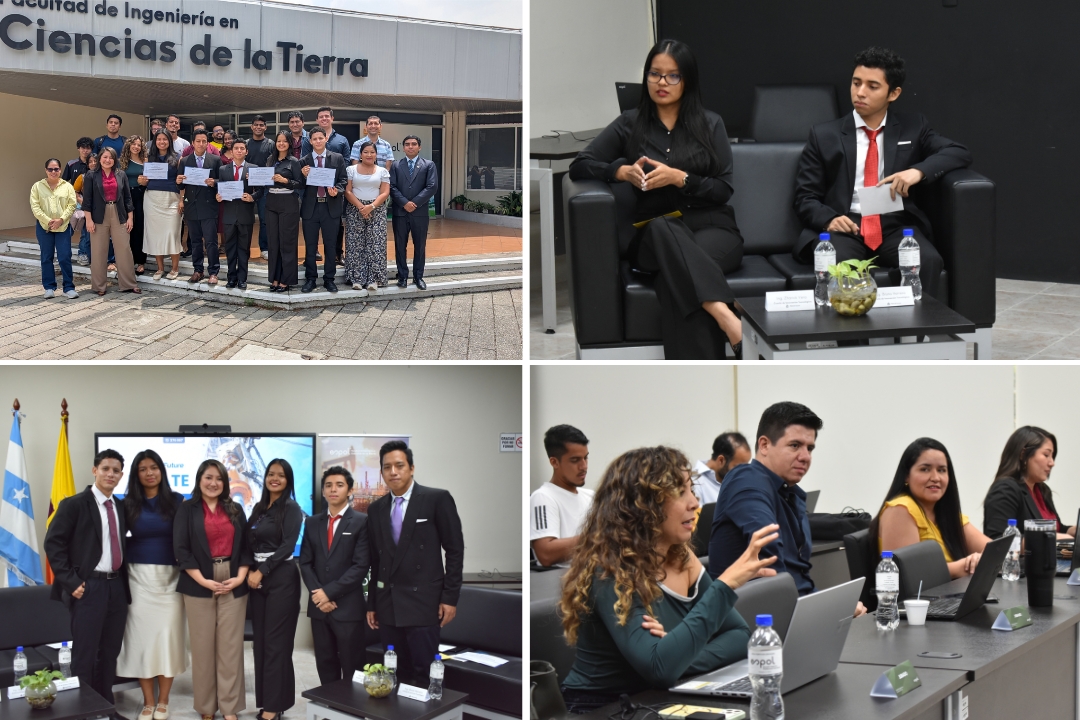
In this vein, as part of the closing activities for the Drilling and Directional Drilling courses, an academic debate was held on Friday, August 21, 2026, organized by the Petroleum Engineering program at ESPOL as an initiative aimed at strengthening these competencies in students. The activity, conducted as part of the courses taught by Professor Johanna Zambrano A., M.Sc., was structured as a deliberative debate for decision-making, allowing students to assume different roles and analyze an issue related to the current and future challenges of the petroleum industry. For the exercise, two committees were formed: the Technological Innovation Committee and the Risk and Governance Committee. The deliberation was structured around four areas of analysis—technical, environmental, economic, and social and governance—with the aim of addressing the incorporation of new technologies into drilling operations from a comprehensive perspective.
The discussion centered on the following question:
Does the accelerated adoption of artificial intelligence in drilling operations represent a strategic opportunity or a risk for the oil industry? Based on this question, participants developed and defended their positions, weighed arguments, and responded to the questions raised during the debate, with the goal of supporting a decision that takes into account the various factors involved. The final evaluation was conducted by a panel of judges consisting of Débora Camargo, M.Sc., academic advisor at ESPOL; Eunice Lindao, M.Sc., professor in the Civil Engineering program; and Freddy Carrión, M.Sc., professor in the Petroleum Engineering program. The jury members evaluated the students’ positions, the strength of their arguments, their ability to respond, and their performance during the exercise. Initiatives such as this aim to complement the technical training of future professionals in the Petroleum Engineering program with experiences that expose them to real-world scenarios involving analysis and decision-making, in which they must integrate knowledge, evaluate different perspectives, and communicate their conclusions clearly and substantively.
Related Sustainable Development Goals
SDG 4: Quality Education. For strengthening student training through exchanges with specialists and access to up-to-date knowledge.
SDG 9: Industry, Innovation, and Infrastructure. For contributing to training in the design and analysis of road infrastructure based on scientific and technical knowledge.
SDG 16: Peace, Justice, and Strong Institutions.