Agua limpia y saneamiento

5MinPitch Semifinals: Presentation of Capstone Projects for FICT Programs - PAO II 2025

Image
FICT-ESPOL successfully hosted the 5MinPitch PAO II 2025 semifinals, where students from Geological Engineering, Mining Engineering, Petroleum Engineering, and Civil Engineering presented their capstone projects in five minutes before a specialized jury. This initiative strengthened communication skills and technical argumentation, leading to the selection of five finalist projects focused on solving real-world engineering challenges.

Strengthening Ground Stability Monitoring in Paute with Advanced DInSAR Technology

Image
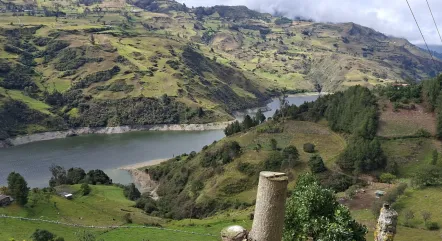
From January 14 to 17, 2026, a multidisciplinary team led by M.Sc. Kenny Escobar Segovia installed corner reflectors in the Paute sector, Azuay, to calibrate Sentinel-1 satellite signals and monitor ground deformation using DInSAR technology. This strategic initiative aims to ensure the stability of the Paute Integral Hydroelectric Complex and the safety of surrounding communities, aligning with Sustainable Development Goals to strengthen infrastructure and risk management in Ecuador.

FICT–ESPOL conducted a field visit for a high-traffic permeable pavement project

Image
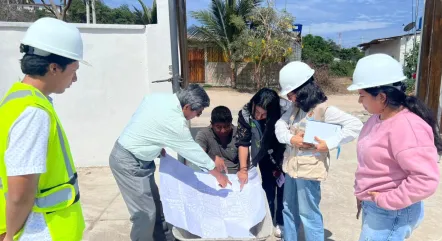
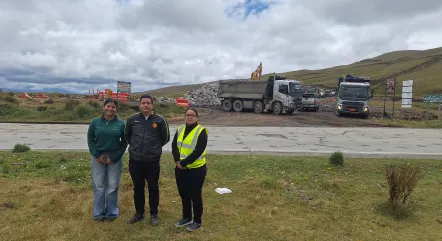
ESPOL's FICT conducted a field visit to the Balbanera–Pallatanga road section as part of the “Permeable Pavements for High Traffic” project. The activity allowed for the identification of the pilot site and the evaluation of the pavement, drainage system, and structural behavior of the road under real conditions, with the aim of validating laboratory results and strengthening the development of innovative solutions for road infrastructure.

FICT-ESPOL and Corporación Agua para Todos drive technological solutions for the water sector

Image
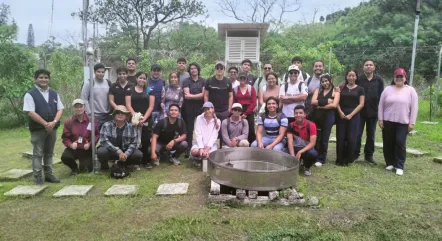
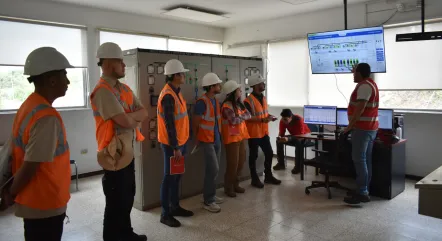
FICT-ESPOL and Corporación Agua para Todos are strengthening their strategic alliance to implement advanced water treatment technologies, bridging the gap between academic scientific rigor and the corporate sector's operational needs. This partnership not only drives sustainable solutions for water access in communities (SDGs 6 and 17) but also transforms our students' education by allowing them to apply their knowledge in real-world scenarios, enhancing their technical judgment and social responsibility before graduation.

Published Article | Impact of Temperature, Membrane Type, and Process Parameters in Seawater Acidification Using Bipolar Membrane Electrodialysis

Image
This study, published in ACS Sustainable Resource Management (2025) by researchers from ESPOL in collaboration with Ghent University and FujiFilm, demonstrates that the use of elevated temperatures and homogeneous bipolar membranes significantly optimizes seawater acidification via electrodialysis, facilitating a faster and more efficient CO₂ extraction as a key strategy to mitigate climate change.

Journal Article (Q1) | Morphometric Prioritization of Watersheds for Sustainable Agriculture and Water Management on Santa Cruz Island, Galápagos

Image
A top-decile (Q1) scientific study analyzes 24 sub-watersheds on Santa Cruz Island (Galápagos) to prioritize those with the most favorable conditions for sustainable water management and agriculture, identifying five key watersheds with high water-retention capacity. Published in Environmental & Sustainability Indicators, the study provides high-impact scientific evidence to support territorial planning and climate change adaptation in volcanic island environments.

Strengthening Scientific Collaboration between ESPOL and UNAL: Research Stay

Image
Research Technician from FICT - ESPOL conducted a research stay at the National University of Colombia (UNAL) as part of the EOR and CCUS project, collaborating in the Summer School on low-carbon technologies. This experience strengthens scientific cooperation between Ecuador and Colombia in the fields of sustainability and energy transition.

Journal Article (Q1) | Water Quality in Mining Areas: Hydrochemical and Isotopic Analysis

Image
Based on Karla Villamar's master's thesis (ESPOL), a study published in the journal Groundwater for Sustainable Development reveals that mining and urbanization in Santa Rosa, El Oro, have contaminated streams and altered the chemical composition of water reaching local communities. This research, conducted by FICT experts alongside Slovakian colleagues, provides key scientific evidence to improve water management, protect public health, and promote sustainability in mining areas.

ESPOL and the University of Cagliari strengthen water management in the Galápagos through training and technology, thanks to the IsVolc – Galápagos Project.

Image
ESPOL and the University of Cagliari, with support from the Autonomous Region of Sardinia, are implementing the IsVolc project in Santa Cruz, Galápagos, to strengthen sustainable water management. The initiative includes the delivery of specialized equipment, technical training for staff from the local water authority (EPMAPASC), and the collection of samples at key points such as ‘La Camiseta’ and the ‘El Gallito’ well, with the aim of ensuring water quality and expanding extraction sources.