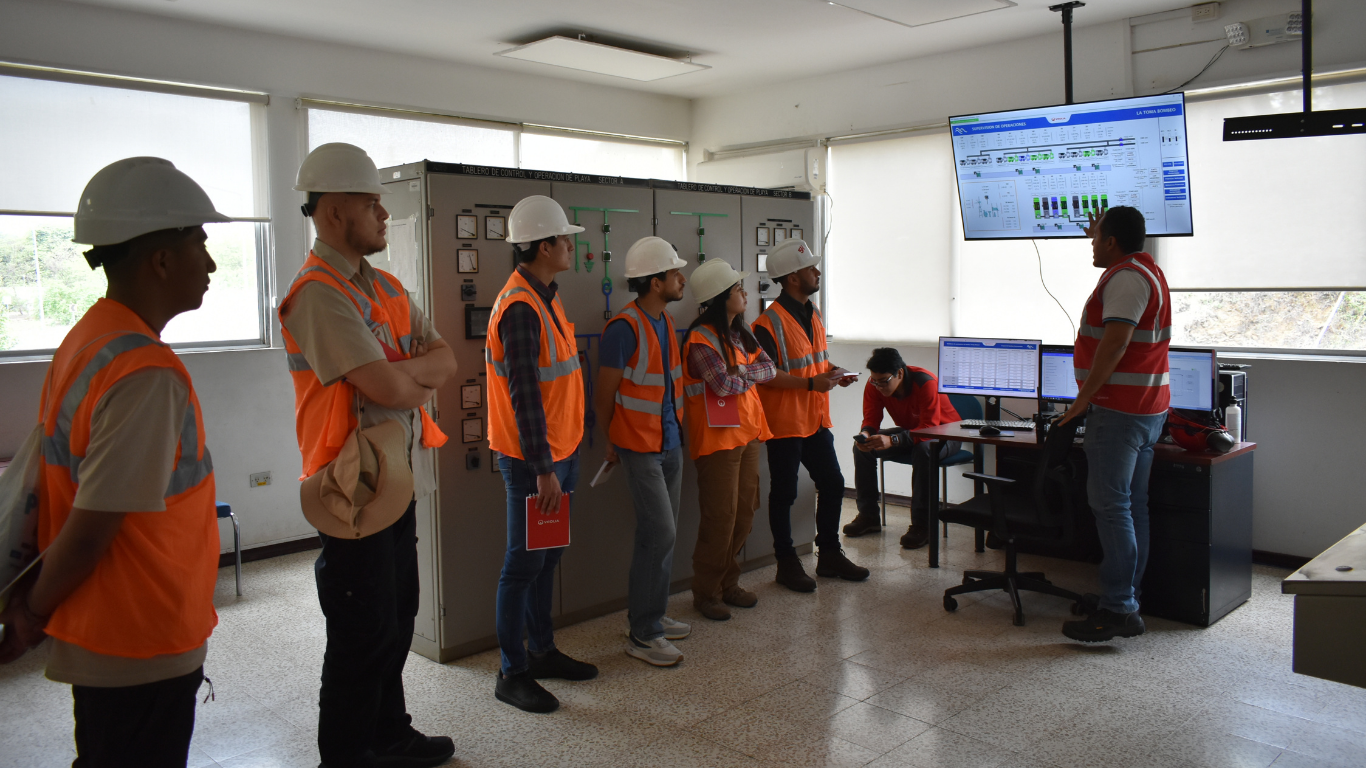


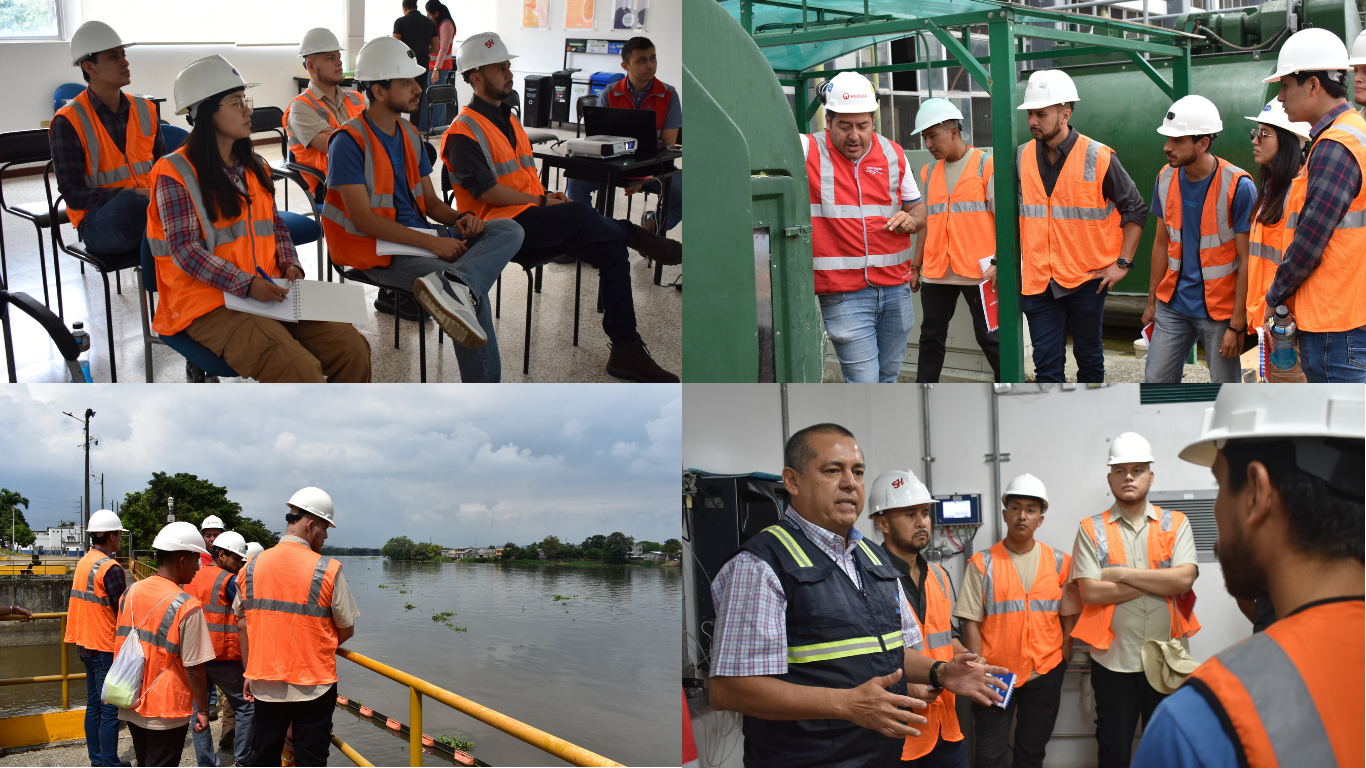
As part of their technical and professional development, students from the 7th Cohort of the Master’s in Civil Engineering (specializing in Construction and Sanitation) at ESPOL’s Faculty of Geosciences Engineering (FICT) conducted an academic visit to the 'La Toma' Raw Water Pumping Station in Guayaquil.
The primary objective of this activity was to gain first-hand knowledge of the SAICA Network (Automatic Water Quality Information System), including its infrastructure, operation, and real-time monitoring technology. This experience successfully bridged the gap between classroom theory and practical application, fostering a comprehensive vision of sustainable water resource management and data-driven decision-making.
The visit was supported by professionals from the Municipal Drinking Water and Sewerage Company of Guayaquil (EMAPAG EP) and VEOLIA ECUADOR S.A., the entities responsible for the operation, maintenance, and management of the city’s water supply and monitoring systems. During the guided tour, students observed the performance of measurement and control equipment, information transmission and processing systems, and the operational protocols implemented to ensure the quality of raw water destined for human consumption.
Furthermore, direct interaction with the specialists in charge of the SAICA Network allowed students to address technical queries and learn about real-world water management challenges in urban environments. This engagement strengthened their competencies in fields such as sanitary engineering, hydraulics, environmental control, and public utility management.
These academic activities organized by the Escuela Superior Politécnica del Litoral (ESPOL) reinforce the synergy between academia, industry, and the public sector. They promote a holistic education focused on developing professionals committed to sustainability and social well-being.
Furthermore, this academic visit aligns with the Sustainable Development Goals (SDGs), specifically SDG 4: Quality Education, SDG 6: Clean Water and Sanitation, SDG 9: Industry, Innovation, and Infrastructure, and SDG 11: Sustainable Cities and Communities.