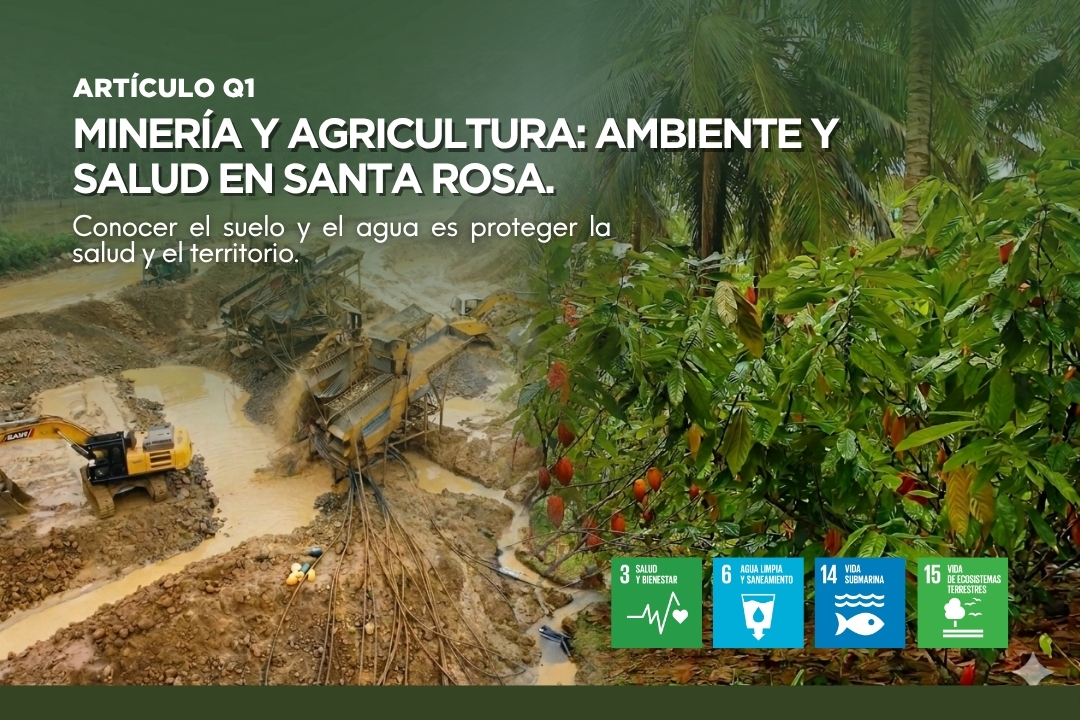

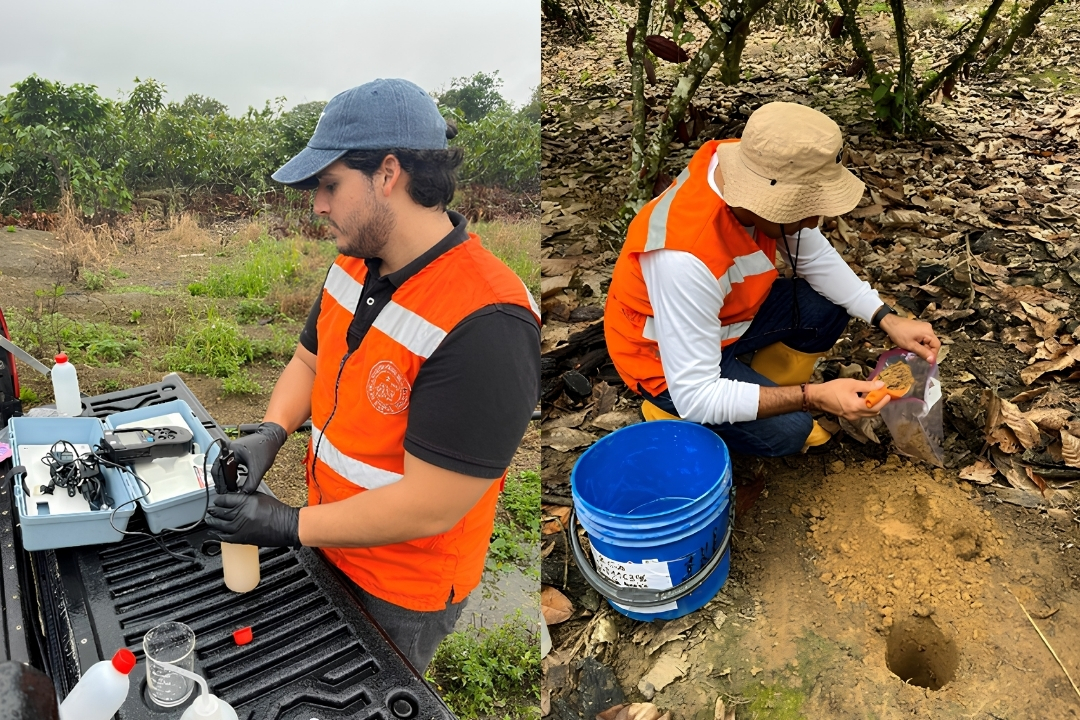
When mining and agriculture share the same territory, understanding soil and water quality is essential to protecting the health of communities and promoting sustainable environmental management. A study conducted in the Santa Rosa canton, El Oro province, assessed the presence of potentially toxic elements (PTEs) in agricultural soils and irrigation water, with the aim of estimating the risk to human health associated with skin contact among the exposed agricultural population.
The study analyzed 14 composite soil samples and 12 irrigation water samples, integrating environmental and occupational health data to characterize conditions in an area where mining and agricultural activities coexist. This research provides scientific information that contributes to decision-making regarding environmental risk management and the protection of natural resources.
The results revealed significant differences between the two matrices. While the irrigation water complied with current regulations, the soil contained concentrations of arsenic and chromium exceeding the maximum permissible limits in 93% of the samples, and copper in 57%. Although the non-carcinogenic risk remained below the reference values, the analysis identified that the carcinogenic risk associated with the soil requires continuous monitoring and follow-up, with arsenic being the primary element contributing to this risk.
The findings provide a technical baseline for strengthening programs for the periodic monitoring of arsenic, chromium, and copper in agricultural soils, especially in areas most affected by mining. They also support the implementation of preventive measures during agricultural activities and the design of strategies to reduce the population’s exposure to these contaminants.
This research reflects the Faculty of Geosciences Engineering (FICT)’s commitment to generating applied scientific knowledge to address environmental issues of national interest. Through studies that integrate engineering, occupational health, and environmental management, the Faculty contributes to the development of solutions that promote territorial sustainability and community well-being, in alignment with ESPOL’s mission to generate knowledge that has an impact on the country.
doi: https://doi.org/10.3390/resources15060081
Researchers:
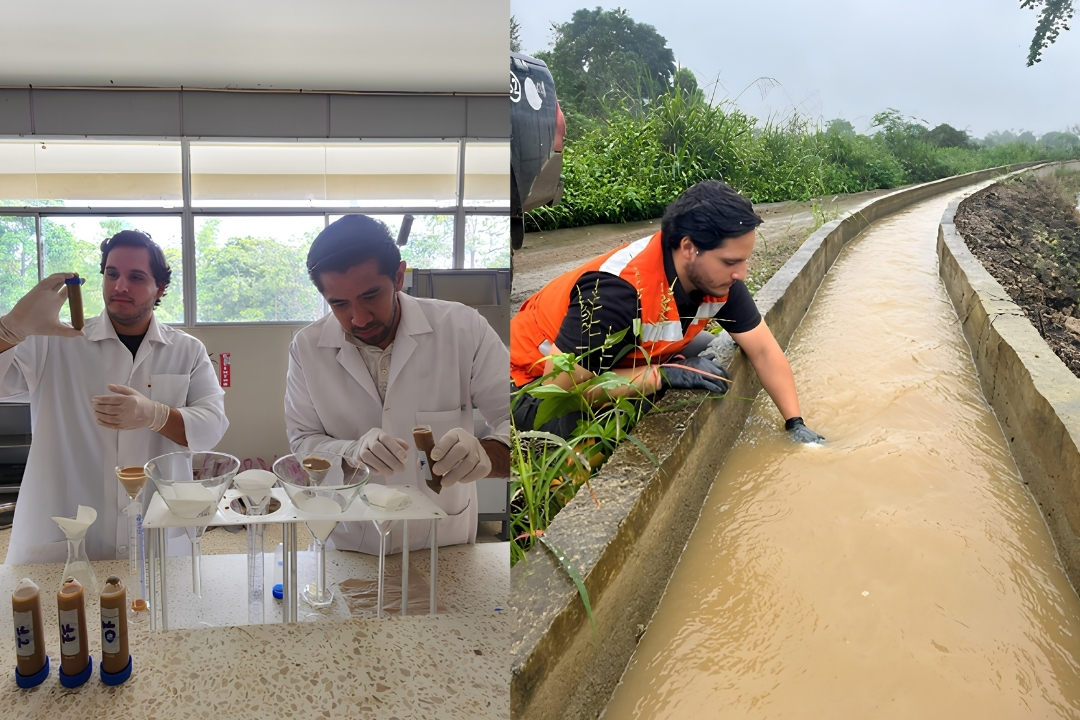
FICT - ESPOL
Juan José González Menéndez, M. Sc.
Carlos Hugo Bustamante Torres, M. Sc.
Samantha Tamara Jiménez Oyola, Ph. D.
Kenny Fernando Escobar Segovia, M. Sc.
International Researchers:
Geological and Mining Institute of Spain (IGME-CSIC)
Bryan Salgado Almeida, M. Sc.
Espíritu Santo University (UEES)
Gianella Muriel Granda, Ph. D.
Sustainable Development Goals (SDGs)
SDG 3: Good Health and Well-being
SDG 8: Decent Work and Economic Growth
SDG 12: Responsible Consumption and Production