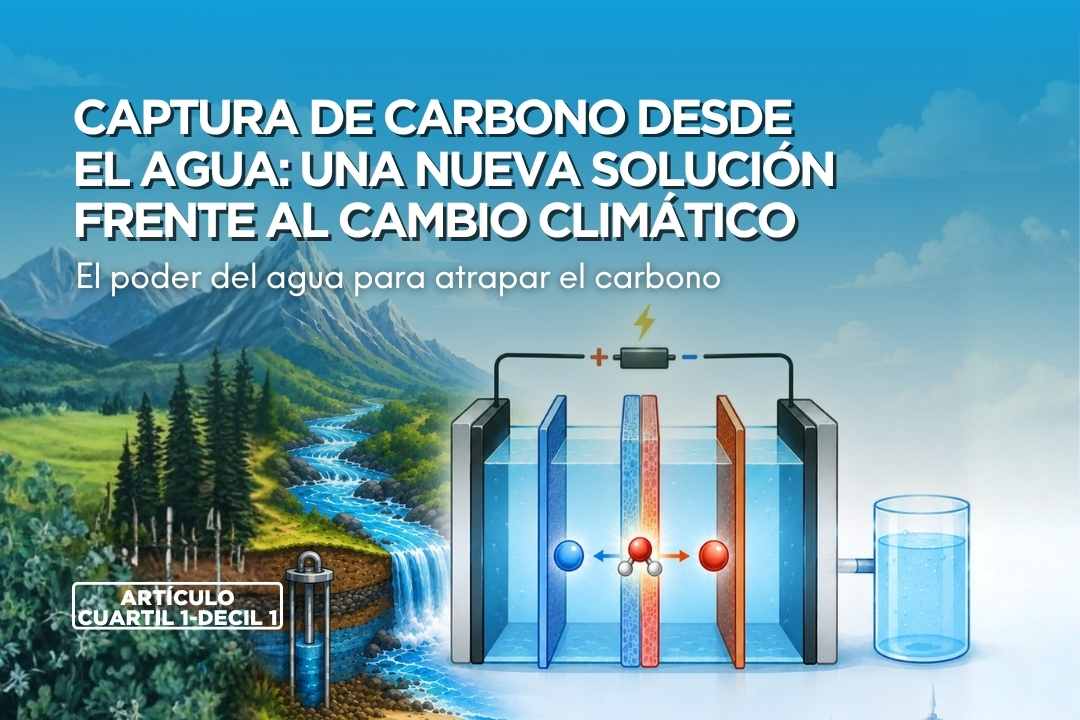


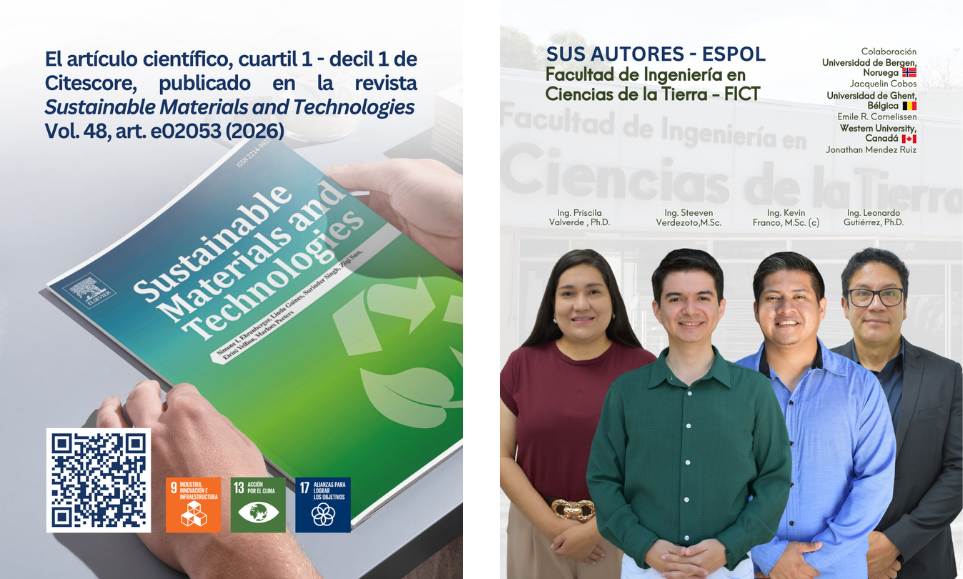
A study conducted by researchers at ESPOL’s Faculty of Geosciences Engineering (FICT) analyzed the use of bipolar membrane electrodialysis (BPMED) as an alternative for capturing carbon dioxide (CO₂) from seawater, groundwater, and freshwater. The research was published in the scientific journal *Sustainable Materials and Technologies*, ranked in Q1, decile 1.
The study, titled “Acidification of brackish, fresh, and seawater by bipolar membrane electrodialysis: Impact of composition on kinetics and energy consumption,” evaluated how the hydrochemical composition of the water influences the rate of acidification and the process’s energy consumption. BPMED technology enables the conversion of dissolved inorganic carbon species, such as bicarbonate and carbonate, into carbonic acid and subsequently into dissolved CO₂, facilitating its extraction without the need to add additional chemical reagents.
The results showed that waters with higher salinity acidified more rapidly due to their higher electrical conductivity. In addition, it was found that high concentrations of bicarbonate produce a buffering effect that slows down carbon capture. The study also showed that freshwater had the lowest energy consumption, with values as low as 1.02 kWh per kilogram of CO₂, lower than conventional technologies such as direct carbon capture, whose energy consumption ranges from 5 to 8 kWh/kg CO₂.
The research also explored the potential for repurposing CO₂-rich water in enhanced oil recovery processes, as well as the possibility of obtaining sodium hydroxide (NaOH) as a byproduct with commercial value. These findings expand opportunities for the development of circular and sustainable technologies aimed at carbon capture and reuse in the face of the challenges posed by climate change.
DOI: 10.1016/j.susmat.2026.e02053
At ESPOL’s Faculty of Geosciences Engineering (FICT-ESPOL), this type of research reflects the institution’s commitment to generating scientific knowledge aimed at addressing high-impact environmental and technological challenges. Through coordinated efforts among faculty, researchers, and students, FICT-ESPOL promotes the development of innovative solutions that contribute to the advancement of science, sustainability, and the strengthening of applied research with national and international reach.
Researchers
ESPOL - Faculty of Geosciences Engineering (FICT), Ecuador
Steeven Verdezoto Intriago
Kevin Franco González
Priscila Valverde Armas
Leonardo Gutiérrez
University of Bergen, Norway
Jacquelin Cobos
Ghent University, Belgium
Emile R. Cornelissen
Western University, Canadá
Jonathan Méndez Ruiz
Sustainable Development Goals
SDG 9: Industry, Innovation, and Infrastructure
SDG 13: Climate Action
SDG 17: Partnerships for the Goals