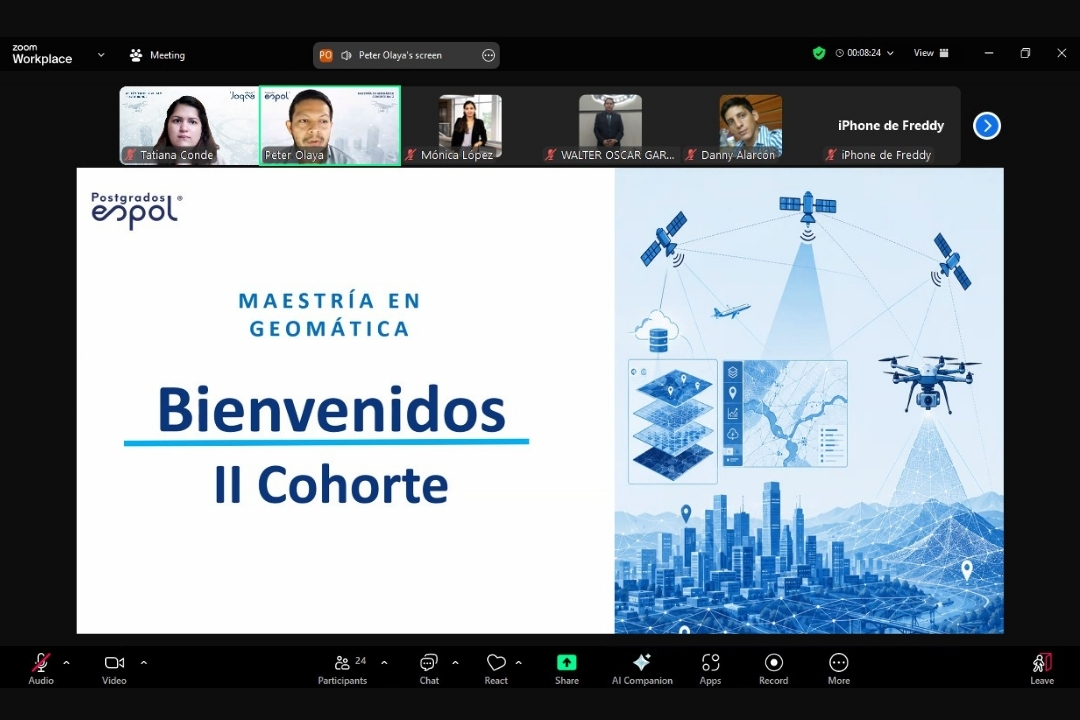


ESPOL’s Faculty of Geosciences Engineering (FICT) welcomed the 26 students admitted to the second cohort of the Master’s in Geomatics program during a virtual event held on May 30, 2026. The event marked the official start of a new phase of specialized training in geospatial technologies, remote sensing, geographic information systems, and territorial analysis.
The Master’s in Geomatics is designed to strengthen advanced skills in the generation, analysis, and interpretation of geospatial information—a fundamental tool for territorial planning, environmental monitoring, natural resource management, and evidence-based decision-making. Through this program, students acquire knowledge and skills applicable to current challenges related to territory and sustainable development.
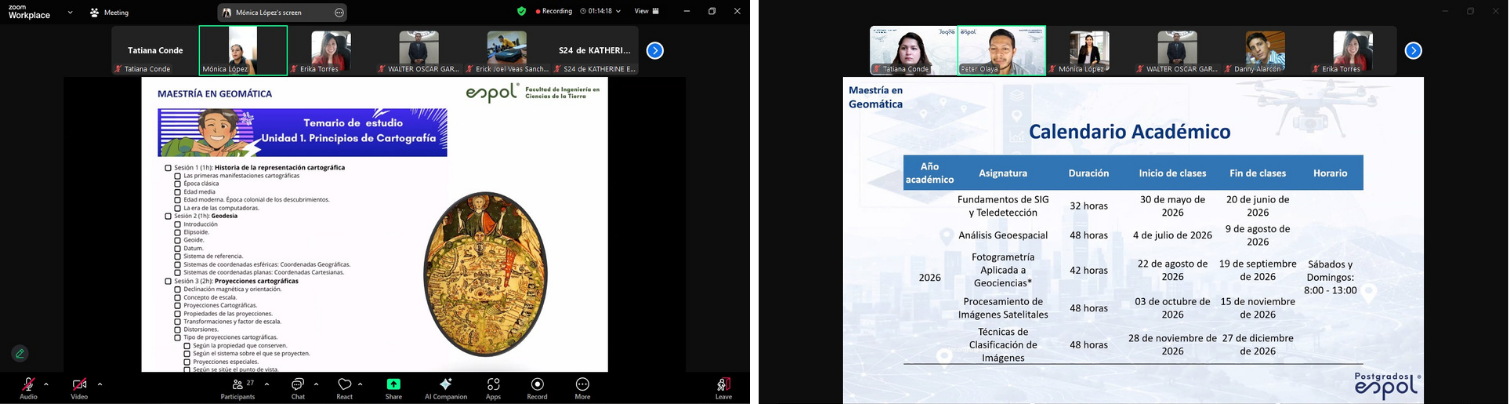
During the welcome session, the new master’s students received academic information relevant to their educational journey, including general program guidelines, the academic calendar, and key details for getting started. This was followed by classes for the first course of the master’s program, marking the formal start of the academic term for this new cohort.
The second cohort is made up of professionals from various fields related to the environment and geosciences, including oceanography, geography, geology, geosciences, aquaculture, agronomy, civil engineering, environmental biotechnology, and forestry. This academic diversity reflects the multidisciplinary nature of geomatics and its ability to provide solutions in various strategic sectors.
Furthermore, the Master’s in Geomatics is included on the list of programs eligible for the 2026 Hydrocarbons Scholarships, offering admitted students the chance to access funding opportunities to pursue their studies, in accordance with the conditions set forth in the call for applications.
With the start of this new cohort, FICT reaffirms its commitment to training professionals capable of transforming geospatial data into applied knowledge for land management, environmental sustainability, and the country’s development.
Sustainable Development Goals (SDGs)
SDG 4: Quality Education
SDG 9: Industry, Innovation, and Infrastructure
SDG 11: Sustainable Cities and Communities