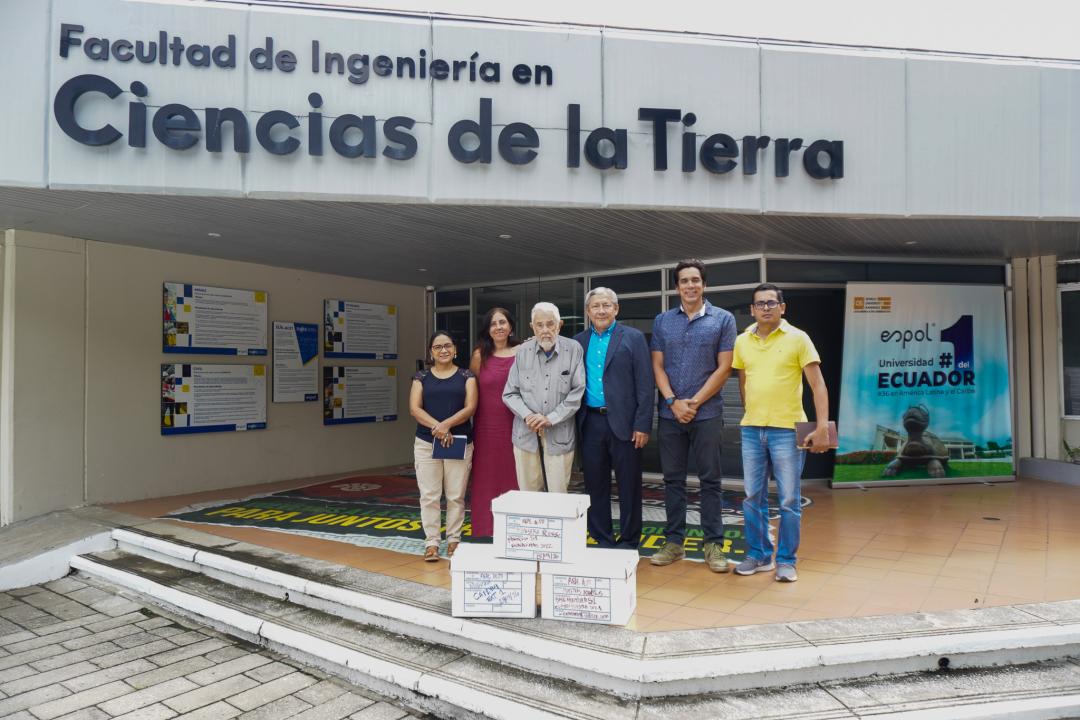


The Faculty of Geosciences Engineering (FICT) took another step toward integrating engineering with heritage research by launching a technical-scientific collaboration with the Real Alto archaeological project, led by Dr. Jorge Marcos of the Center for Archaeological and Anthropological Studies (CONAH). The purpose of the meeting was to define a joint roadmap for analyzing the formations found at one of Ecuador’s most significant archaeological sites.
The event was attended by the dean of FICT, Paúl Carrión, Ph.D.; professors and researchers Daniel Falquez T., David Altamirano, and Nancy Zumba; and Dr. Jorge Marcos and Dr. Silvia Marcos, researchers at the CONAH Center for Archaeological and Anthropological Studies. The meeting made it possible to identify the technical needs of the archaeological project and establish a roadmap for integrating geological and geotechnical tools into the study of the Real Alto site, thereby strengthening cooperation between the two institutions.
To this end, the plan is to characterize samples through specialized testing in FICT’s Petrography and Geotechnical Engineering and Construction laboratories, generating information that will contribute to a better understanding of the site’s archaeological context.
As a result of the meeting, it was agreed to conduct a technical reconnaissance visit to Real Alto. This activity will allow specialists to directly assess site conditions, identify operational challenges, and develop an intervention strategy that optimizes the contribution of geological and geotechnical engineering to the project.
The initiative highlights the coordinated efforts led by FICT, which integrates the internal expertise of its faculty and specialists with that of external partners to address scientific challenges of national interest. In line with ESPOL’s vision, this collaboration strengthens interdisciplinary research, promotes knowledge exchange, and creates opportunities for the development of evidence-based solutions.
In addition to advancing Ecuadorian archaeological research, the partnership contributes to the preservation and understanding of the country’s cultural heritage, strengthening the relationship between science, technology, and society. The use of specialized scientific infrastructure and cooperation among institutions serve as an example of how academia can generate value for the advancement of knowledge and the preservation of national history.