

ESPOL’s participation in the STARS project solidifies the Geoinformation and Remote Sensing Laboratory’s position as a strategic hub for research, innovation, and international scientific cooperation.
The Faculty of Geosciences Engineering (FICT) at the Escuela Superior Politécnica del Litoral (ESPOL) is strengthening its presence in international research networks through the Geoinformation and Remote Sensing Laboratory, led by Andrés Velástegui, Ph.D., and its participation in the STARS project: Spatial Tools for Assessing Risks in Sudden Natural Hazards.
Funded by the European Union through the Erasmus+ Capacity Building in Higher Education 2025 program, STARS brings together universities from Latin America and Europe with the aim of strengthening the use of geospatial technologies for risk assessment and improving decision-making based on scientific information and data.
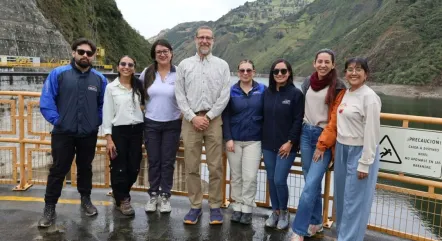
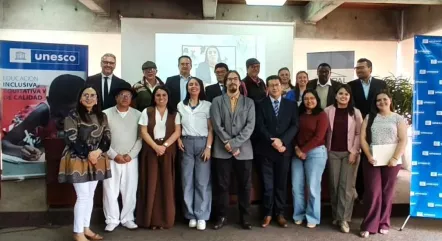
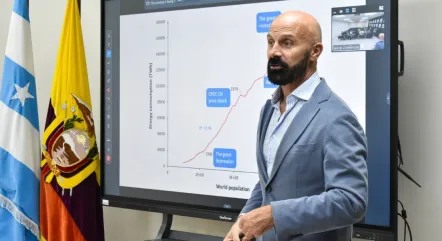
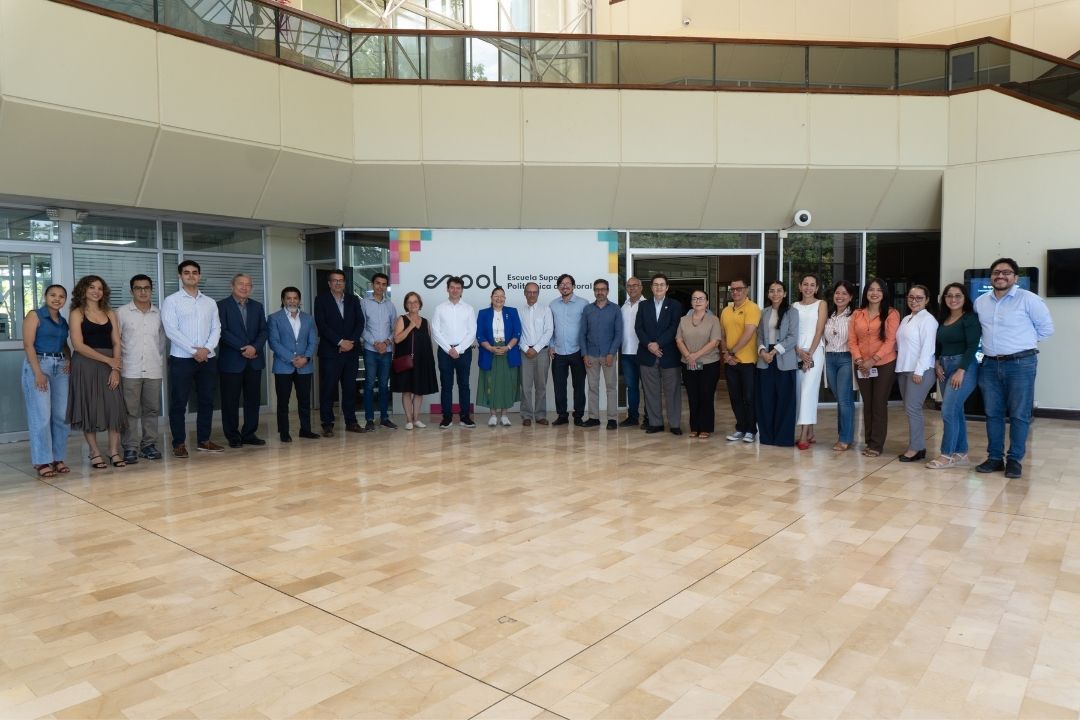
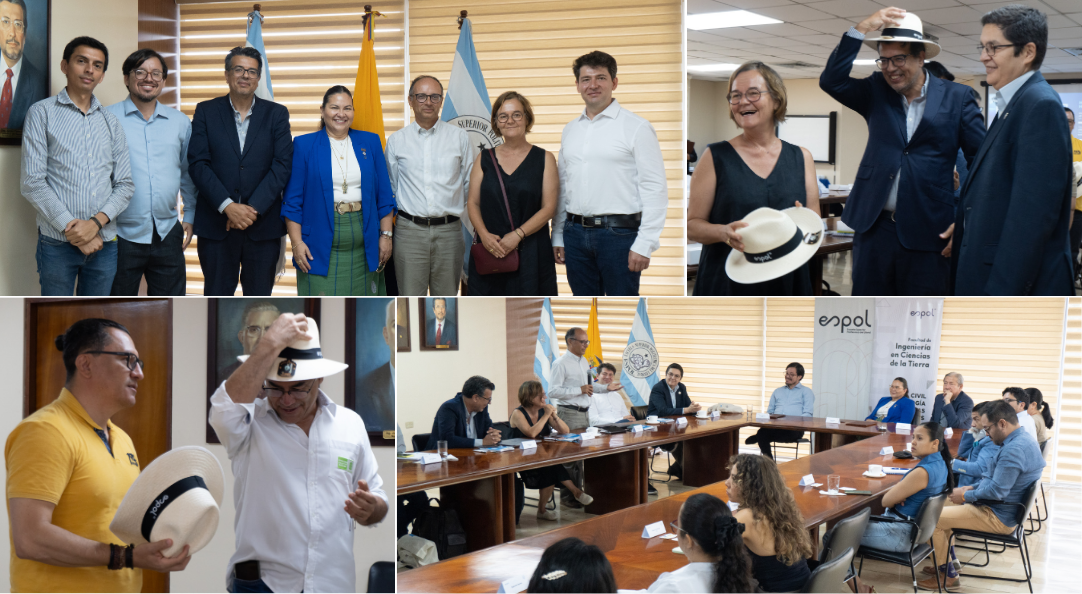
As part of the project’s activities, on August 24, ESPOL hosted representatives from the institutions that make up the international consortium. The event provided an opportunity for collaboration, academic exchange, and scientific cooperation with FICT officials and the research team.
The delegation consisted of Alexandre Gonçalves, Ph.D., general coordinator of STARS; Rui Mendes, Ph.D., director of International Affairs; and Ana Falcão, Ph.D., from the Instituto Superior Técnico at the University of Lisbon; Ali Mansourian, Ph.D., project coordinator from Lund University; Francisco Velandia, Ph.D., coordinator from the Industrial University of Santander (UIS); researchers Guillermo Mejía, Ph.D., and Joaquín Valencia, Ph.D. (c), from UIS; and Gabriel Jácome, Ph.D. (c), coordinator from the Technical University of the North.
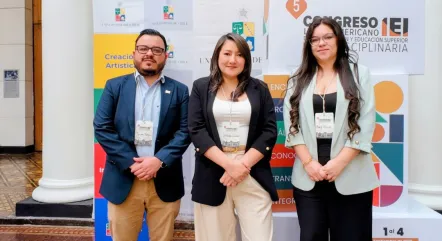
Representing ESPOL were the dean of FICT, Paúl Carrión, Ph.D.; the associate dean, Kenny Escobar, M.Sc.; and the researchers who are part of the STARS team: Andrés Velástegui, Ph.D., STARS project coordinator for ESPOL; David Valverde, Ph.D.; Joselyne Solórzano, Ph.D. (c); Daniella Mora, M.Sc.; Isabel Chuizaca, M.Sc.; and Samuel Mora Mejía.
Geoinformation and Remote Sensing for Risk Management
STARS seeks to harness the potential of geospatial technologies to contribute to a better understanding of risks and strengthen the capacities of higher education institutions to address these challenges.
In this context, the FICT’s Geoinformation and Remote Sensing Laboratory plays a strategic role as a center for research, training, and the application of these technologies.
The project includes, among other components, the development of educational resources and massive open online courses (MOOCs) aimed at building capacity in geospatial tools and their application to risk management.
Also participating in this process is Débora Camargo, M.Sc., an academic advisor for the design of the STARS MOOCs, who has worked closely with the Latin American team over the past few months.
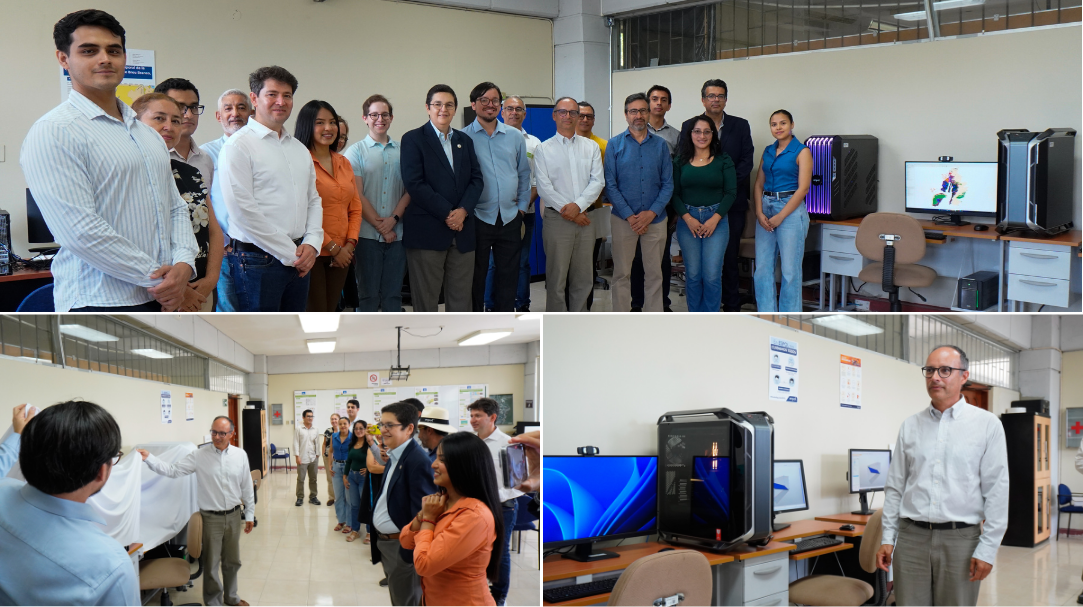
In addition to building academic capacity, the cooperation is also generating new technological capabilities for ESPOL. As part of the project’s resources, two high-performance computers were acquired to strengthen STARS’ activities and the infrastructure of the Geoinformation and Remote Sensing Laboratory.
This equipment will remain at the university as installed capacity for future research, projects, and academic activities, benefiting both researchers and students.
A visit that strengthens ties for the future
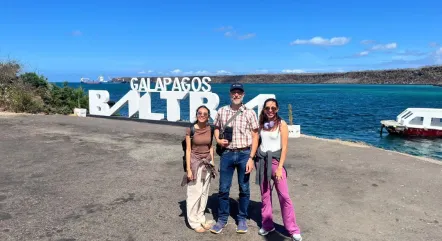
The visit by international partners to Ecuador provided an opportunity to gain firsthand knowledge of the Santa Elena region and the contexts in which the knowledge and tools developed through STARS will be applied.
This exchange is essential for an initiative whose goal is not only to transfer knowledge from Europe to Latin America but also to foster a process of mutual learning that allows technological solutions to be adapted to the realities of South American regions.
For FICT, this experience also represents an opportunity to consolidate the Geoinformation and Remote Sensing Laboratory as a bridge between the research conducted at ESPOL and international scientific cooperation networks.
“When universities from different countries work toward a common vision, we not only strengthen our institutions; we also expand our collective capacity to generate solutions and respond to the challenges facing our societies,” noted Andrés Velástegui, Ph.D.
The researcher also highlighted the value of the networks built by the university community and, in particular, the role of ESPOL alumni as bridges capable of opening new opportunities for the institution.
The story of STARS demonstrates that an academic connection can evolve into an international partnership and that the capabilities developed in a university laboratory can extend beyond the institution’s boundaries to create new opportunities for research and training.
A legacy that goes beyond STARS
A few months into the project’s first year of implementation, the partners have made progress on various components of STARS and have established a working dynamic based on collaboration and knowledge sharing.
For ESPOL, the goal is for the results of this experience to extend beyond the project’s implementation period.
The expectation is that the relationships built will help foster new research, scientific publications, international projects, academic exchanges, and training opportunities for students and faculty.
In this way, STARS becomes a platform for projecting the capabilities of the FICT and the Geoinformation and Remote Sensing Laboratory toward new networks of scientific cooperation.
Science, Technology, and Cooperation for Sustainable Development
The activities carried out as part of STARS contribute to various Sustainable Development Goals (SDGs):
- SDG 9: Industry, Innovation, and Infrastructure, by strengthening scientific, technological, and research infrastructure capacities.
- SDG 11: Sustainable Cities and Communities, by developing tools that contribute to better management of natural hazards and risks.
- SDG 17: Partnerships for the Goals, through scientific and academic cooperation between universities in Latin America and Europe.