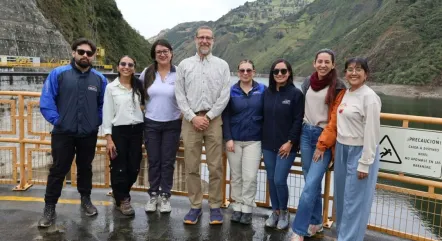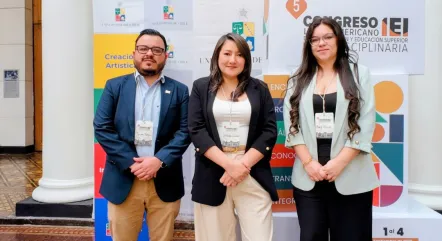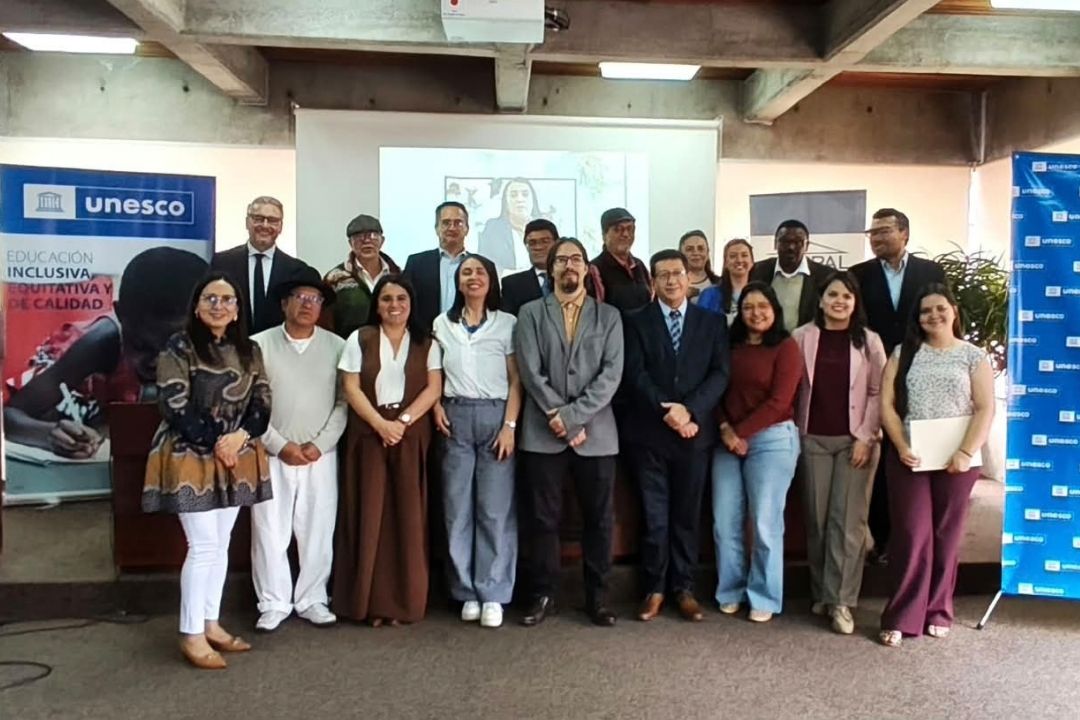


The UNESCO Chair in Geosciences Applied to Sustainable Development at the Escuela Superior Politécnica del Litoral (ESPOL) participated in the Second National Meeting 2026 of UNESCO Chairs in Ecuador, held on September 15 at CIESPAL in Quito. The meeting brought together representatives from the country’s 12 UNESCO Chairs, the UNESCO Office in Ecuador, the National Commission for Cooperation with UNESCO, and the Ministry of Foreign Affairs and Human Mobility.
The purpose of the meeting was to create a forum for coordination to exchange work priorities for the 2026–2027 biennium, share best practices and lessons learned, and identify cooperation initiatives among the UNESCO Chairs related to the 2030 Agenda and sustainable development.
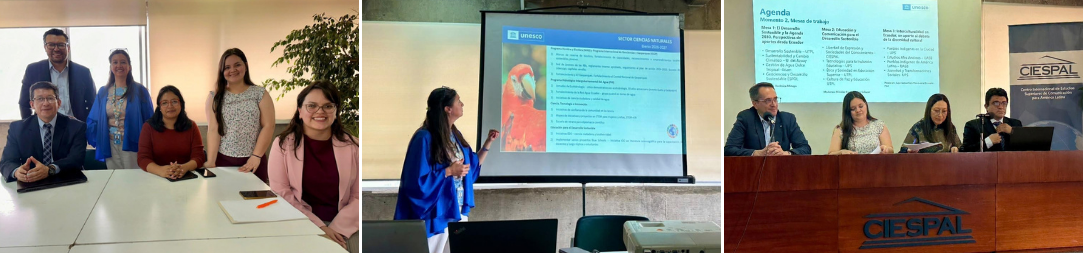
In Working Group 1, titled “Sustainable Development and the 2030 Agenda. Perspectives on Contributions from Ecuador,” ESPOL shared the session with the UNESCO Chairs in Sustainable Development at the Universidad Técnica Particular de Loja; in Sustainability and Climate Change at the Universidad del Azuay; and in Tropical Water Management at the Universidad Regional Amazónica Ikiam.
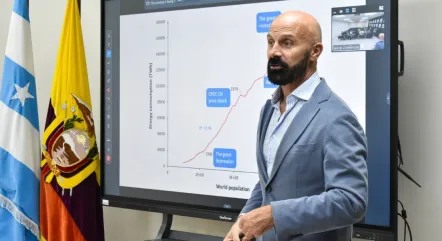
During this roundtable, the UNESCO Chair in Geosciences Applied to Sustainable Development, led by Paúl Carrión, Ph.D., dean of the Faculty of Geosciences Engineering (FICT), presented the progress and key results of the activities carried out within the framework of its areas of focus. These include 13 knowledge-transfer events, such as guided tours, workshops, and conferences; the first series of short stories titled “Chongón Colonche Mágico: ESPOL, a Living Campus”; plans for a webinar to mark International Geodiversity Day 2026; and participation in joint activities with the SbN-GIA Network, focused on nature-based solutions for integrated water management in vulnerable communities.
ESPOL’s participation was led by María Fernanda Jaya, Ph.D. (c), a researcher at the Center for Research and Applied Projects in Earth Sciences (CIPAT) and co-director of the UNESCO Chair in Geosciences Applied to Sustainable Development, and Maribel Aguilar Aguilar, Ph.D. (c), a professor and researcher at FICT and CIPAT and general coordinator of the UNESCO Chair at ESPOL.
As a result of this collaborative effort, the participating Chairs identified opportunities for cooperation in the coming years. Among the proposed initiatives are the organization of a training course on sustainability, coordination with a green transition event at institutions of higher education scheduled for 2027, and plans for a Meeting of UNESCO Chairs in Latin America for 2028–2029.
FICT-ESPOL’s participation in this forum strengthens its ties with the national network of UNESCO Chairs and creates opportunities to promote projects, training activities, and joint initiatives in areas such as geosciences, ecohydrology, geoconservation, education, and sustainable development. These initiatives contribute to the exchange of knowledge and the development of collaborative responses to environmental and social challenges.
Sustainable Development Goals (SDGs)
- SDG 4: Quality Education, through the development of training activities, knowledge transfer, and academic cooperation.
- SDG 6: Clean Water and Sanitation, through the coordination of initiatives related to integrated water management and nature-based solutions.
- SDG 11: Sustainable Cities and Communities, through the promotion of knowledge and actions related to sustainable development and land management.
- SDG 13: Climate Action, by incorporating sustainability and climate change into cooperation initiatives.
- SDG 15: Life on Land, through work related to geoconservation, geodiversity, and ecosystem protection.
- SDG 17: Partnerships for the Goals, through cooperation among UNESCO Chairs, universities, and institutions linked to the 2030 Agenda.