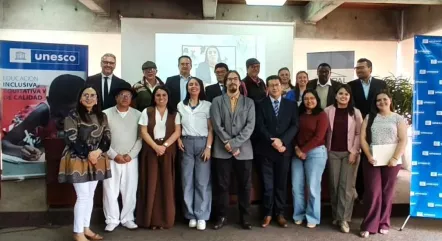



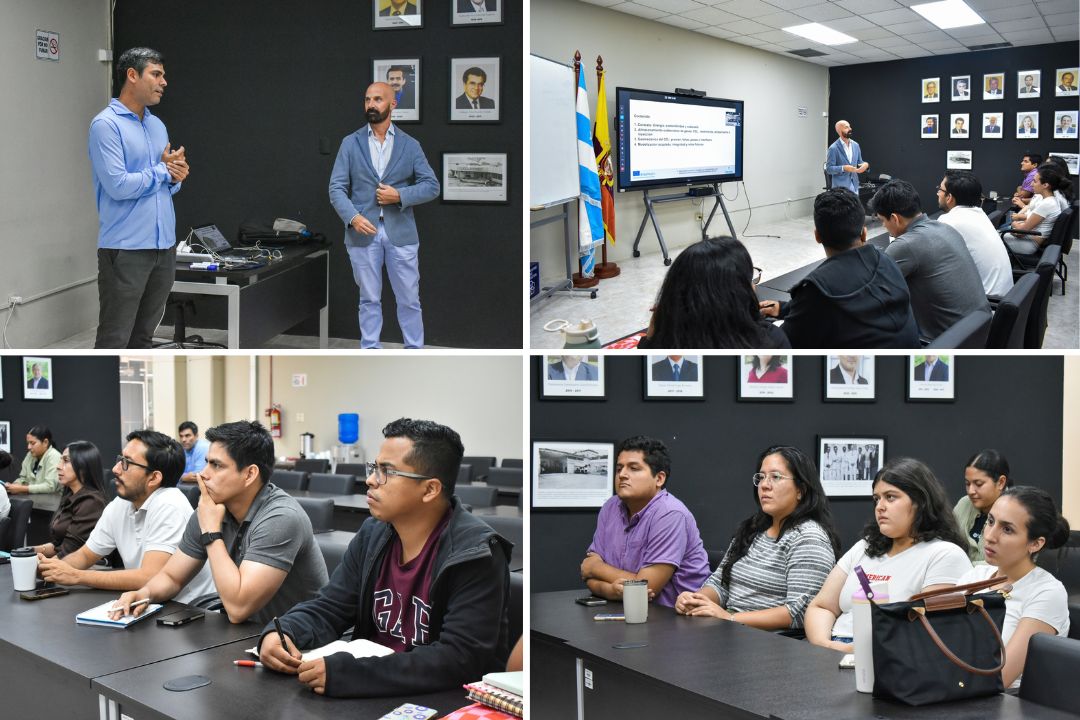
ESPOL’s Faculty of Geosciences Engineering (FICT) hosted the conference “Geomechanics for Deep Carbon Dioxide Storage: Constitutive Behavior and Numerical Analysis,” held on September 8, 2026, in the FICT Conference Room. The event provided an opportunity to analyze the role of geomechanics in deep geological CO₂ storage and the importance of the subsurface in the context of the energy transition and sustainability.
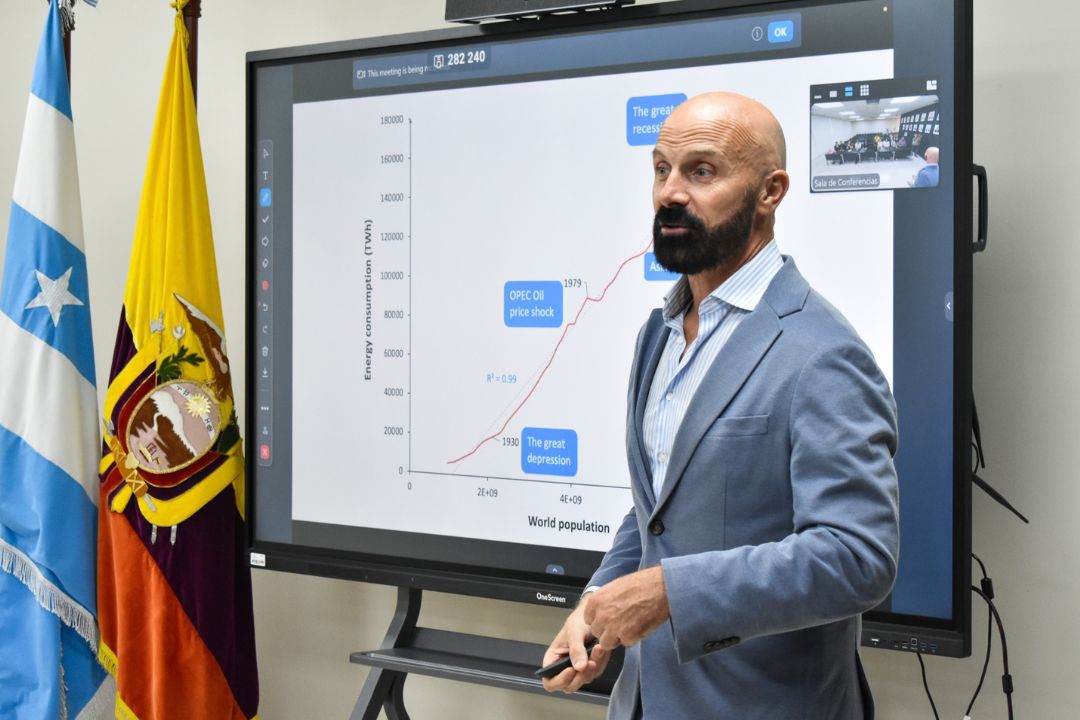
During the conference, Diego Guillermo Manzanal Milano, Ph.D., a full professor at the Polytechnic University of Madrid (UPM), presented the main geological options for CO₂ storage, the trapping mechanisms, and the injection conditions for supercritical carbon dioxide. He also addressed the challenges associated with the safety and integrity of these systems.
Among the aspects analyzed were overpressures in the reservoir, the possible reactivation of faults and discontinuities, induced seismicity, well stability, and possible migration pathways for CO₂ through fractures and cement-rock interfaces. In addition, he presented results from experimental research on carbonation, porosity, strength, and the mechanical behavior of rocks and discontinuities exposed to CO₂.
The conference also provided insight into applications of coupled hydro-mechanical and thermo-hydro-mechanical-chemical (HM/THM/THMC) numerical models for assessing reservoir integrity, fault response, and long-term system evolution. These tools enable the analysis of variables relevant to the design, operation, and risk management associated with underground storage
The event was organized by the Master’s Program in Geotechnical Engineering as part of the Erasmus+ agreement between UPM and ESPOL. The conference featured research findings developed by UPM in collaboration with various institutions and research groups involved in geological CO₂ storage.
Participants in the event included Davide Besenzon Venegas, coordinator of the Master’s Program in Geotechnical Engineering; Samantha Tamara Jiménez Oyola, full professor at FICT; and Juan José González Menéndez, graduate program analyst for the Master’s Program in Geotechnical Engineering. This forum for academic exchange helps strengthen specialized training and brings students and professionals closer to international research related to geotechnical engineering, energy, and sustainability.
Related SDG
SDG 4: Quality Education. For strengthening specialized training through the exchange of knowledge and international research findings.
SDG 9: Industry, Innovation, and Infrastructure. For addressing analytical and modeling tools applied to geological storage and the behavior of underground infrastructure.
SDG 13: Climate Action. For contributing to scientific and technical knowledge related to alternatives for the geological storage of carbon dioxide in the context of the energy transition.