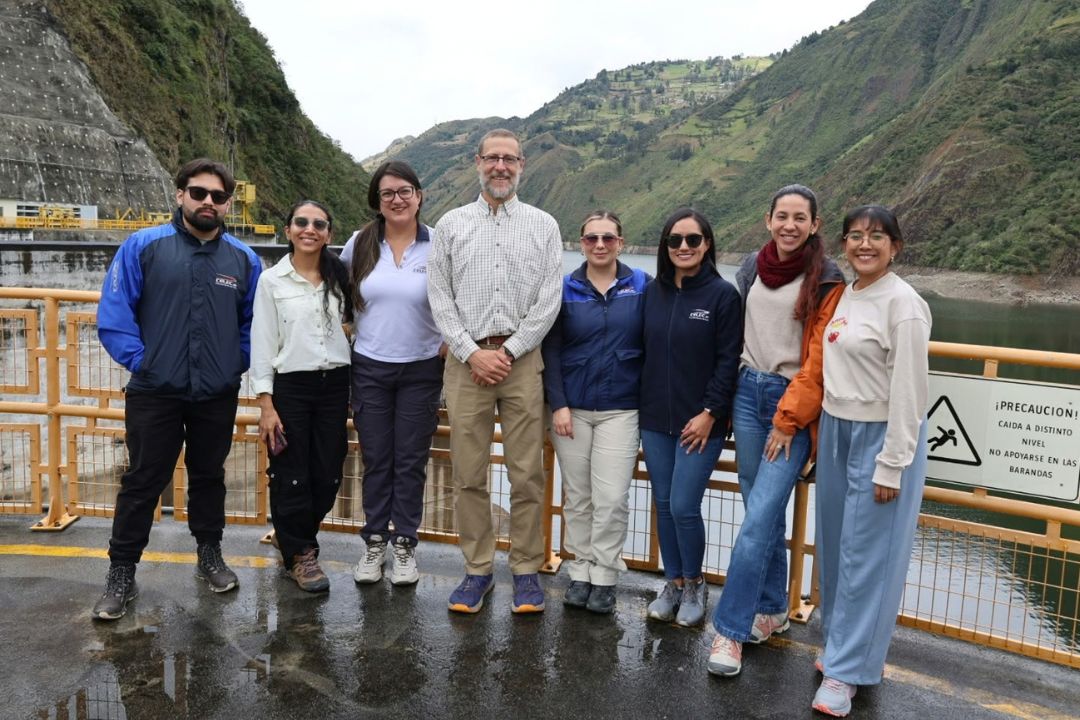


The technical agenda developed in collaboration with the CELEC SUR Business Unit enabled researchers from the Escuela Superior Politécnica del Litoral (ESPOL) and specialist Mitch Clement, M.Sc., from the Center for Advanced Decision Support for Water and Environmental Systems (CADSWES) at the University of Colorado Boulder (CU Boulder), to identify opportunities for scientific cooperation in hydroelectric optimization, water resources management, and monitoring of unstable areas in strategic power generation infrastructure.
On behalf of ESPOL, which has been carrying out the “Applied Research Project on Geological and Geotechnical Studies for the CELEC SUR Business Unit’s Program for the Management of Unstable Areas” since 2023, under the direction of Paúl Carrión, Ph.D., dean of the FICT, and the co-direction of Joselyne Solórzano, M.Sc., coordinator of the Geology program.
During this technical visit, coordination of all activities was handled by the agreement administrator on behalf of CELEC SUR, Jéssica Robles, M.Sc., together with Professor Joselyne Solórzano, with the assistance of Daniella Mora, M.Sc., from FICT, and Ashley Castro, B.A., from the Faculty of Natural Sciences and Mathematics (FCNM).
This activity was part of the interinstitutional cooperation agreement between ESPOL and CU Boulder, administered by Paola Almeida Guerra, Ph.D., a professor at FCNM-ESPOL. This initiative promotes academic exchange programs, summer schools, and joint research projects between the two institutions.
Technical Assessment in the Field and Management at CELEC SUR
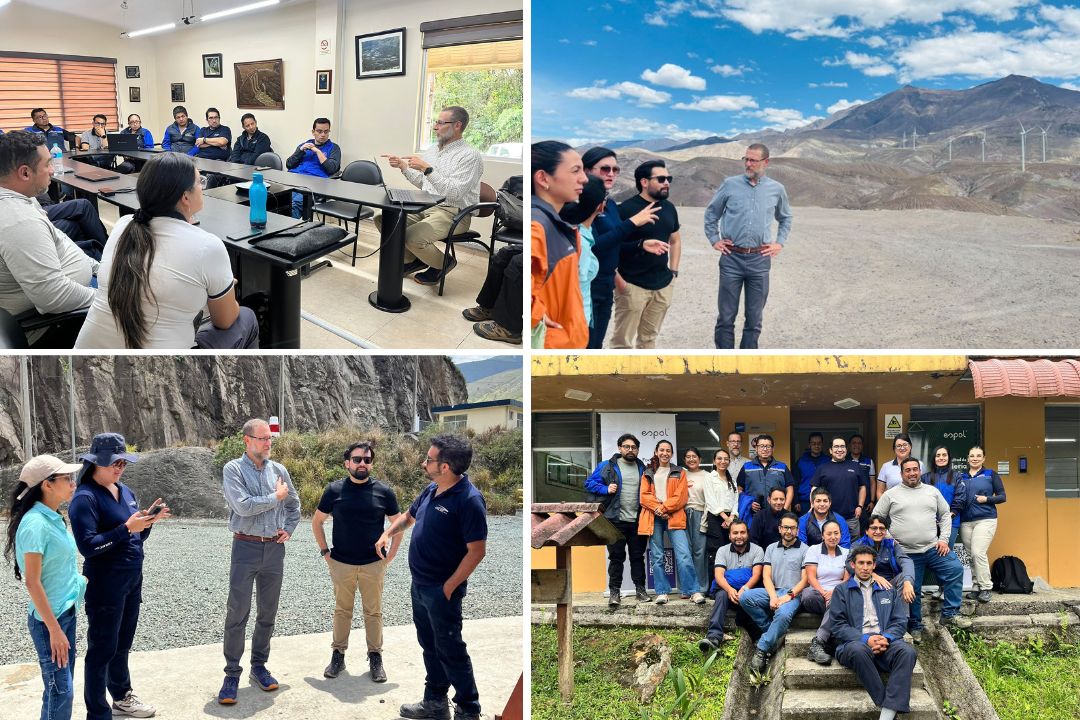
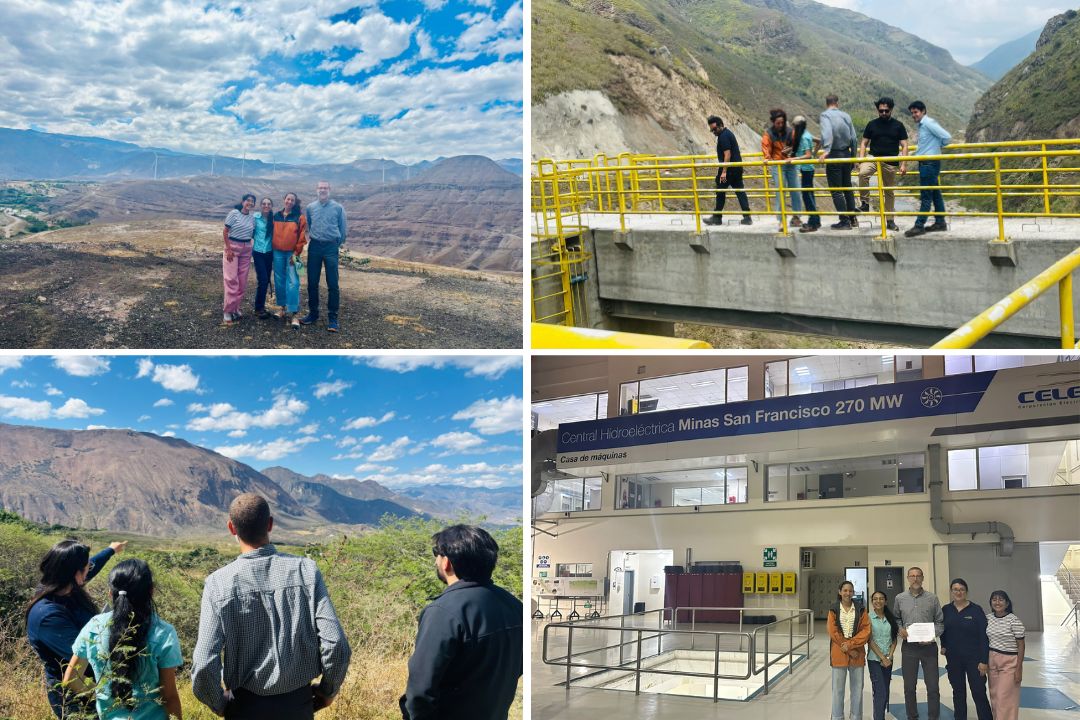
On September 16, a meeting was held with the manager of CELEC SUR, Miguel Andrade, and his team of specialists, followed by a technical inspection of the hydroelectric system to evaluate the generation infrastructure and the geotechnical processes associated with the watershed.
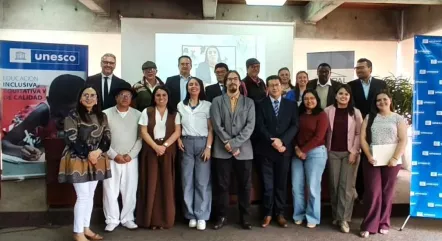
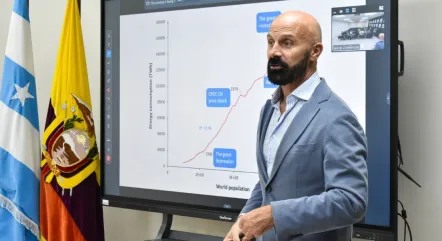
The delegation visited the Mazar Hydroelectric Plant, where they observed the reservoir’s operation and the protective and engineering measures implemented to stabilize slopes within its area of influence. Subsequently, the team traveled to Camp Guarumales, where Mitch Clement delivered a specialized lecture titled “Tools for Hydropower Decision Making,” aimed at presenting quantitative tools and computational models for decision-making in the operation and planning of hydroelectric systems.
The tour provided a direct link between energy operations and the geological and geotechnical conditions of the surrounding environment, highlighting the need to strengthen monitoring in areas prone to instability.
Field Assessment at the Minas San Francisco Power Plant
The technical workshop continued on September 17 at the Minas San Francisco Hydroelectric Power Plant with a tour of the dam and the reservoir area. During this part of the agenda, the specialist delivered a technical presentation titled “Tools for Hydropower Decision Making,” aimed at the plant’s technical and operations staff, delving into the application of hydropower optimization models in the face of hydrological uncertainty.
During the technical tour of the plant, field measurement instruments were used to collect hydrological and environmental data, and methods for integrating field data with quantitative models were analyzed. The visit concluded with a technical briefing in the powerhouse, the nerve center of the complex’s electricity generation.
CELEC SUR emphasized that this scientific exchange facilitated the sharing of advanced methodologies for optimizing energy management, comprehensively integrating the geological, geotechnical, hydrological, and operational components of the power plants.
For the Faculty of Geosciences Engineering (FICT), this experience reinforces the contribution of the geosciences to the sustainability of the energy sector and reaffirms the value of partnerships between academia, international research centers, and the public and private sectors. This project is generating a number of scientific publications, carried out as part of ESPOL’s graduate programs, focused on providing answers and solutions to CELEC SUR’s needs.
Sustainable Development Goals (SDGs)
SDG 7: Affordable and Clean Energy: Promoting operational efficiency and technological optimization of the country’s hydroelectric systems.
SDG 9: Industry, Innovation, and Infrastructure: Providing engineering solutions, computational modeling, and monitoring to increase the resilience of strategic energy infrastructure.
SDG 17: Partnerships for the Goals: Coordinating scientific capabilities among Ecuador’s public universities, international research centers, and strategic public enterprises.