
The Escuela Superior Politécnica del Litoral is carrying out the applied research project “Geopatrimonial Assessment and Geoeducation Strategies for the Cretaceous–Paleogene (K–Pg) Boundary at the Gustavo Galindo Campus,” under the auspices of ESPOL’s UNESCO Chair in Geosciences Applied to Sustainable Development.
The initiative began on March 30, 2026, and will run through December 2027 in the La Prosperina Protected Forest, an area of high natural value within the campus in Guayaquil, where a lithological contact outcrops that records approximately 66 million years of geological history, linked to one of the most momentous events on the planet: the transition between the Cretaceous and Paleogene periods.
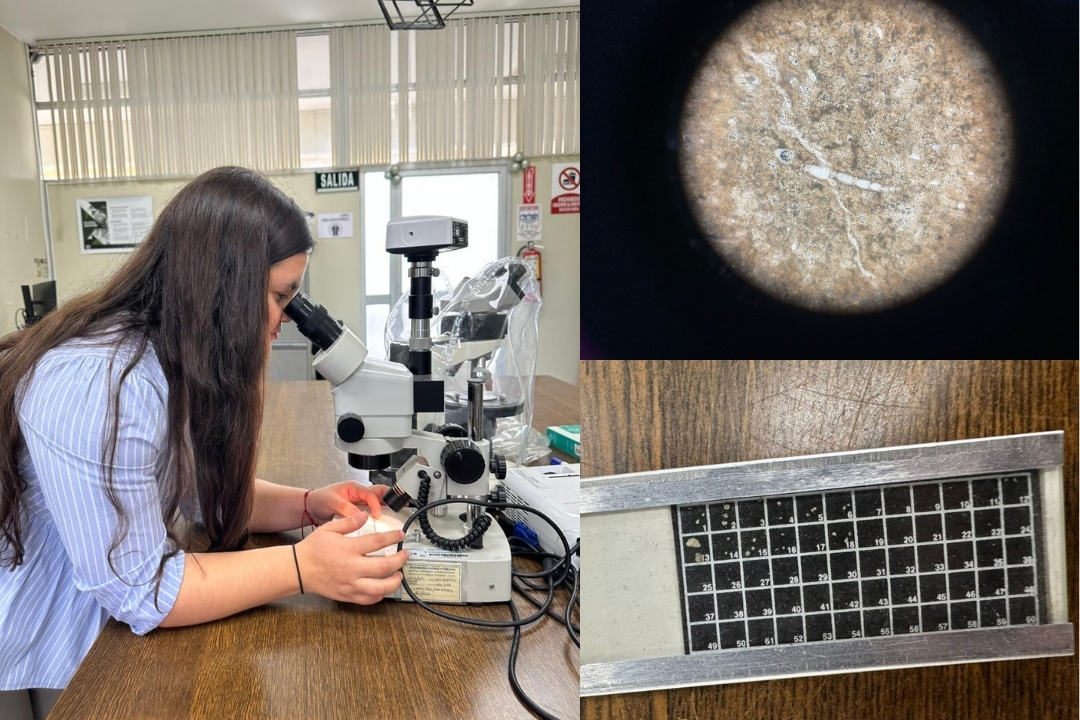
The project aims to assess the geopatrimonial value of this boundary through sedimentological and geochemical analysis, to formulate strategies under the 3G approach: geotourism, geoconservation, and geoeducation. This site constitutes an exceptional record of the global biological and environmental changes associated with the mass extinction that marked the end of the dinosaurs, reinforcing its academic, scientific, and educational relevance.
The research is led by María Fernanda Jaya Montalvo, a professor in the Faculty of Geosciences Engineering (FICT), a research technician at the Center for Research and Applied Projects in Earth Sciences (CIPAT), and the School of Mechanical Engineering and Production Sciences (FIMCP), along with professor and researcher Fernando Enrique Morante Carballo, director of CIPAT. The team also benefits from the advisory roles of the chair director, professor and researcher Paúl Carrión Mero, and researcher Edgar Raúl Berrezueta from the Geological and Mining Institute of Spain (IGME).
The research team includes Kevin Joel Loor Figueroa, Maribel Estefanía Aguilar Aguilar, Silvia Catalina Loaiza Ambuludi, Diana Alejandra Mejía Cela, Daniella Andrea Mora Villón, and Joselyne Bárbara Solórzano Chauca, from the Faculty of Earth Sciences Engineering; Emily Nicole Sánchez Zambrano, from the Faculty of Mechanical Engineering and Production Sciences and CIPAT; Vicky Elizabeth Arteaga León, from CIPAT; Lady María Soto Navarrete, from the Faculty of Social Sciences and Humanities; and Mónica Robles Granda, from the Faculty of Art, Design, and Audiovisual Communication.
The project includes the production of scientific articles indexed in Scopus/WoS, the development of geo-educational materials, a geoconservation plan, and the adaptation of the site as an educational and tourist geosite. These actions aim to strengthen geological literacy within the university community and society at large, promoting an understanding of concepts such as geological time and stratigraphy.
In addition, the initiative has the support of ESPOL’s Physical Infrastructure Management (GIF), which contributes to the adaptation and enhancement of the site within the campus.
This proposal contributes to positioning ESPOL as an institution committed to research, educational innovation, and the conservation of natural heritage, benefiting students, faculty, and the community at large.
Sustainable Development Goals
SDG 4: Quality Education
SDG 11: Sustainable Cities and Communities
SDG 15: Life on Land