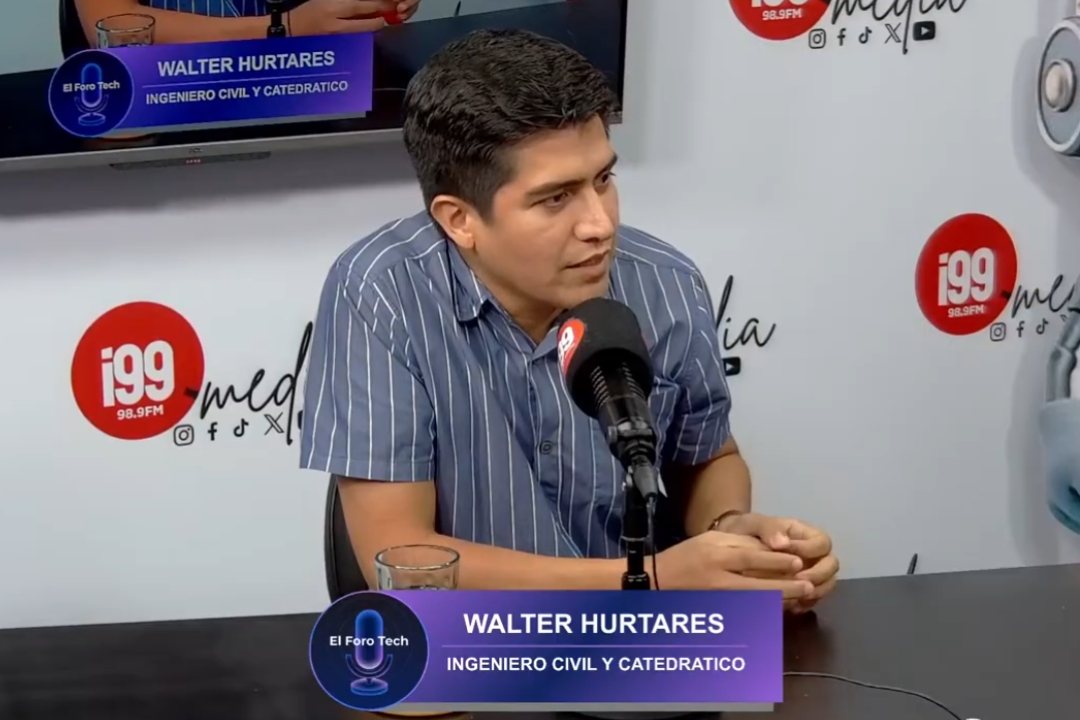


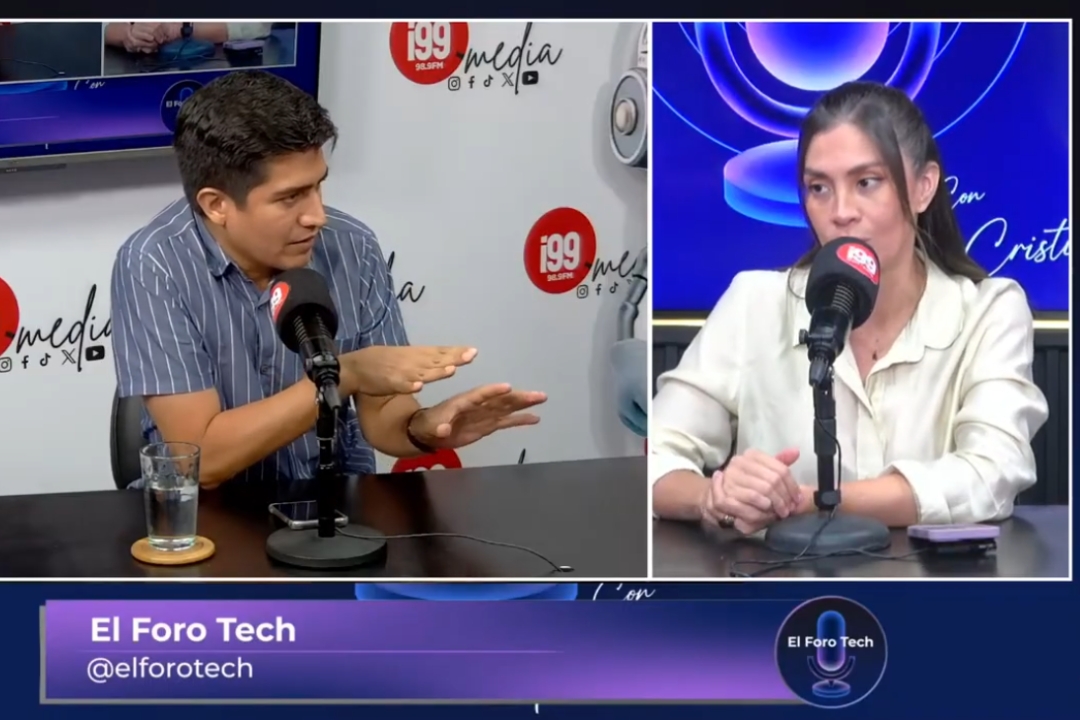
Seismic risk prevention and the development of safer cities were the central themes of the appearance by Walter Hurtares Orrala, a professor in the Faculty of Geosciences Engineering (FICT) at the Escuela Superior Politécnica del Litoral (ESPOL), on the program El Foro Tech, which aired on July 2, 2026. During the interview, the expert explained how civil engineering and new technologies help reduce the vulnerability of buildings to seismic events.
As a starting point, the professor addressed the origin of earthquakes, explaining that these phenomena result from the movement of tectonic plates and the release of energy accumulated over long periods. Building on this context, he emphasized the importance of understanding the seismic behavior of the territory in order to design strategies to reduce associated risks.
During the conversation, he also explained how the national network of accelerometers managed by the Geophysical Institute works; this network records ground motion during an earthquake and generates technical data for analysis. He also noted that structural monitoring using sensors installed in buildings is a highly useful tool for evaluating structural performance, although its implementation in the country still depends primarily on private initiatives.
One of the main messages of the interview was the difference between the concepts of earthquake-resistant construction and “seismic-proof” construction. The professor emphasized that no building can prevent an earthquake from occurring; however, it is possible to design structures capable of withstanding seismic motions by complying with technical standards and engineering criteria that prioritize human safety.
In this context, he presented some of the technologies currently available to reduce the impact of earthquakes on buildings, including seismic isolators, seismic energy dissipators, and sacrificial elements. He also highlighted the use of digital twins, tools that facilitate the simulation of structural behavior prior to construction and help improve the design of infrastructure projects.
Finally, the professor emphasized the importance of keeping structural design codes up to date and promoting investment in technologies aimed at building safety. He noted that the incorporation of innovative solutions and the support of technical expertise in civil engineering are key factors in strengthening the understanding of seismic risk and contributing to the construction of more resilient cities.
The participation of Walter Hurtares Orrala, Engineer, in this outreach initiative demonstrates the commitment of FICT and ESPOL to generating and disseminating scientific knowledge that contributes to risk prevention, the protection of the population, and the development of safer and more sustainable infrastructure for the country.
Sustainable Development Goals
SDG 4: Quality Education
SDG 9: Industry, Innovation, and Infrastructure
SDG 11: Sustainable Cities and Communities