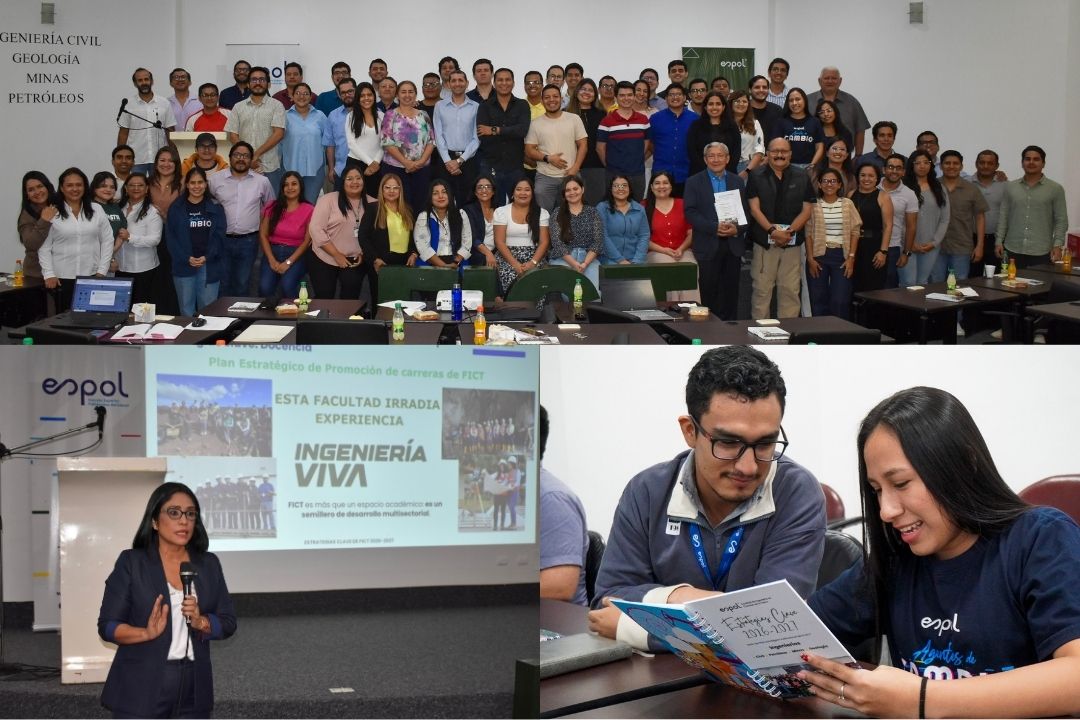


The Faculty of Geosciences Engineering (FICT) at ESPOL officially presents its institutional book, “Key Strategies 2026–2027: Vision of the FICT Institutional Strategic Plan,” a proposal that consolidates the strategic, academic, and human vision that will guide the school’s development in the coming years.
The book was developed with the participation of faculty administrators, academic coordinators, professors, and technical and administrative staff, under the overall direction of FICT Dean Paúl Carrión Mero, and with the support of a multidisciplinary team committed to strengthening the institution’s identity and projecting the faculty’s impact on society.
The publication stems from an analysis of the national context and its evolution, identifying challenges such as declining student enrollment at FICT and the need for institutional adaptation. The document includes information on the undergraduate programs in Geology, Mining, Petroleum Engineering, and Civil Engineering, as well as graduate programs, research projects, outreach initiatives, international cooperation, and institutional indicators. The publication serves as a tool that reflects FICT’s commitment to academic excellence, sustainability, and the country’s development.
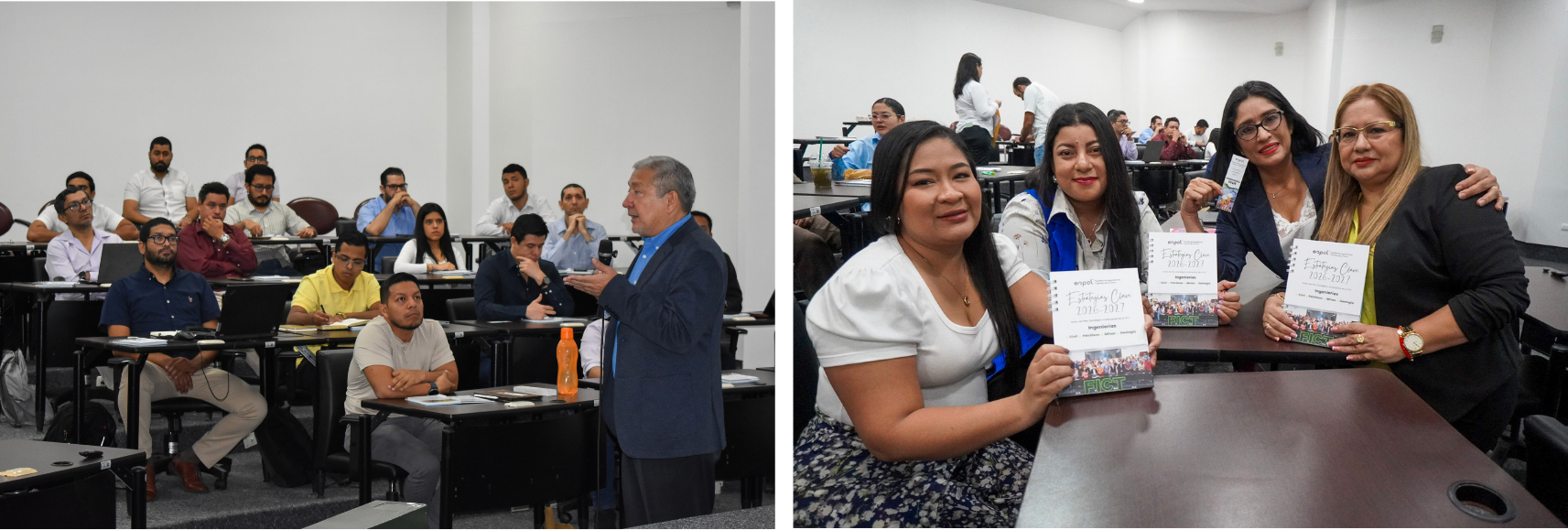
The book presents the vision of “Living Engineering,” a concept that promotes an education connected to the real-world challenges of the environment and fosters integration among teaching, research, innovation, and community engagement. It also addresses strategic issues related to sustainability, educational transformation, internationalization, academic accreditation, and the strengthening of scientific and technological capabilities.
Among the publication’s main themes are the FICT’s strategic plan for the 2026–2027 period, the strengthening of applied research and international cooperation, the promotion of skills geared toward sustainable development, the consolidation of specialized laboratories and graduate programs, and the promotion of academic outreach initiatives to inspire new generations of engineers.
The publication also recognizes the collective work of the entire FICT community, highlighting the contributions of faculty, students, technicians, assistants, and support staff, who contribute daily to the institution’s growth and the development of solutions for society.
Editorial and Contributing Team for the Institutional Book “Key Strategies 2026–2027: Vision of the FICT Institutional Strategic Plan”
Editor
Ing. Paúl Carrión Mero, Ph.D. – Dean of the FICT
Co-Editoras
Ing. Joselyne Solórzano Chauca, Ph.D.(c) – Coordinator of the Geological Engineering Program
Ing. Daniella Mora Villón, M.Sc. – Lab Technician 1
Ing. Diana Mejía Cela, M.Sc. – Lab Technician 1
Colaboradores
Ing. Kenny Escobar Segovia, M.Sc. – Associate Dean of the FICT
Ing. Cecibel Castillo Olvera, M.Sc. – Coordinator of the Petroleum Engineering Program
Ing. Paulina Vilela Govea, Ph.D. – Coordinator of the Civil Engineering Program
Ing. Silvia Loaiza Ambuludi, Ph.D. – Coordinator of the Mining Engineering Program
Maurizio Mulas, Ph.D. – Graduate Program Coordinator
Ing. Mijaíl Arias Hidalgo, Ph.D. – Research Coordinator
Ing. Freddy Carrión Maldonado, M.Sc. – Academic Mobility Coordinator
Ing. Carola Gordillo Vera, M.Sc. – Promotion Plan Coordinator
Lcda. Emily Chiriguaya Urdánigo – Director of the Communications Department
Through this initiative, FICT reaffirms its commitment to continuing to train professionals capable of leading transformation processes in the fields of Earth Sciences and Engineering, thereby actively contributing to the sustainable development of Ecuador and the region.
ACCESS to the institutional book
Sustainable Development Goals (SDGs)
SDG 4: Quality Education, through the strengthening of academic, scientific, and vocational skills.
SDG 9: Industry, Innovation, and Infrastructure, by promoting applied research, innovation, and technological advancement.
SDG 17: Partnerships for the Goals, through international cooperation and institutional collaboration.