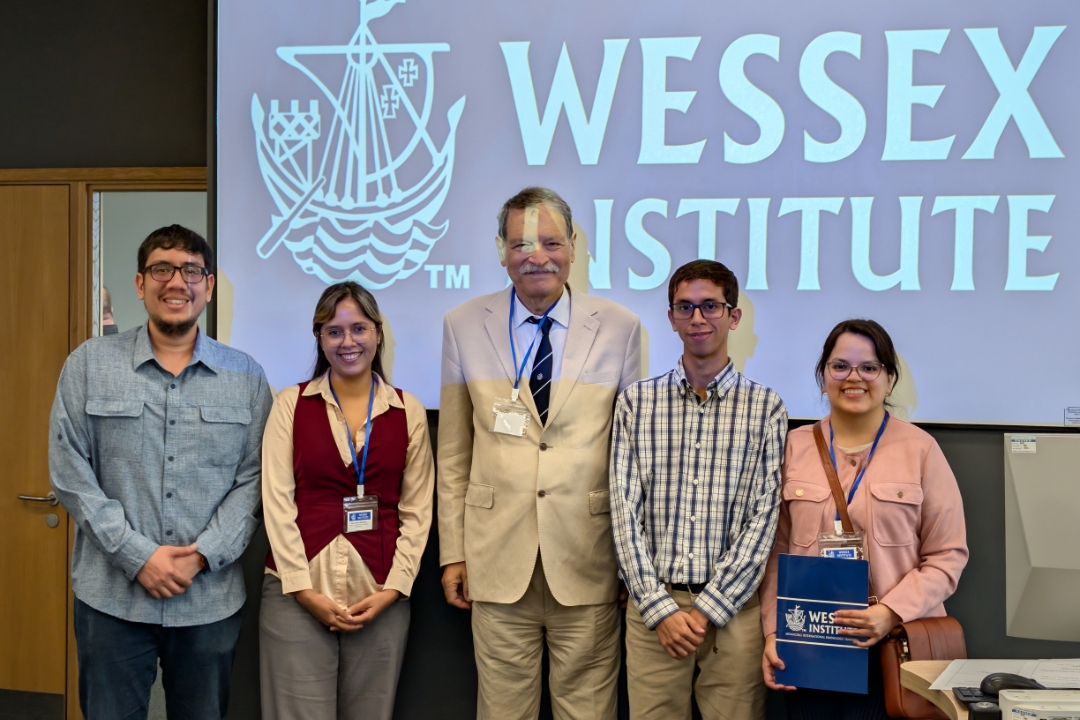
The Faculty of Geosciences Engineering (FICT), together with the Center for Research and Applied Projects in Earth Sciences (CIPAT), participated in the 31st International Conference on Modelling, Monitoring, and Management of Air Pollution (Air Pollution 2026), held June 8–10, 2026, at the University of the West of England (UWE) in Bristol, United Kingdom.
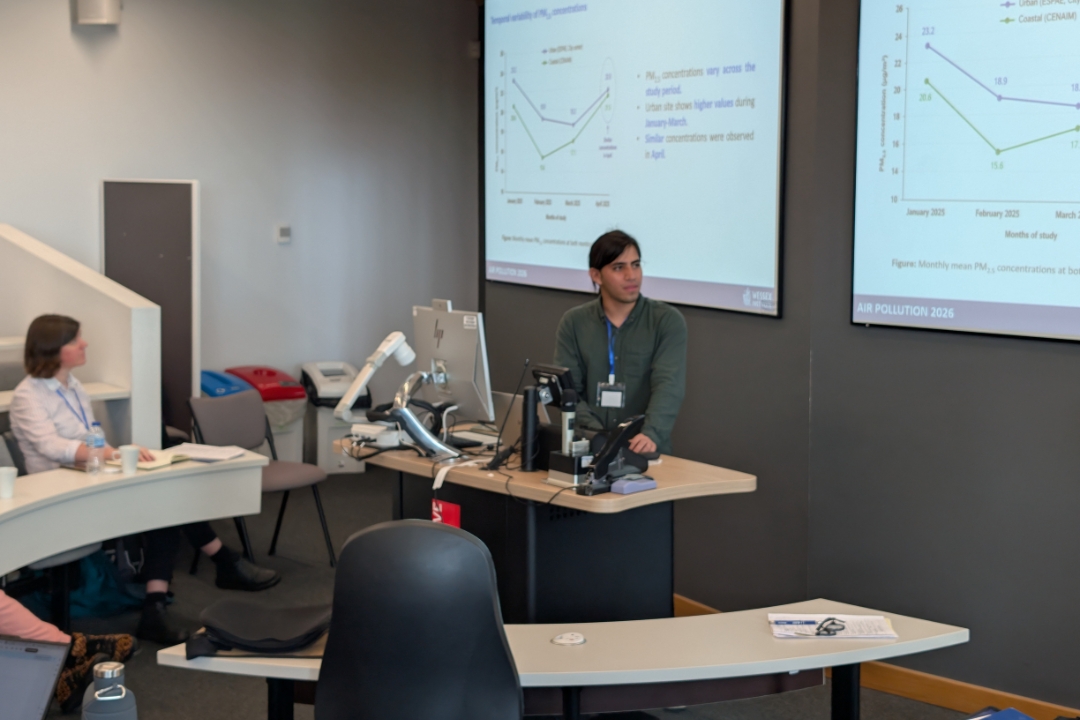
At this international conference, Jairo Dueñas, M.Sc., a research technician at CIPAT, presented a study titled “Spatial and Temporal Variability of PM2.5 in Coastal and Urban Areas of Southern Ecuador During the Rainy Season,” with Paúl Carrión, Ph.D., dean of FICT, listed as one of the authors.
The scientific study incorporates contributions from researchers, professors, and technical staff at ESPOL, who conducted an analysis aimed at understanding the behavior of fine particulate matter in different environments in southern Ecuador during the rainy season. These contributions help expand the scientific understanding of ecosystems and their environmental conditions.
The collaboration between FICT and CIPAT underscores the importance of interdisciplinary work within ESPOL for conducting applied research aimed at addressing environmental challenges. Furthermore, the university’s participation in such initiatives helps raise awareness of the research conducted at ESPOL and creates opportunities to further advance research in the fields of the environment, land use, and sustainability.
ESPOL Delegation Attends Air Pollution 2026
Jairo Dueñas Tovar, M.Sc., Eng.: Research Technician at CIPAT-ESPOL
Paúl Carrión Mero, Eng.: Dean of FICT, Professor in the Master’s programs in Geosciences and Geotechnical Engineering
Fernando Morante Carballo, Ph.D.: Director of CIPAT-ESPOL, Full Professor at FCNM, Coordinator of the Geo-Resources and Applications (GIGA) Research Group
María Jaya Montalvo, Ph.D. (c): Research Technician II (Ph.D. in Engineering at FIMCP), instructor in the master’s programs in Geosciences and Water Resources.
Sustainable Development Goals (SDGs)
SDG 3: Good Health and Well-being. Research provides scientific information on air quality and its relationship to environmental conditions that may affect populations.
SDG 11: Sustainable Cities and Communities. The analysis of air pollutants in urban areas contributes to the knowledge needed to promote more sustainable communities.
SDG 13: Climate Action. The generation of environmental data strengthens research and monitoring of variables related to current environmental challenges.