
Where does the water stored beneath the Galápagos Islands come from? How long does it take for rainwater to reach the aquifers? How vulnerable are these reserves to pollution, extraction, and climate change?
These are some of the questions that the project “Hydrochemical and Isotopic Assessment of Groundwater Recharge Dynamics and Vulnerability on Santa Cruz Island, Galápagos–Ecuador” will address. The proposal was selected by the International Atomic Energy Agency (IAEA) to receive international funding and join a scientific network comprising countries such as Australia, Samoa, Canada, Costa Rica, Barbados, Jamaica, Malta, and the Netherlands, dedicated to researching water-related challenges in island territories.
The research is part of Coordinated Research Project F31009, titled “Innovative Applications of Isotope Hydrology for the Sustainable Management of Water Resources on Small Islands,” which will be carried out between 2026 and 2029 in technical cooperation with the IAEA.
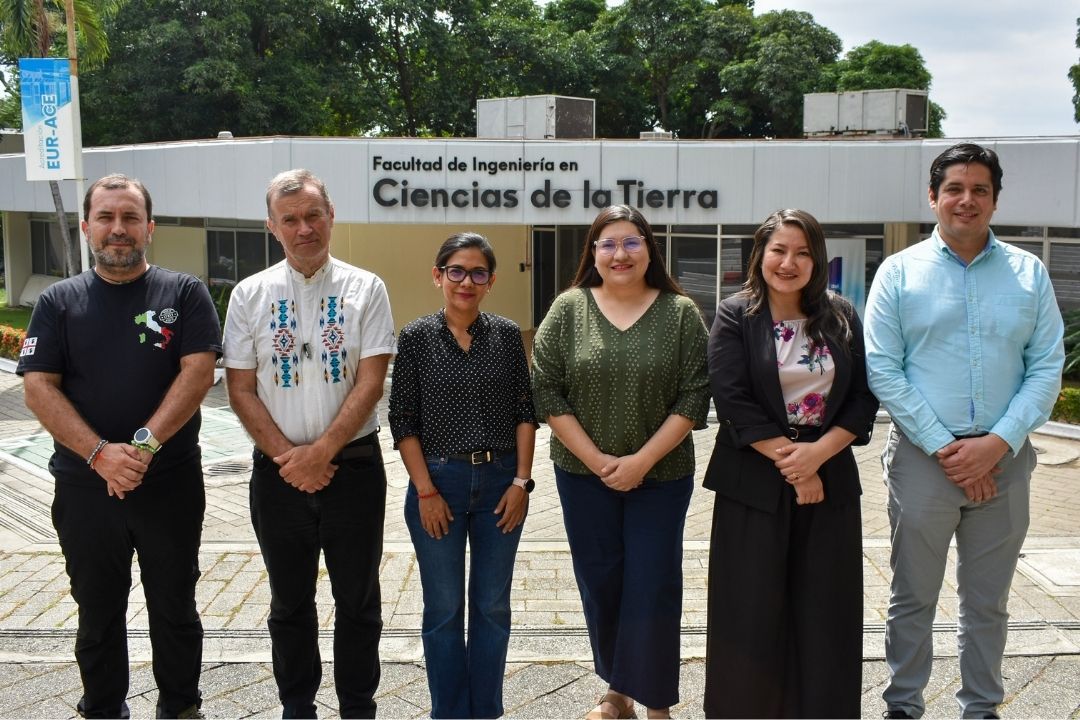
The project is led by Priscila Valverde, Ph.D., and co-led by Samantha Jiménez, Ph.D. The research team consists of Tomas Vitvar, Ph.D.; geologist Maurizio Mulas, Ph.D.; Daniel Garcés, M.Sc.; Johanna Zambrano, M.Sc.; and Leonardo Gutiérrez, Ph.D.
ESPOL’s participation will enable the hydrogeological conditions of the Galápagos to be incorporated into the international scientific discourse through the study of the relationship between rainfall, surface water, and groundwater on Santa Cruz Island. To this end, sampling campaigns for precipitation, surface water, and groundwater will be conducted to understand how aquifers are recharged, how long it takes for water to infiltrate, and what processes may affect its availability.
The project will apply tools from isotopic hydrogeology, a branch of science that studies the natural characteristics of water to reconstruct its path. In simple terms, isotopes function as a kind of fingerprint, as they allow researchers to identify the origin of water, recognize mixing processes, and analyze how it moves from rainfall to the subsurface.
The Ecuadorian team will also contribute to the study of the sulfur-35 (³⁵S) isotope. This technique will allow for the study of relatively recent recharge processes and will be validated using actual samples of rainwater, surface water, and groundwater collected in the Galápagos. The results will be interpreted in conjunction with hydrochemical, isotopic, and hydrological data.
In addition to generating scientific data, the project includes the Ecuadorian team’s participation in international coordination meetings, the dissemination of results, and the production of joint scientific publications.
The information generated will support water resource planning and decision-making aimed at conserving the water sources on which the island’s communities depend.
Understanding the water cycle will make it possible to anticipate risks, protect aquifers, and help ensure that the population of Santa Cruz has access to scientific information to address future challenges related to water supply.
Sustainable Development Goals (SDGs) 6, 11, 13, 17
SDG 6 - Clean Water and Sanitation
SDG 11 - Sustainable Cities and Communities
SDG 13 - Climate Action
SDG 17 - Partnerships for the Goals