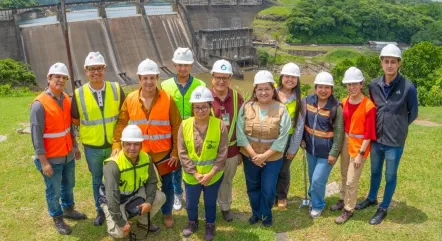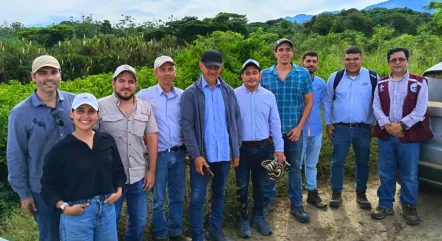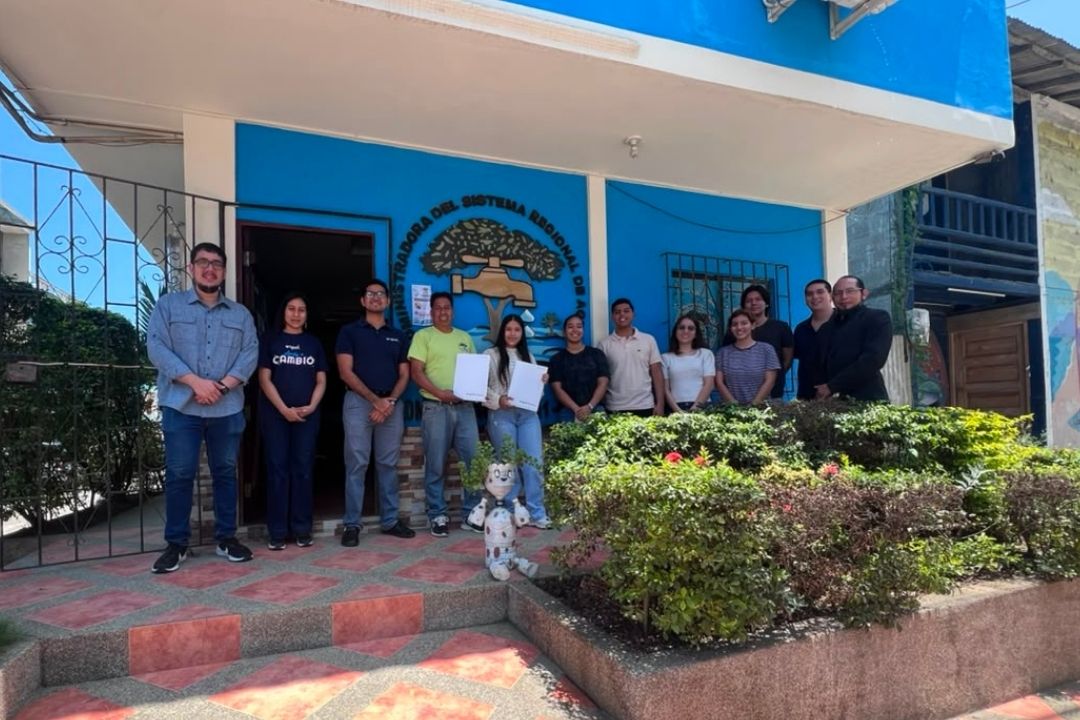


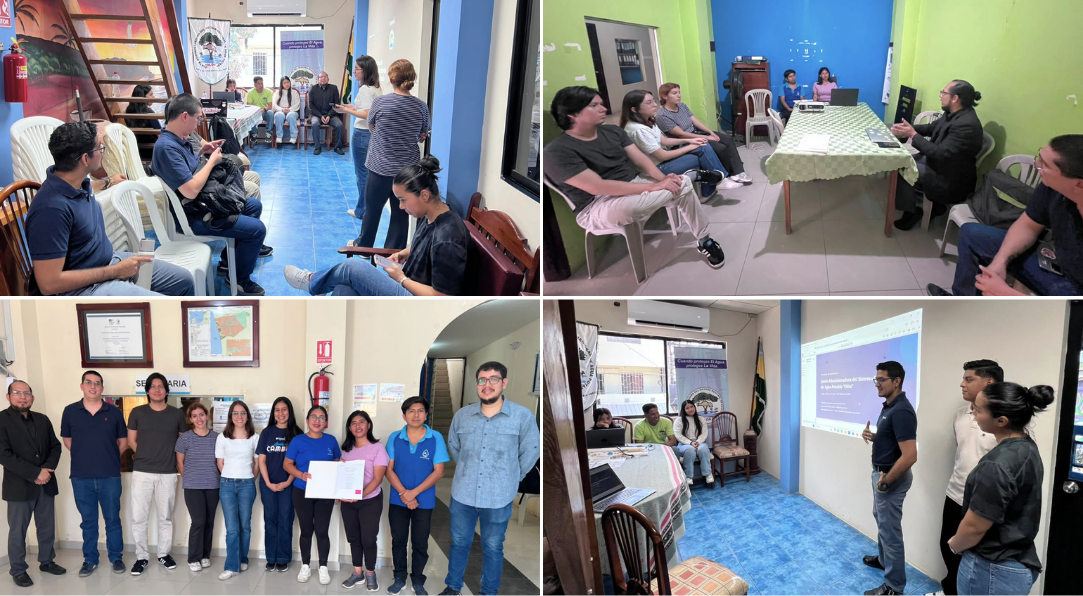
ESPOL students presented and delivered products developed during their community service internships as part of the Faculty of Geosciences Engineering (FICT) project “Water Harvesting and Storage (SyCA): Strengthening Community Resilience.” The event took place on Friday, August 21, 2026, in the communities of Manglaralto and Olón, at the facilities of the Manglaralto Regional Drinking Water Administrative Board (JAAPMAN) and the Olón Regional Drinking Water System Administrative Board (JASRAPO).
The project “Water Seeding and Harvesting (SyCA): Strengthening Community Resilience,” led by FICT-ESPOL, is part of the “Integrated Coastal Management in the Manglaralto Parish” program of the Faculty of Maritime Engineering and Marine Sciences (FIMCM). The project is led by Josué Briones Bitar, M.Sc. It is co-directed by Paúl Carrión Mero, Ph.D., dean of the Faculty of Geosciences Engineering, and coordinated by María Fernanda Jaya, M.Sc. A research technician from CIPAT and FIMCP, with the participation of researchers and technicians from the Center for Research and Applied Projects in Earth Sciences (CIPAT-ESPOL).
From the Computer Science department, instructor Víctor Hugo Cruz, a professor at ESPOL, along with five students, conducted an assessment of the hardware and technological infrastructure of JAAPMAN and JASRAPO, in addition to identifying needs related to these resources. This work provided technical information to support the management of the water management boards.
Meanwhile, mentor Humberto Morán Rodríguez, a professor at ESPOL, along with two students from the Auditing and Management Control program, developed an updated chart of accounts in accordance with International Financial Reporting Standards (IFRS) and International Accounting Standards (IAS), as well as a 2022 management audit report for JASRAPO.
The deliverables address needs identified directly within the community organizations and allow students to apply academic knowledge in real-world contexts. The experience also strengthens students’ professional competencies through their participation in processes of diagnosis, analysis, and the development of tools for institutional management.
Collaboration among students, researchers, and community organizations helps build capacities and develop tools that support local water management, while also strengthening experiential learning and ESPOL’s connection to the needs of the communities of Manglaralto and Olón.
Sustainable Development Goals (SDGs)
SDG 4: Quality Education. For integrating academic training with community service experiences and the practical application of knowledge.
SDG 6: Clean Water and Sanitation. For contributing to capacity-building in the management of community drinking water systems.
SDG 17: Partnerships for the Goals. For bringing together students, teachers, researchers, and community organizations to develop solutions for the region.