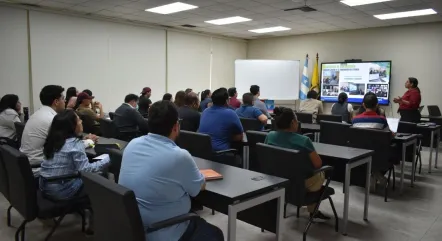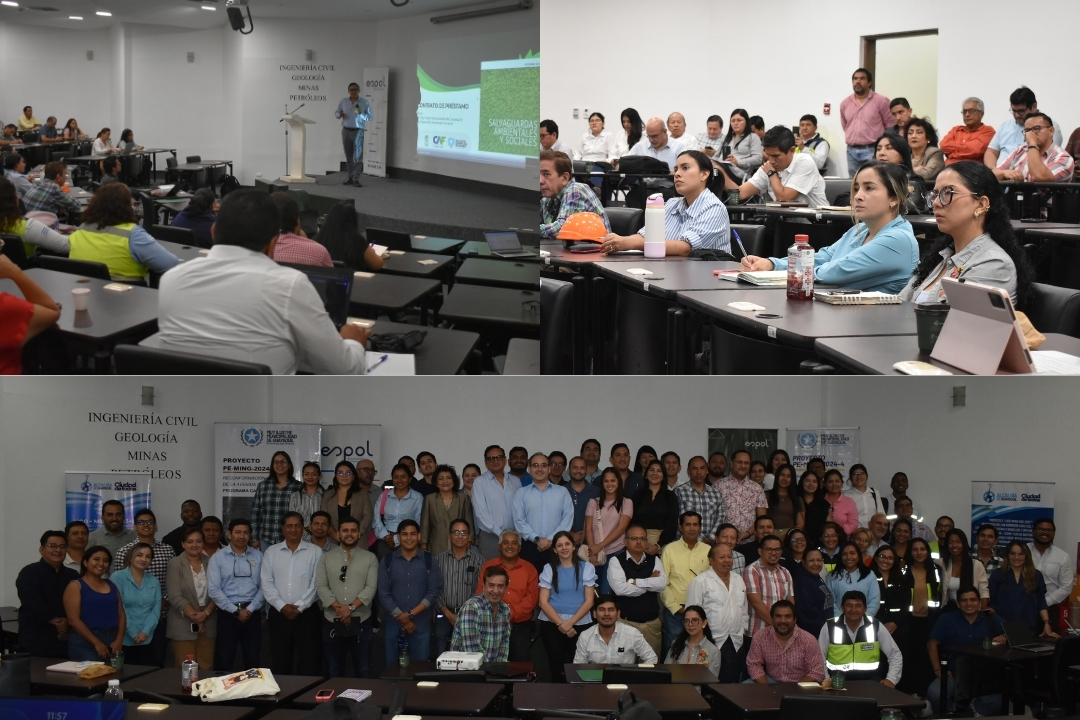

On April 17, 2026, an introductory and kick-off session for the consulting project on the design and implementation of an external environmental and social monitoring and auditing program was held in the Satellite Lecture Hall of the Faculty of Geosciences Engineering at ESPOL. This initiative is aimed at the CAF program projects promoted by the Decentralized Autonomous Municipal Government of Guayaquil.
The event brought together construction contract administrators and supervisors, as well as environmental, forestry, industrial safety, and social specialists from construction contractors and supervisory teams. Representatives from the Coordination of Externally Funded Projects within the General Directorate of Public Works of the Municipality of Guayaquil also participated, creating a technical forum for coordination among the stakeholders involved in project implementation.
The session was led by the AASE CONSORTIUM, a consulting firm contracted by the Municipality as part of the commitments made to CAF, the entity financing the program. During the session, the consulting firm’s working methodology was presented, which includes monitoring compliance with the provisions established in the projects’ environmental authorizations and CAF’s environmental safeguards.
The components reviewed included environmental compliance indicators, pollution levels generated by the construction work, variables related to climate change, budget execution for environmental items, industrial safety, community relations, and agronomic aspects. In addition, communication mechanisms were established between the audit team and the various stakeholders to ensure proper information management throughout the process.
Likewise, the planning of activities for data collection and monitoring was addressed, which will be carried out over a period of 720 days, in accordance with the consulting contract. This process will allow for verification of compliance with current environmental regulations and national and local public policies, as well as the safeguards established by CAF.
The participation of ESPOL, through the Faculty of Geosciences Engineering as the host of the meeting, highlights the contribution of academia to institutional capacity building. Such forums promote coordination among the public, private, and academic sectors and contribute to the development of strategies for the responsible management of environmental and social impacts resulting from civil engineering projects, for the benefit of the city and the country.
Sustainable Development Goals (SDGs)
SDG 11: Sustainable Cities and Communities
SDG 13: Climate Action
SDG 16: Peace, Justice, and Strong Institutions
SDG 17: Partnerships for the Goals