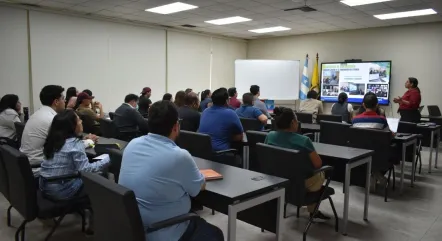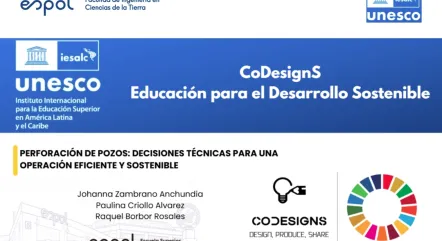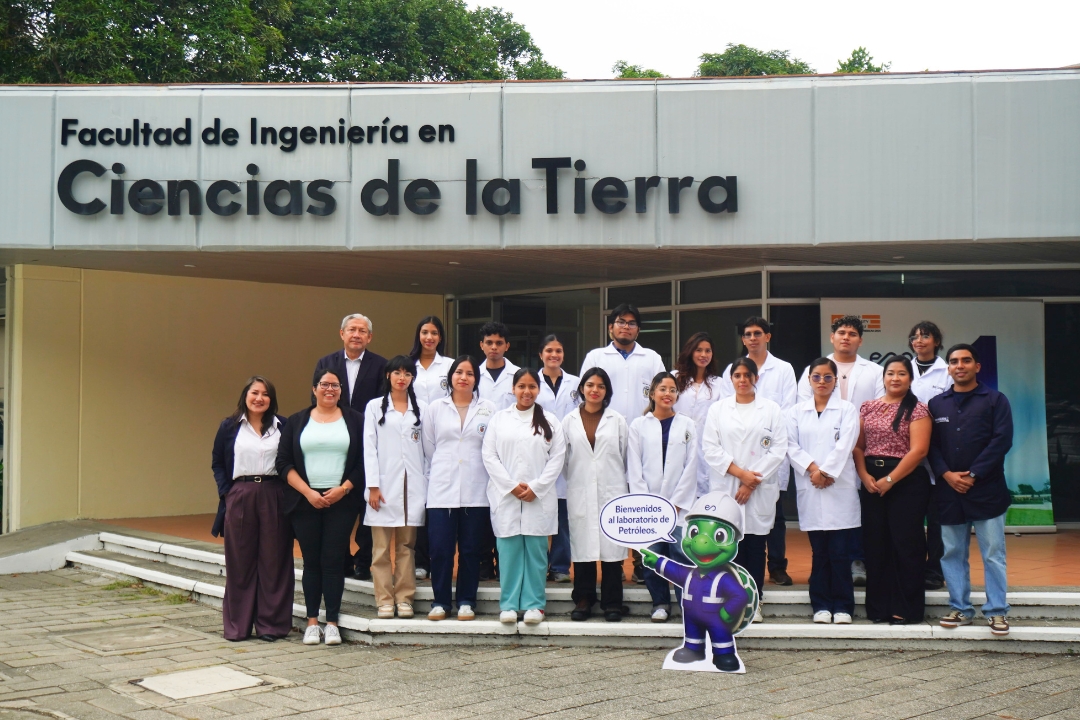


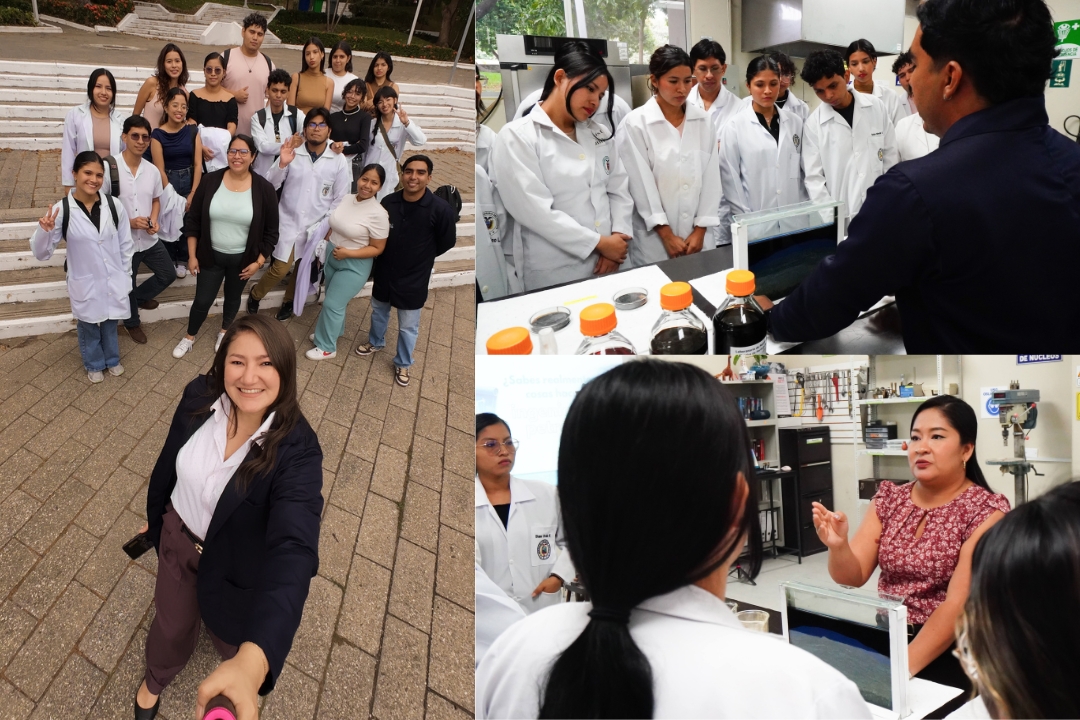
On July 31, 2026, students in the Environmental Engineering program at the Agrarian University of Ecuador visited ESPOL’s Petroleum and Drilling Fluids Laboratory to expand their knowledge of the processes associated with the hydrocarbon industry and their relationship to the assessment, prevention, and management of environmental impacts.
The visit drew on the experiences gained through the project “Assessment of Environmental Pollution Resulting from Hydrocarbon Activities,” led by Johanna Zambrano Anchundia, M.Sc., co-directed by Samantha Jiménez O., Ph.D., and with technical support from Janner Galarza, M.Sc.
During the tour, topics related to the collection and analysis of environmental samples, the identification of potential sources of pollution, exposure pathways, and the assessment of risks to human health were discussed. These topics allowed participants to connect their knowledge of environmental engineering with the technical and operational aspects of the hydrocarbon industry.
The event also provided a forum for exchange between the Environmental Engineering and Petroleum Engineering departments, during which production activities were analyzed from a comprehensive perspective. This dialogue allowed for a discussion of the relationship between industrial processes, the technologies employed, and measures for the prevention, control, and monitoring of potential environmental impacts.
For the visiting students, the experience provided a deeper understanding of the processes involved in the hydrocarbon industry and the aspects related to its environmental assessment. The integration of these two fields contributes to an interdisciplinary education that fosters an understanding of the challenges associated with hydrocarbon production and the responsible management of its potential impacts.
The delegation from the Agrarian University of Ecuador was accompanied by Isabel Silva, M.Sc., the students’ academic advisor. On behalf of ESPOL, the visit was hosted by Cecibel Castillo Olvera, M.Sc., coordinator of the Petroleum Engineering program, who emphasized the importance of creating opportunities for academic exchange that strengthen interdisciplinary education and expose students to the challenges of the industry and environmental management.
These types of activities strengthen collaboration between institutions of higher education and create opportunities to share knowledge related to the hydrocarbon industry and environmental management. They also help students explore different professional perspectives for addressing issues related to the energy sector and the environment.
Sustainable Development Goals
SDG 9: Industry, Innovation, and Infrastructure. For promoting knowledge about processes, technologies, and practices associated with the hydrocarbon industry.
SDG 12: Responsible Consumption and Production. For addressing the assessment and management of potential environmental impacts resulting from production activities.
SDG 17: Partnerships for the Goals. For strengthening academic exchange and collaboration among institutions of higher education.