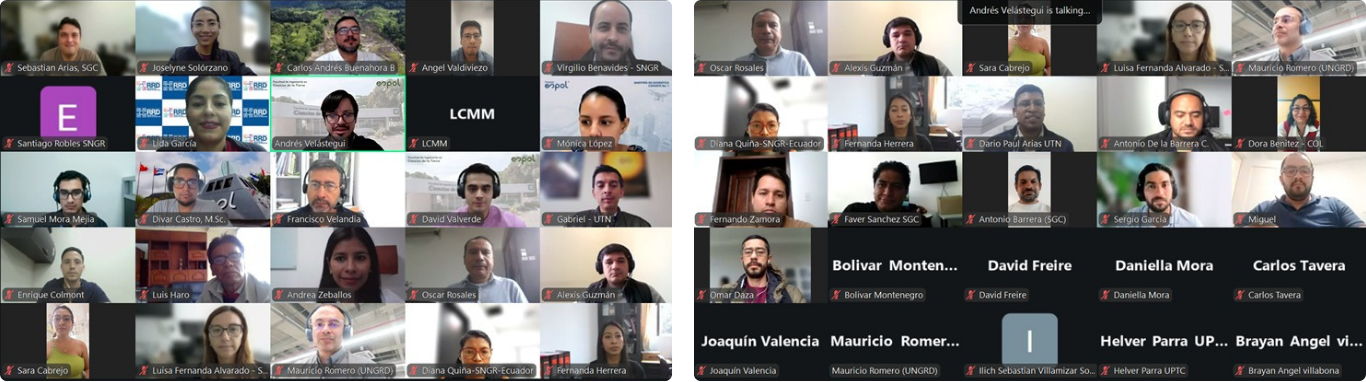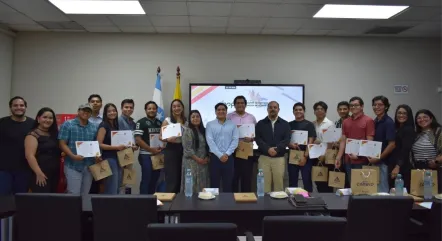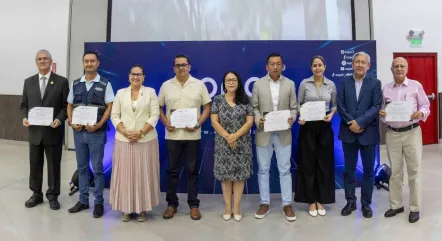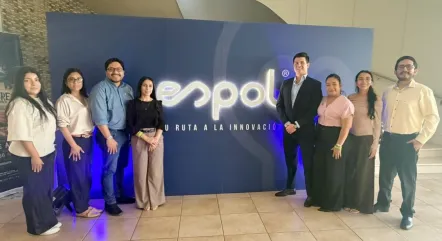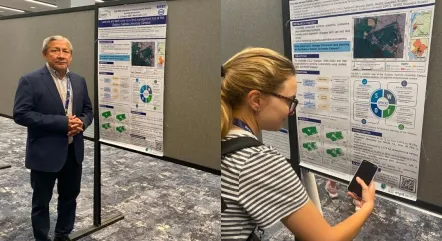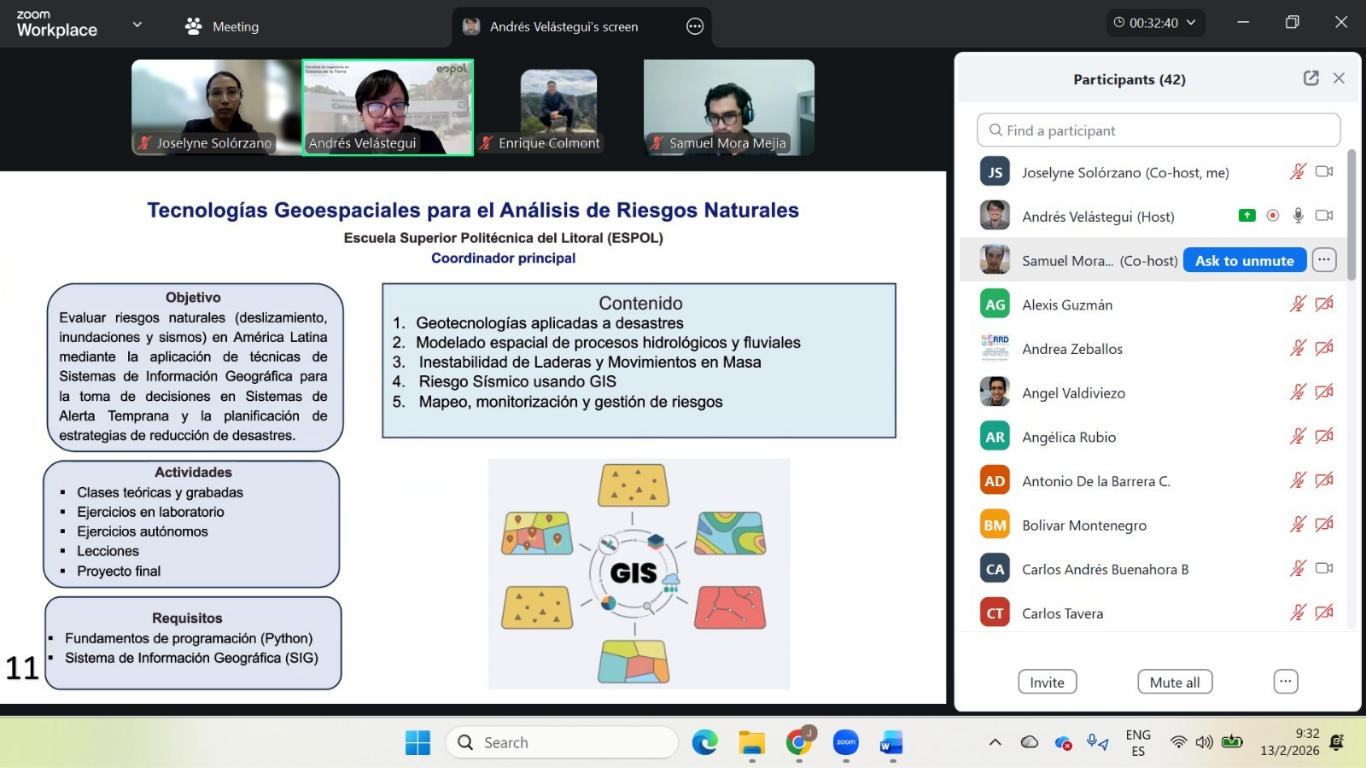


On Friday, February 13, 2026, the Advisory Board of the project Spatial Tools for Assessing Risks in Sudden Natural Hazards (STARS) was held online via Zoom. The meeting aimed to present the scope of the project to stakeholders and share the course syllabi that will be developed, in order to receive feedback for their academic and technical strengthening.
Representatives from organizations in Ecuador and Colombia linked to disaster risk management and territorial planning participated in this session.
Participants from Colombia included:
Secretaría Departamental de Gestión de Riesgos de Desastres de Boyacá
Gestión del Riesgo de Desastre de la Corporación Autónoma Regional de Boyacá (CORPOBOYACÁ)
Servicio Geológico Colombiano (SGC), la Unidad Nacional para la Gestión del Riesgo de Desastres (UNGRD)
Empresa Ingeotecnia SAS
Red Universitaria para las Américas y el Caribe en Reducción del Riesgo de Desastres
Consejo Profesional de Geología (CPG)
Participants from Ecuador included:
Secretaría Nacional de Gestión de Riesgos (SNGR)
Empresa Pública Municipal para la Gestión de Riesgos y Control de Seguridad de Guayaquil (SEGURA EP)
The STARS Project is funded by the European Union through the Erasmus+ Programme and is led by the University of Lisbon. It also includes the participation of Lund University, the UTN, the UIS, the UPTC, and the ESPOL. Its purpose is to strengthen prevention and mitigation measures against threats of flooding, mass movements, and earthquakes in South America through the use of Geographic Information Systems (GIS), Geospatial Artificial Intelligence, Building Information Modeling (BIM), and Earth observation data.
For ESPOL, participation in this international project contributes to strengthening academic and technical capacities in risk management, as well as coordination with public entities, the productive sector, and universities in the region. The feedback received will allow for the consolidation of training programs aligned with the real needs of the territory, benefiting students, teachers, and professionals involved in natural hazard management.
The initiative reinforces the institutional commitment to the generation of applied knowledge, international cooperation, and technical support for decision-making in public policies related to disaster risk reduction.
Sustainable Development Goals (SDGs)
SDG 3: Climate action
SDG 4: Quality Education
SDG 11: Sustainable Cities and Communities
SDG 17: Partnerships for the Goals