

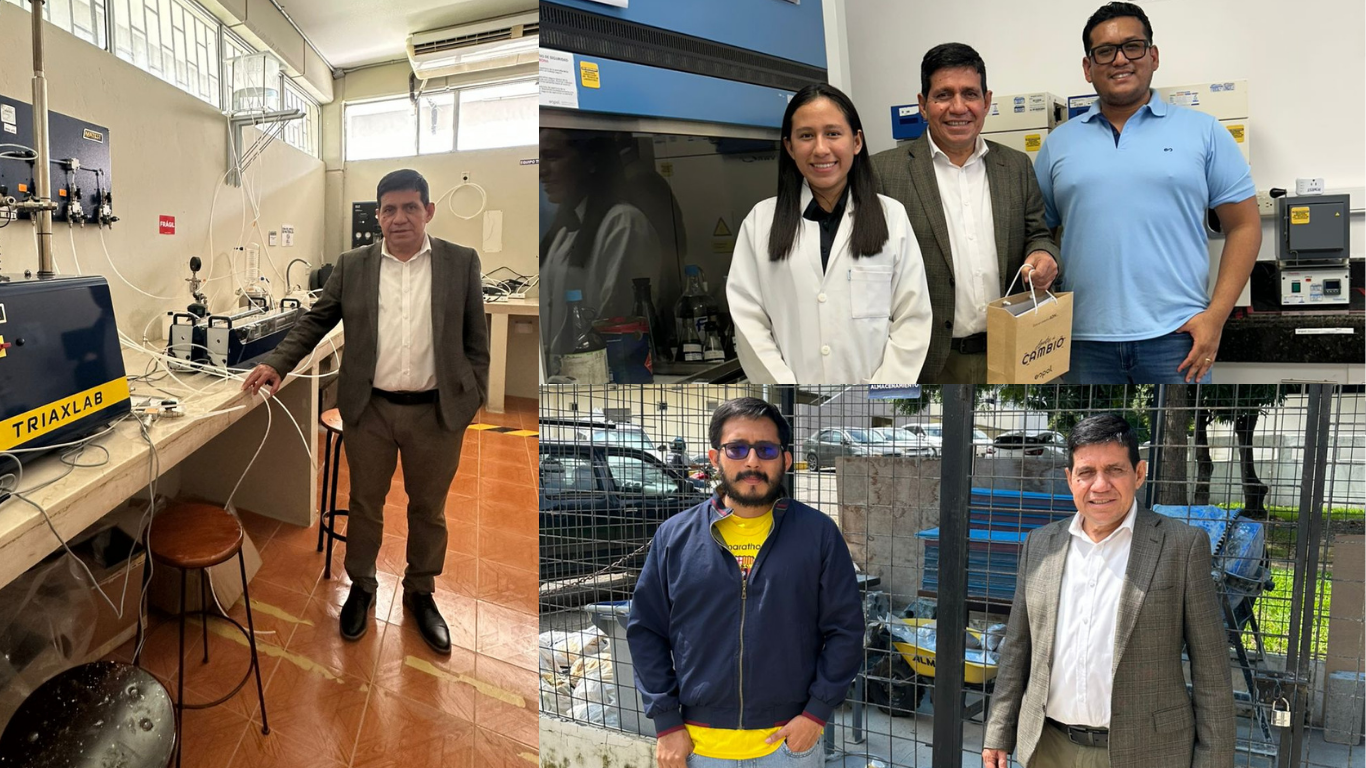
 On February 26, 2026, the Faculty of Earth Sciences Engineering (FICT) of the Escuela Superior Politécnica del Litoral (ESPOL) received a visit from the dean of the Faculty of Engineering Sciences of the Universidad Técnica Estatal de Quevedo (UTEQ), with the aim of learning about the technical and academic capabilities of the faculty's laboratories.
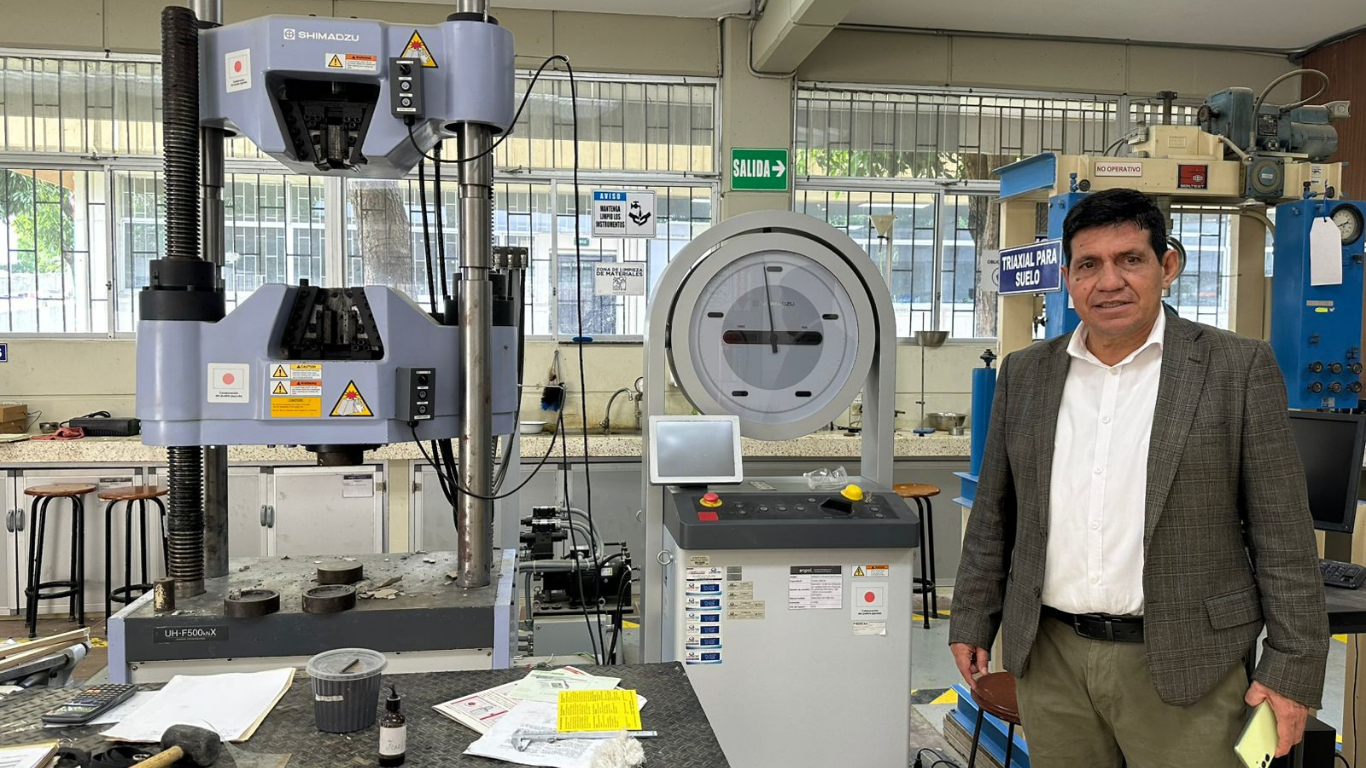
During the visit, a tour was given of the Geotechnical and Construction laboratories, as well as the Sanitary laboratory, where the main equipment, working methodologies, and tests carried out as part of the academic training and applied research projects were presented.
Demonstration of specialized equipment and tests
During the tour, visitors were able to observe demonstrations of the operation of various laboratory equipment, as well as an explanation of the technical activities carried out in these facilities.
Highlights included geotechnical and construction material testing, as well as tests related to analysis and quality control in the area of sanitary engineering. These activities showcased the technical capabilities of the FICT to support academic processes, research, and specialized services.
Degree programs represented during the visit
The UTEQ Faculty of Engineering Sciences offers several degree programs related to the areas visited, including:
Architecture
Electrical Engineering
Environmental Engineering
Civil Engineering
Mechanical Engineering
The exchange allowed for the identification of points of common interest between both institutions, especially in areas related to infrastructure, materials, and technologies applied to engineering.
Prospects for academic cooperation
One of the main objectives of the visit was to explore opportunities for collaboration between both universities, particularly in the use of specialized laboratories.
Given that the UTEQ engineering faculty is relatively new and is still strengthening its technical infrastructure, the possibility of conducting tests in the FICT laboratories was raised, as well as promoting academic exchanges that would allow students and teachers to gain practical experience and expertise in the use of specialized equipment.
Such initiatives help strengthen inter-institutional cooperation, promote applied research, and expand practical training opportunities for students, thereby consolidating academic ties between universities in the country.