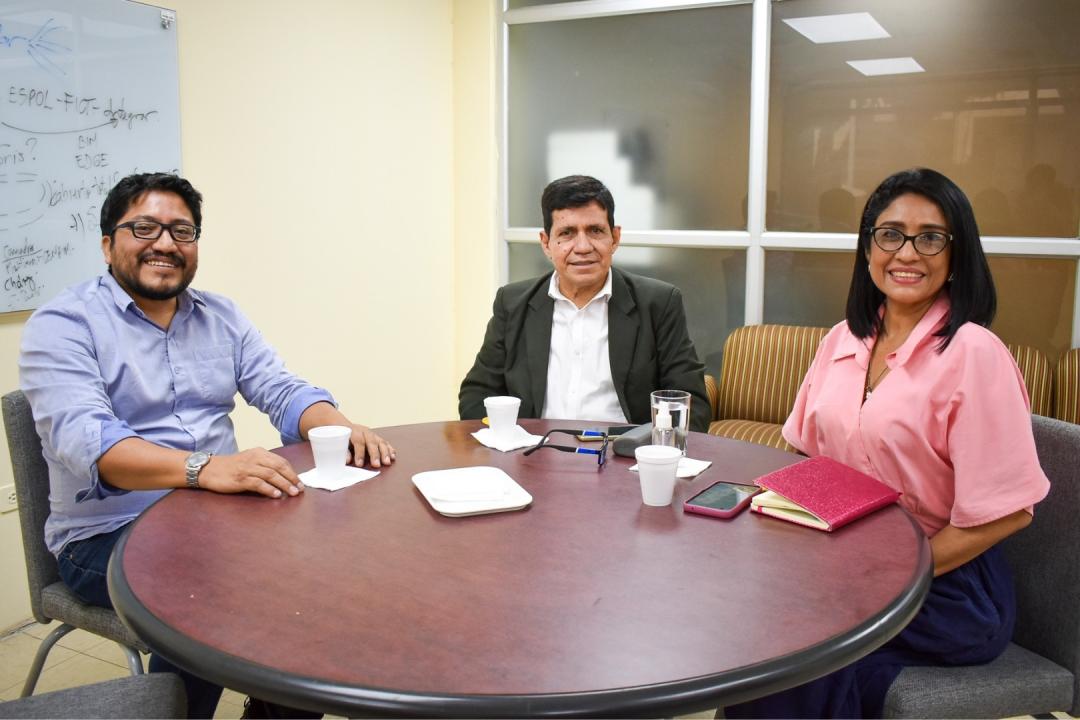


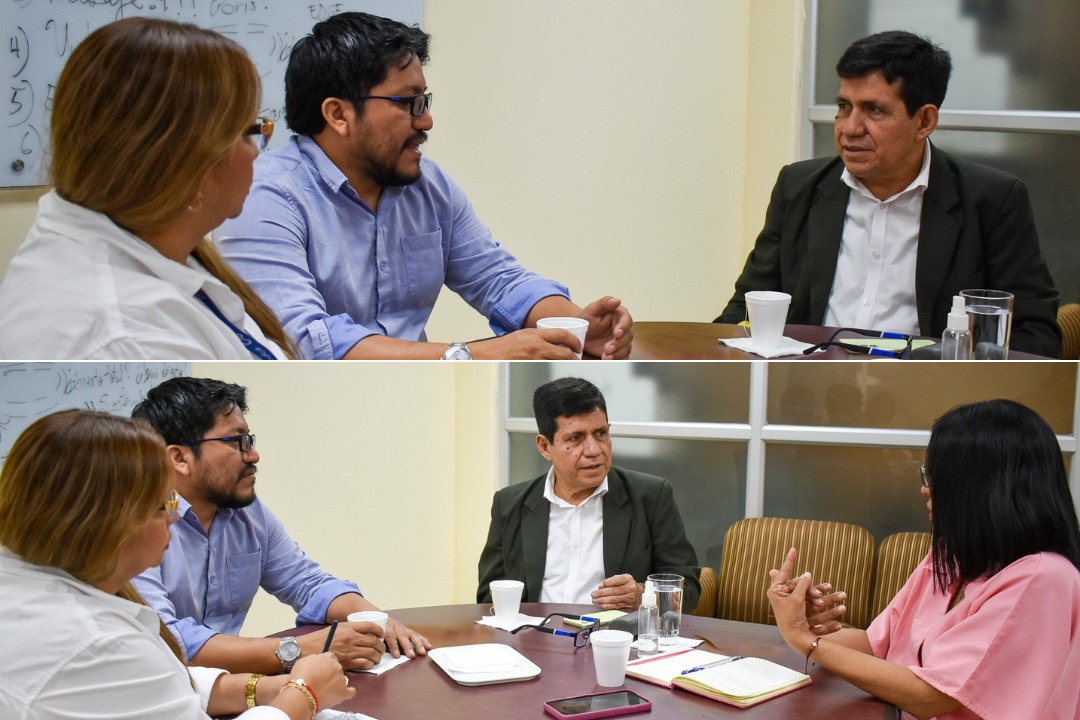
On July 17, 2026, ESPOL’s Faculty of Geosciences Engineering (FICT) hosted the Quevedo State Technical University (UTEQ) for a working meeting aimed at strengthening academic, scientific, and technological cooperation between the two institutions. The meeting took place within the framework of the current Framework Agreement and Specific Agreement, which promote joint initiatives in research, innovation, knowledge transfer, and academic training.
The meeting was attended by Kenny Escobar, M. Eng., acting dean of the FICT, and Carola Gordillo, M.Sc., coordinator of Career Promotion, representing ESPOL; while UTEQ was represented by Roberto Pico Saltos, Ph.D., dean of the Faculty of Engineering Sciences.
During the meeting, opportunities were discussed to develop research projects with regional impact, particularly those focused on addressing the challenges facing the Los Ríos province. The identified areas of collaboration involve leveraging the scientific and technical capabilities of both institutions to generate applied solutions that contribute to the country’s sustainable development.
In addition, discussions were held regarding the possibility of sharing specialized infrastructure—particularly the Soil Mechanics and Sanitary Engineering laboratories at FICT—with the aim of strengthening academic and research activities. This cooperation will help supplement the practical training of students in UTEQ’s first engineering cohort.
As part of the event, the UTEQ representative toured the Geotechnical and Sanitary Engineering laboratories to learn about their technical capabilities and explore opportunities for joint activities. The shared use of scientific infrastructure is a mechanism that strengthens inter-institutional cooperation and optimizes the resources allocated to education and research.
The agreement between ESPOL and UTEQ includes joint initiatives related to scientific research and technological development; innovation and knowledge transfer; engagement with society and the productive sector; continuing education; the development of inter-institutional projects; the provision of specialized services; and the exchange of academic and technical expertise.
The meeting reaffirms the commitment of FICT and ESPOL to generating applied knowledge, training highly qualified professionals, and strengthening strategic partnerships that contribute to Ecuador’s scientific, technological, and social development.
Sustainable Development Goals (SDGs)
SDG 4. Quality Education. Strengthening academic training through access to specialized infrastructure and inter-institutional cooperation.
SDG 9. Industry, Innovation, and Infrastructure. Promoting applied research, innovation, and technology transfer for regional development.
SDG 17. Partnerships for the Goals. Strengthening strategic partnerships among institutions of higher education to enhance scientific capabilities and generate social impact.