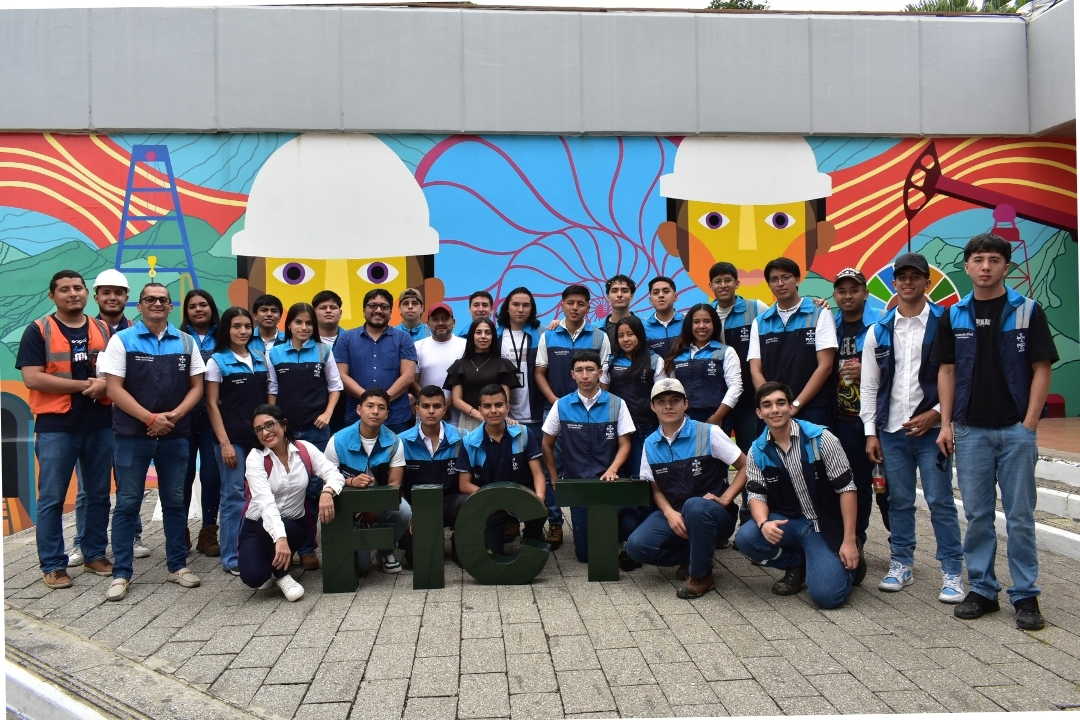


With the aim of strengthening their academic training through exposure to specialized scientific infrastructure, civil engineering students from the Pontifical Catholic University of Ecuador (PUCE), Santo Domingo Campus, made an academic visit to the laboratories of the Faculty of Geosciences Engineering (FICT) at ESPOL.
The delegation was received by Kenny Escobar, M.Sc., associate dean of FICT, who welcomed the visitors and highlighted the importance of these facilities in complementing professional training by allowing future engineers to gain firsthand experience with technologies, methodologies, and research projects.
The tour was led by Carola Gordillo, M.Sc., FICT’s Outreach Coordinator, along with technicians Sebastián Suárez, M.Sc., and Erick Veas, who served as hosts and accompanied the students throughout the day.
During the visit, the students toured four specialized laboratories that support teaching, research, and community engagement. At the Mineral Processing Laboratory, they learned about different methodologies for mineral recovery, and research projects were highlighted, such as “Evaluation of the Recovery Potential of Critical Minerals Present in Mining Waste,” funded by CEDIA through a successful grant application. At the Petroleum and Drilling Fluids Laboratory, they observed demonstrations on hydrocarbon characterization and learned about partnerships with the oil industry aimed at strengthening academic training. At the Geotechnical, Construction, and Surveying Laboratory (GCT), they learned about the equipment and methodologies used for geotechnical studies and construction materials, with a focus on research aimed at preventing risks associated with soil behavior.
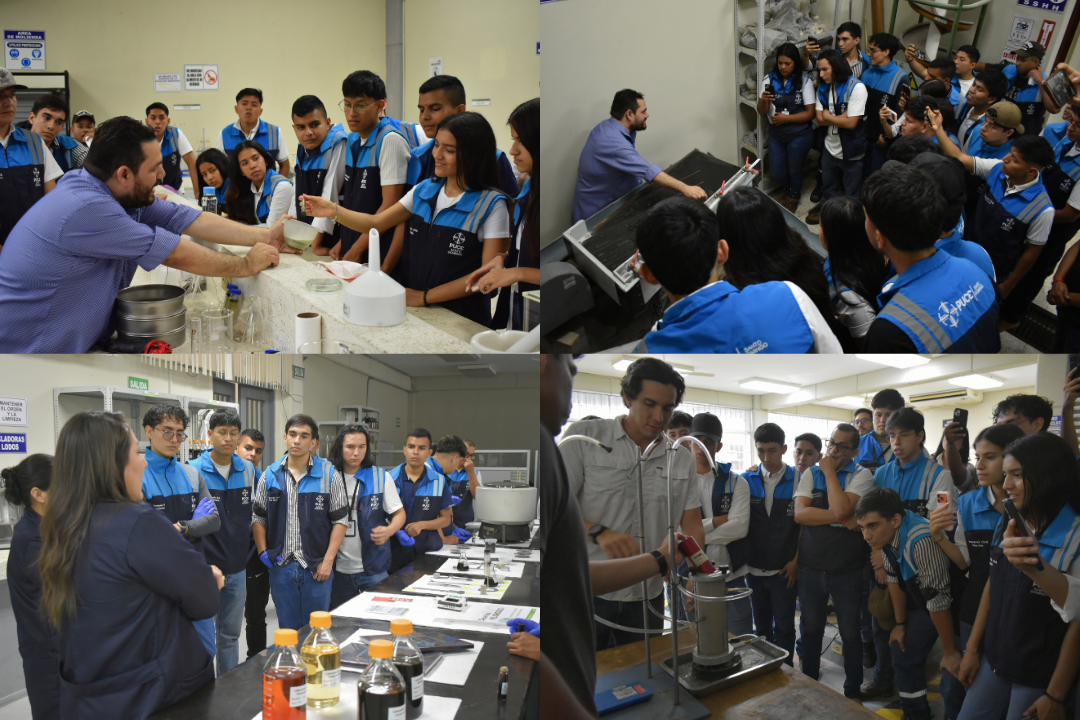
In addition, at the Water Quality Laboratory, they learned about tests used to evaluate water and wastewater quality, such as the determination of Chemical Oxygen Demand (COD) and the jar test for water purification processes. Finally, at the Geo-engineering and Advanced Processes Research Laboratory (GEA-RLab), they were presented with internationally funded research projects related to carbon capture, utilization, and storage (CCUS), as well as research on membrane technologies and water desalination developed in collaboration with foreign universities.
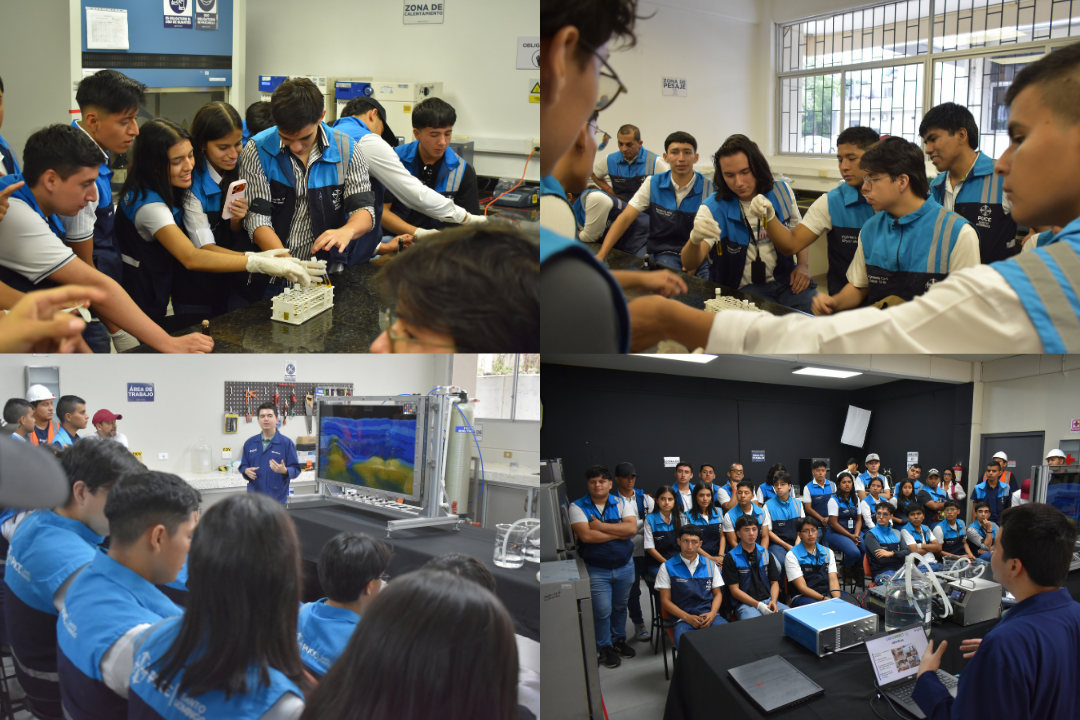
At the end of the day, Juan Carlos Sosa, an engineering professor at PUCE Santo Domingo and head of the delegation, thanked ESPOL and the dean of the Faculty of Geosciences Engineering, Paúl Carrión, Ph.D., for their hospitality during the visit. He emphasized that these types of experiences allow students to understand how the knowledge acquired in the classroom is applied in real-world scenarios of research and technological development, strengthening their training as future civil engineers.
Through initiatives like this, the FICT reaffirms its commitment to fostering partnerships between institutions of higher education and promoting learning opportunities that expose students to research, innovation, and the use of high-level scientific infrastructure.
Sustainable Development Goals (SDGs)
SDG 4: Quality Education
SDG 17: Partnerships for the Goals