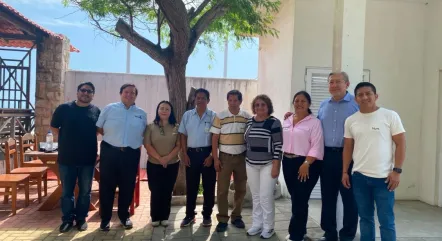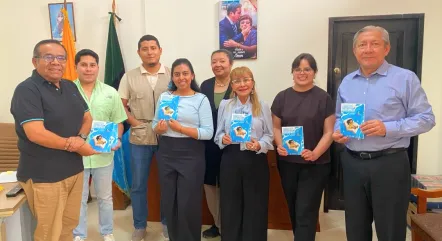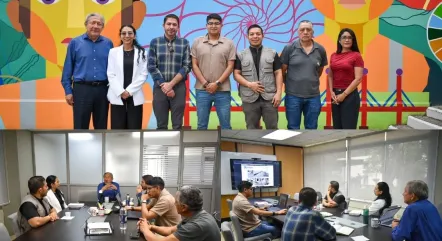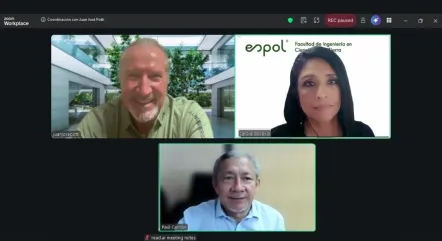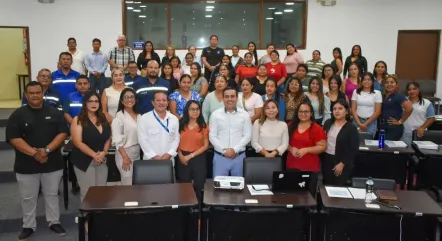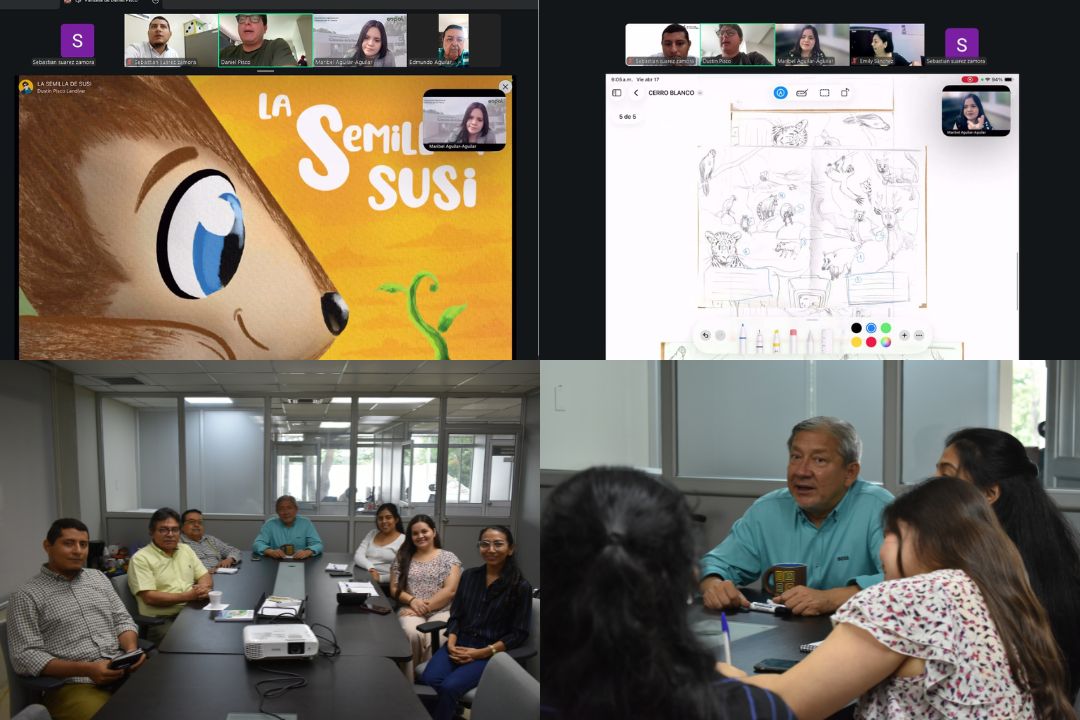

The Faculty of Geosciences Engineering (FICT) and the Center for Research and Applied Projects in Geosciences (CIPAT) at the Escuela Superior Politécnica del Litoral (ESPOL) are developing the “Chongón-Colonche Mágico” publishing initiative as part of the UNESCO Chair in Geosciences Applied to Sustainable Development. This collaborative process has been underway since 2025 in a blended format and is projected to continue through 2026, with the participation of the Faculty of Art, Design, and Audiovisual Communication (FADCOM), faculty members, researchers, and students. The project is advised by anthropologist Edmundo Aguilar and promotes an interdisciplinary approach that integrates scientific knowledge with local knowledge.
The initiative promotes the creation of narrative and audiovisual content that brings together science, culture, and the local landscape, inspired by the geocultural richness of the Chongón-Colonche mountain range. Among its main outputs are the cultural-scientific video on the Kamanchaka and the upcoming publication Chongón-Colonche Mágico. The book will bring together six narrative stories that will bring to life the geodiversity, biodiversity, and ancestral memory of the region. Through characters inspired by emblematic species such as the margay—the symbol of the Faculty of Geosciences Engineering (FICT)—and the region’s cultural knowledge, these stories will bring science closer to the community in a creative way, strengthening local identity and promoting the conservation of the region’s natural and cultural heritage.
From the FICT and CIPAT, this initiative is established as a science outreach strategy that strengthens the transfer of knowledge to society. The participation of professors, researchers, and students ensures the academic rigor of the content, while fostering social appropriation of knowledge and dialogue between the community and academia.
Participants in this initiative:
Edmundo Aguilar Navarro, M.Sc., Anthropologist and Advisor to the UNESCO Chair in Geosciences Applied to Sustainable Development
Paúl Carrión, Ph.D., Dean of FICT, Researcher at CIPAT, and Director of the UNESCO Chair in Geosciences Applied to Sustainable Development
María Fernanda Jaya, Ph.D. (c) – Researcher at CIPAT-ESPOL and Co-Director of the UNESCO Chair in Geosciences Applied to Sustainable Development
Maribel Aguilar, Ph.D. (c) – Professor at FICT, Researcher at CIPAT, and Coordinator of the UNESCO Chair in Geosciences Applied to Sustainable Development
Fernando Morante, Ph.D. – Director of CIPAT and Professor at the Faculty of Natural Sciences and Mathematics (FCNM)
Emily Sánchez, Ph.D.(c) – Researcher at CIPAT-ESPOL and Coordinator of the UNESCO Ecohydrology Demonstration Site “Manglaralto River-Aquifer System”
Sebastián Suarez, M.Sc. – FICT Researcher
Faculty and students from the Faculty of Art, Design, and Audiovisual Communication (FADCOM)
This project reflects the commitment of FICT and CIPAT to generating applied knowledge and fostering its connection with the local community. Its continuation through 2025 and 2026 will help consolidate a model of scientific communication that integrates culture, territory, and sustainability, with an impact on the educational and social spheres.