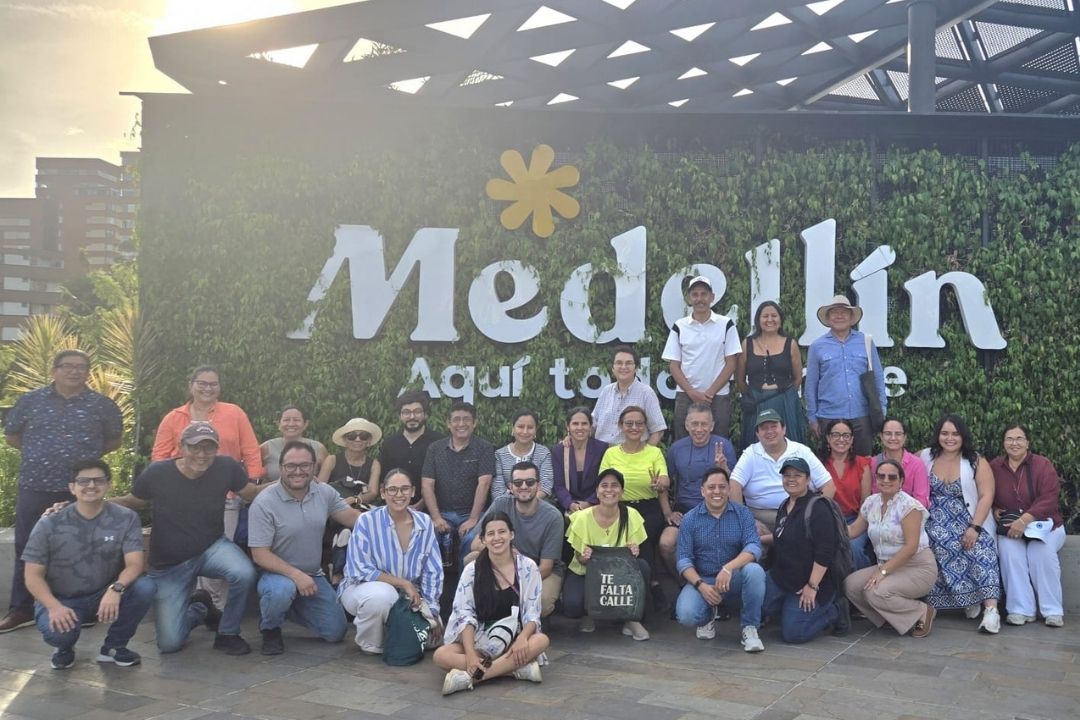


The Dean of ESPOL’s Faculty of Geosciences Engineering (FICT), Paúl Carrión, Ph.D., participated in the course “Medellín, a Living Laboratory: Urban Transformation and Learning in Action,” held July 13–17, 2026, at EAFIT University. The experience provided insight into social urban planning strategies and urban transformation processes that can serve as a reference for the Distrito 100 project, an ESPOL initiative supported by the Inter-American Development Bank (IDB).
The participation took place as part of a visit to Medellín by a delegation of approximately 24 ESPOL officials, including the dean of FICT, along with Rector Cecilia Paredes, Ph.D., and Vice Rector for Research, Innovation, and Technology Carlos Monsalve, Ph.D., as well as deans and associate deans from other academic units of the institution. During the week-long in-person training, participants combined classes, workshops, discussion sessions, and tours of different parts of the city to learn about examples of urban intervention and citizen participation.
For FICT, one of the key lessons from this experience relates to the need to understand urban development from a comprehensive and participatory perspective. Planning processes must take into account the various stakeholders in the area and recognize the social and cultural characteristics of communities.
“There must be workshops and dialogues with the community, and above all, they must respect and focus on the development of the community’s culture and identity, because that is where sustainable urban development can take place,” emphasized the dean of FICT.
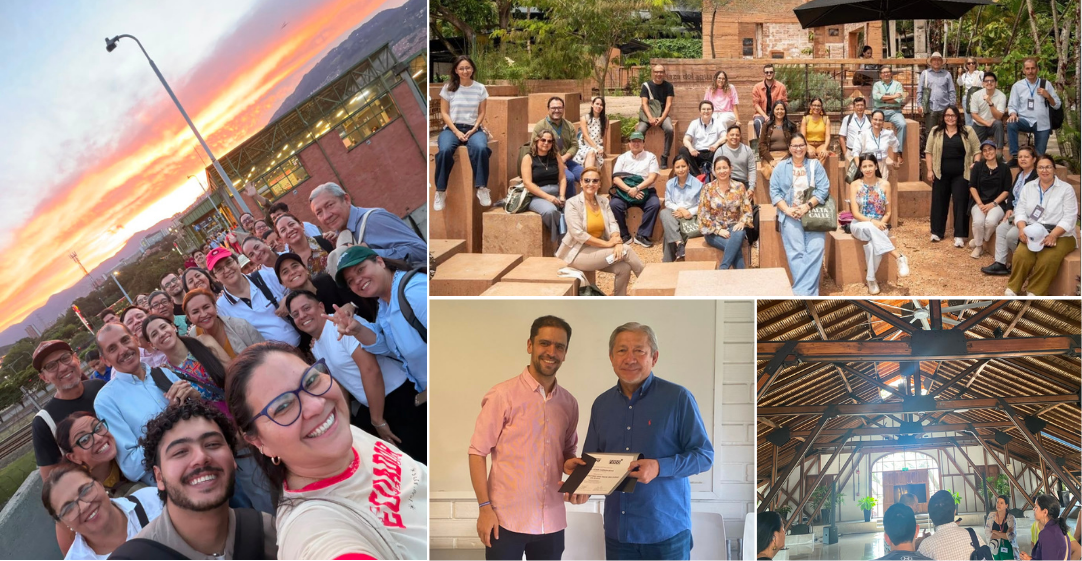
The course addressed topics such as Comprehensive Urban Projects, the relationship between housing and the built environment, the role of the street as a space for gathering and social interaction, governance and innovation in management, as well as urban development in the face of the challenges of climate change. The tours of Medellín complemented this content with firsthand observation of urban transformation processes and dialogue with stakeholders involved in these areas.
In this context, FICT presented its proposal for a degree program in Architecture and Urban Planning with a focus on sustainable urban planning. This initiative addresses the need to train professionals capable of tackling the challenges facing cities from a perspective that integrates urban, social, and environmental dimensions. Furthermore, the insights gained also help identify approaches and methodologies that can serve as a reference for the work ESPOL is carrying out in the Distrito 100 project at the Las Peñas campus, with support from the Inter-American Development Bank (IDB).
This experience thus reinforces the FICT’s vision of linking academic training and knowledge to the real challenges facing the region. Through architecture, urban planning, and research, the Faculty seeks to build capacities that contribute to envisioning Ecuador’s sustainable development and responding to the needs of its communities.
Sustainable Development Goals (SDGs)
SDG 4: Quality Education, for the exchange of knowledge and experiences that strengthen training and academic skills related to urban planning.
SDG 11: Sustainable Cities and Communities, for the course’s focus on social urbanism, citizen participation, and the planning of sustainable and inclusive cities.
SDG 13: Climate Action, through the integration of climate change response as part of the urban planning challenges addressed during the course.