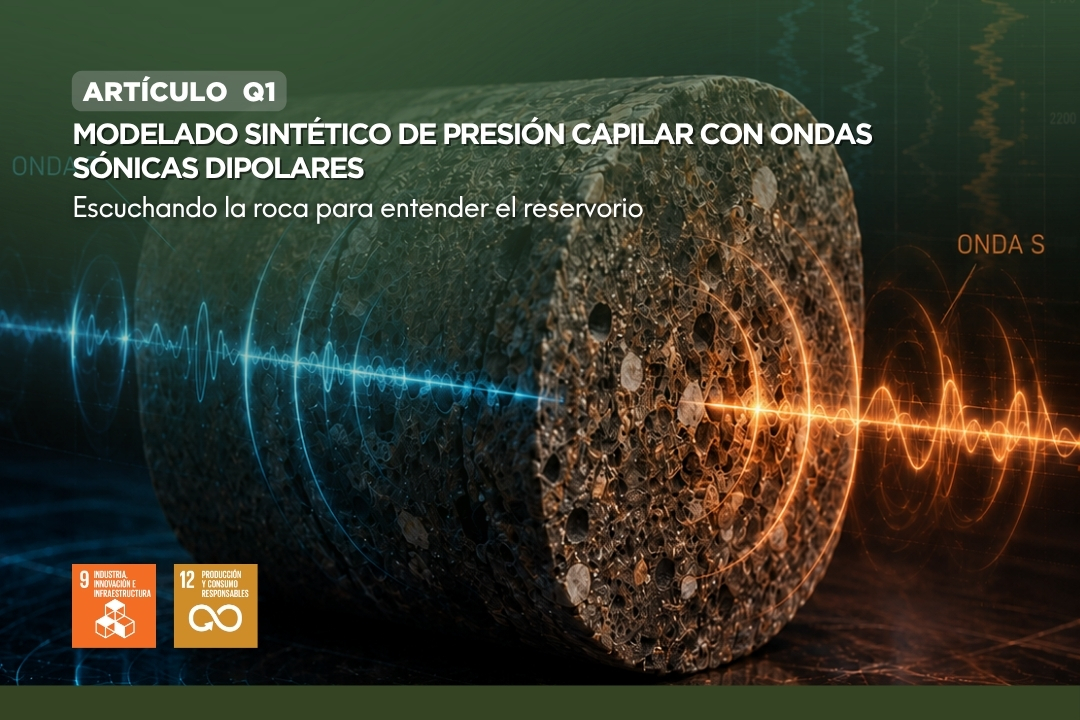


Researchers from the Faculty of Geosciences Engineering (FICT) at ESPOL, Janner Galarza Alava, M.Sc., and Jorge Mendoza Sanz, Ph.D., published a study in Springer Nature’s journal Scientific Reports, in which they present a methodology for generating synthetic capillary pressure curves based on dipole sonic logs, fractal geometry, and porous space modeling. This scientific contribution offers an alternative for characterizing reservoirs when information obtained through core analysis is limited or unavailable.
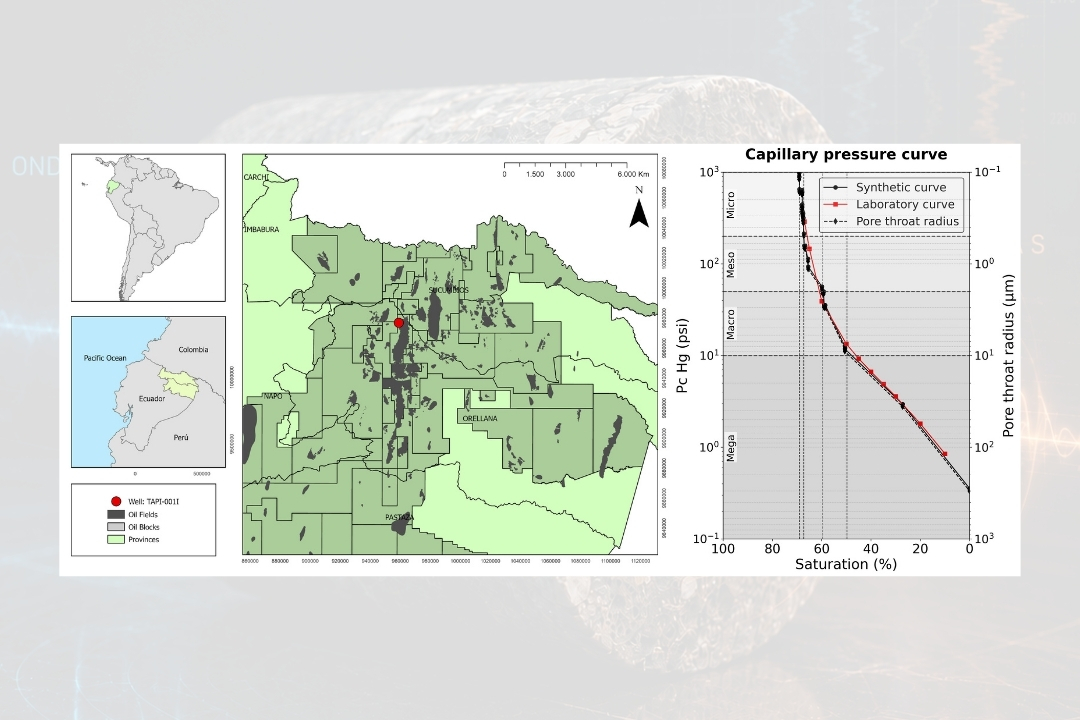
The research develops a mathematical and computational approach that uses P- and S-waves recorded in wells to estimate petrophysical properties, represent pore geometry, and construct synthetic capillary pressure curves. Traditionally, this information requires specialized laboratory testing of rock samples, which entails higher costs and limited data availability.
The methodology was validated using data from the Tapi–TTT field in Ecuador’s Eastern Basin and subsequently evaluated in the Las Piedras Formation in Venezuela. In both cases, the synthetic curves showed good agreement with experimental laboratory measurements, demonstrating the potential of this tool to support reservoir characterization and optimize decision-making in reservoir engineering.
This publication demonstrates FICT’s commitment to generating high-impact applied research and developing innovative solutions for the energy industry. It also strengthens ESPOL’s scientific output and its international profile through research that provides replicable, scalable, and useful tools for the hydrocarbons sector.
Researchers FICT - ESPOL
Faculty of Geosciences Engineering
Janner Galarza Alava, M.Sc.
Jorge Mendoza Sanz, Ph. D.
DOI: https://doi.org/10.1038/s41598-026-47717-x

Sustainable Development Goals
SDG 9: Industry, Innovation, and Infrastructure
SDG 12: Responsible Production and Consumption