

The Faculty of Geosciences Engineering (FICT) participated in the institutional workshop organized by the Office of the President to review the progress of the Distrito 100 Project and collaboratively develop academic proposals for the transformation of the Las Peñas Campus. The event took place on July 20, 2026, at the Las Peñas Campus of the Escuela Superior Politécnica del Litoral (ESPOL) and brought together delegations from various schools.
The workshop began with a presentation on the overall status of the Distrito 100 Project and a tour of the campus to observe the progress of construction and the spaces designated for its transformation. Subsequently, the various academic units shared their contributions to consolidate an institutional vision aimed at strengthening innovation, sustainability, and integration between the university and the city.
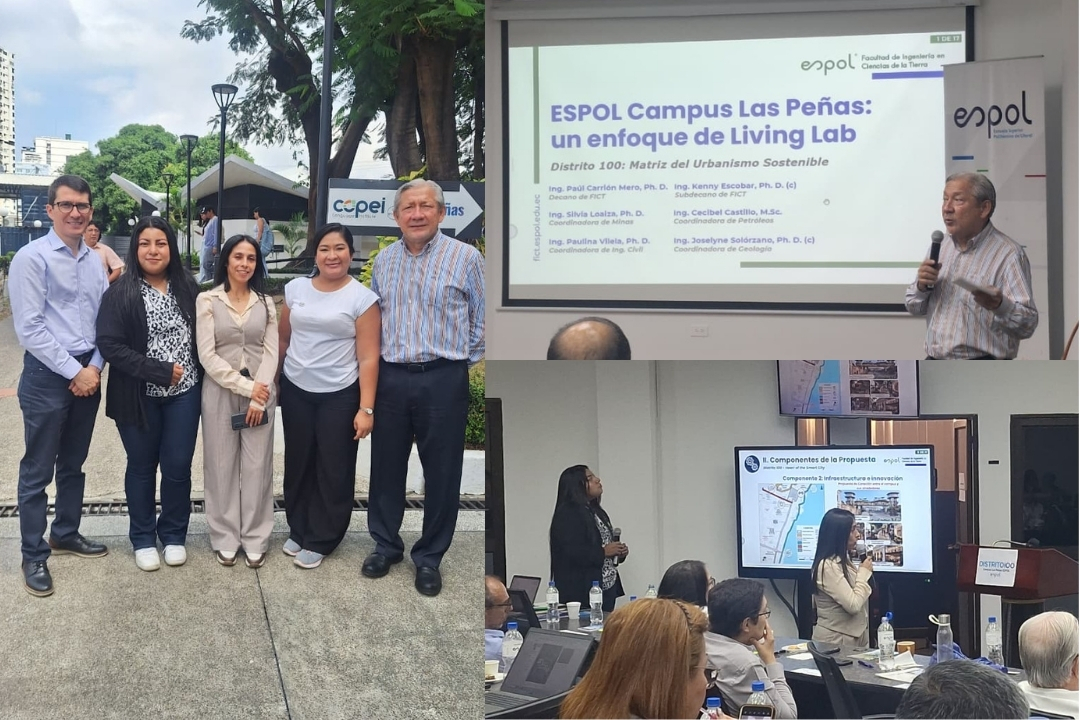
During the event, the FICT presented the proposal “ESPOL Las Peñas Campus: A Living Lab Approach – District 100: Matrix of Sustainable Urbanism,” led by the dean of the FICT, Paúl Carrión, Ph.D., with the support of the program coordinators for Civil, Mining, and Petroleum Engineering and Geology, as well as the program promotion coordinator. The initiative aims to transform the Las Peñas Campus into a living lab for research, innovation, experiential learning, heritage preservation, and community engagement.
The proposal identifies strategic needs to consolidate the Las Peñas Campus as a hub of life that promotes interaction between the university and society, the connection between heritage, biodiversity, innovation, and mobility, as well as the strengthening of spaces dedicated to science, culture, and entrepreneurship. Its interdisciplinary approach brings together academic and technical expertise from different fields of knowledge to develop comprehensive solutions for the campus’s future.
As part of its contribution to the Distrito 100 Project, FICT structured its proposal around four strategic components.
Historical-cultural, focused on preserving the heritage and identity of the Las Peñas Campus.
Infrastructure and innovation, featuring proposals for pedestrian corridors, smart green spaces, and urban connectivity.
Social, designed to foster an open and inclusive campus through a Living Lab model.
Environmental and smart, focused on green infrastructure, environmental monitoring, and technological solutions for a sustainable campus.
Among the proposed initiatives is the development of an academic program in Sustainable Urban Planning, aligned with the vision of District 100. This program aims to strengthen urban spaces by contributing to the development of sustainable solutions that make a difference for the city.
FICT’s participation in this event reflects the collaborative effort among university officials, academic coordinators, faculty members, and technical staff, as well as the institution’s commitment to contributing to the development of the District 100 Project from an academic perspective. It also highlights the importance of coordinated efforts among ESPOL’s various schools to build a shared vision of the Las Peñas Campus as a space for innovation, sustainability, and integration with society.
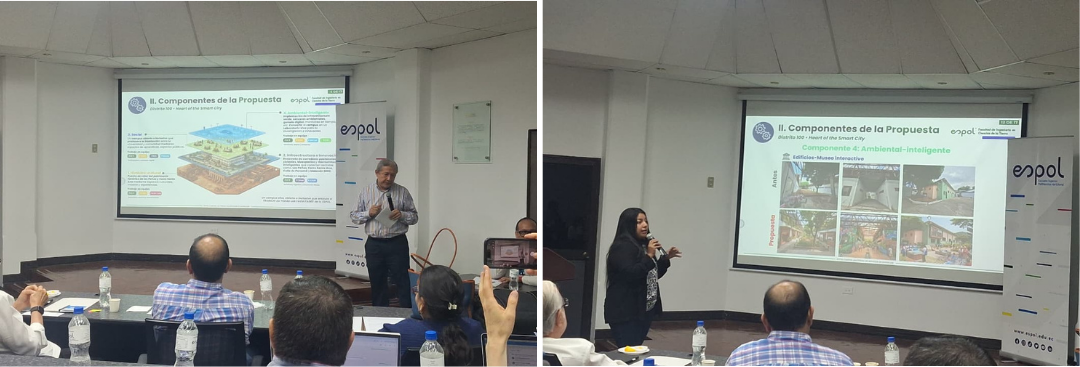
The proposal submitted by the FICT includes:
Restoration and enhancement of the historical heritage of the Las Peñas Campus.
Development of smart infrastructure and sustainable public spaces.
Implementation of a Living Lab model for research, innovation, and experiential learning.
Integration of green infrastructure, environmental sensors, and smart monitoring.
Creation of a new academic program in Sustainable Urban Planning, aligned with the vision of District 100.
Delegation of the FICT
Eng. Paúl Carrión Mero, Ph.D. – Dean of the FICT.
Eng. Kenny Escobar, MSc. – Associate Dean of the FICT.
Eng. Silvia Loaiza, Ph.D. – Mining Coordinator.
Eng. Paulina Vilela, Ph.D. – Civil Engineering Coordinator.
Eng. Cecibel Castillo, M.Sc. – Coordination of petroleum
Eng. Joselyne Solórzano, Ph.D. (c) – Geology Coordinator.
Eng. Carola Gordillo, M.Sc. – FICT Outreach Coordinator.
Sustainable Development Goals (SDGs)
SDG 4: Quality Education. The proposal promotes academic innovation and the strengthening of learning environments linked to applied research and sustainable development.
SDG 11: Sustainable Cities and Communities. The project proposes solutions for a campus that is integrated with the urban environment and is inclusive, resilient, and sustainable.
SDG 17: Partnerships for the Goals. Collaborative work among faculties strengthens the development of a shared institutional vision for the Distrito 100 Project.