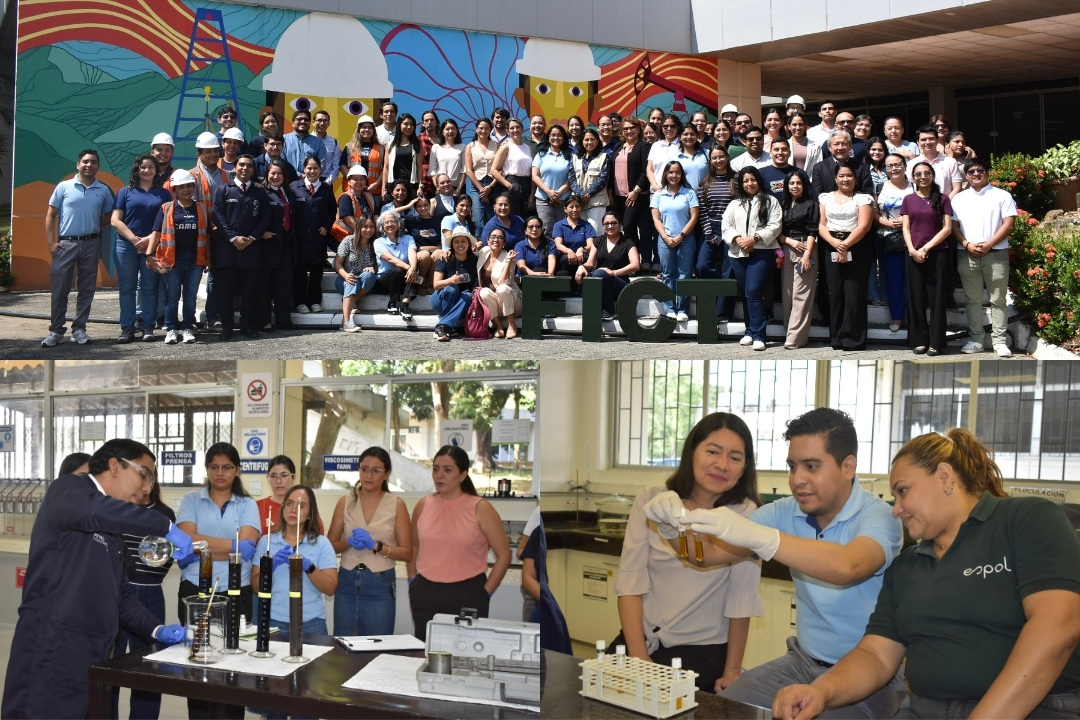


The Faculty of Geosciences Engineering (FICT) hosted another edition of LAB CONNECT, the Laboratory and Center Tour organized by ESPOL’s Office for the Transfer of Research Results (OTRI)—an initiative aimed at strengthening collaboration among the university’s various academic units by showcasing their scientific and technological capabilities and specialized services.
The visit, held on July 1, brought together representatives from various faculties and university departments for a tour designed to showcase the infrastructure, equipment, research areas, and services that FICT makes available to academia, industry, and society.
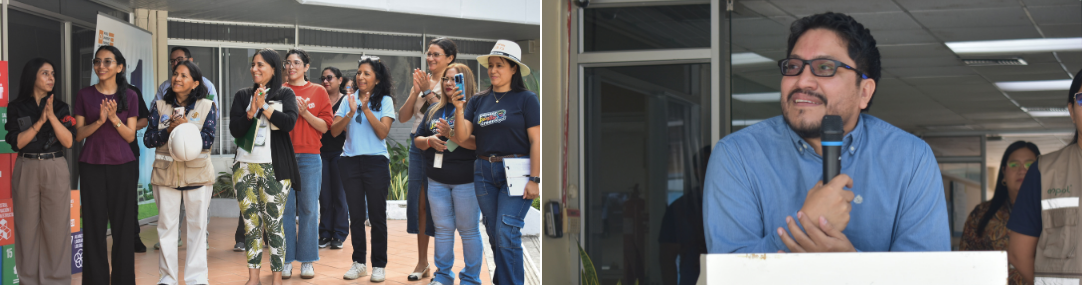
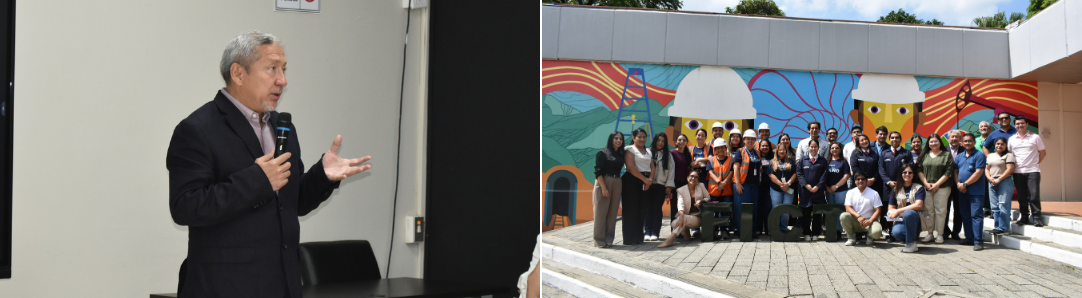
The event began with a reception for attendees hosted by the FICT Dean’s Office, followed by welcoming remarks from Kenny Escobar, M.A., associate dean of FICT, who emphasized the importance of creating opportunities to highlight the capabilities of the laboratories, strengthen collaboration and interdisciplinary synergy, and foster new opportunities for research, technology transfer, and engagement with the private sector.
As part of the tour, visitors were divided into groups to simultaneously visit the four most representative laboratories of the school—out of a total of eleven—selected for their track record, technical capabilities, and potential to offer solutions to environmental challenges, in line with the objectives of LAB CONNECT, which are aimed at identifying synergies and promoting the services offered by ESPOL’s laboratories and research centers.
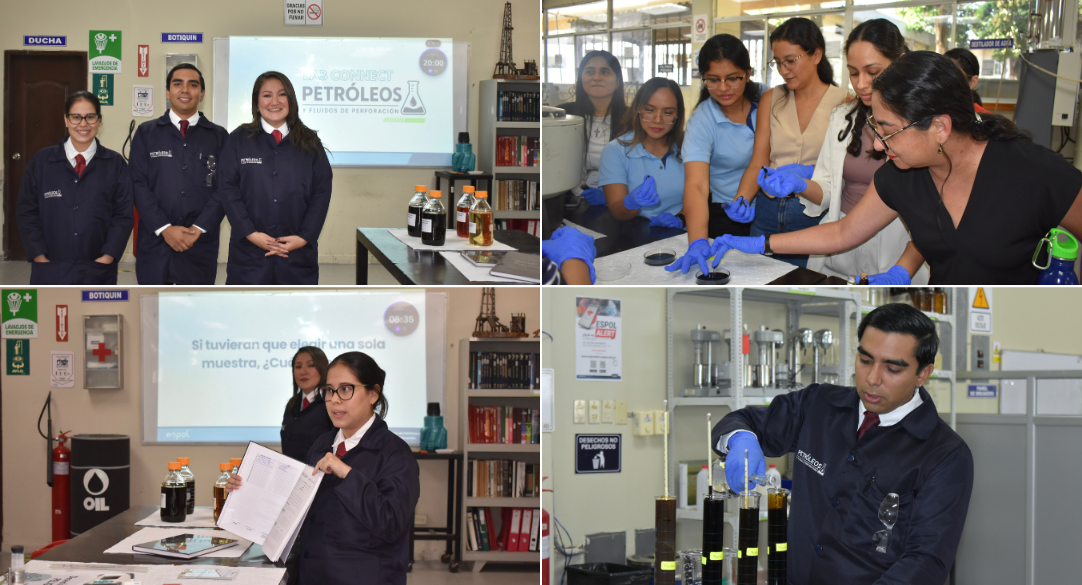
At the Petroleum and Drilling Fluids Laboratory, located in Building 13F, M.Sc. Johanna Zambrano, head of the laboratory, along with technicians M.Sc. Janner Galarza and M.Sc. Cindy Goyburo, presented the laboratory’s capabilities and highlighted its leadership in implementing the 5S philosophy (order, cleanliness, discipline, standardization, and continuous improvement) and high safety standards, making it a benchmark within the School and at ESPOL. During the tour, attendees observed demonstrations of hydrocarbon characterization, including API gravity measurements to determine the commercial quality of crude oil and centrifugation tests to identify the presence of water and sediments. The laboratory’s commitment to educational innovation was also highlighted through the development of audiovisual resources to enhance students’ hands-on learning. Additionally, the strategic partnerships it maintains with companies such as Petroecuador and SLB to obtain real oil samples for teaching and research purposes were emphasized.
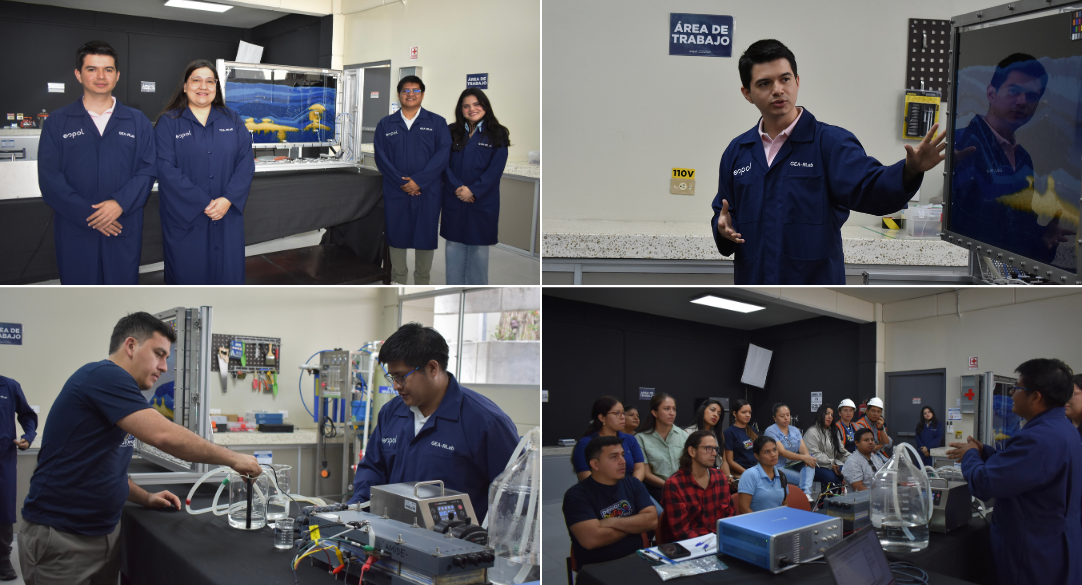
At the Geo-engineering and Advanced Processes Research Laboratory (GEA-RLab), also located in Building 13F, Ph.D. Priscila Valverde, along with technicians M.Sc. (c) Kevin Franco and M.Sc. Steeven Verdesoto, presented the scope of the research being conducted at the laboratory, which is characterized by its focus on sustainability and international cooperation. Among its main areas of focus are carbon capture and storage, as well as water treatment using advanced membrane technologies through the development of the CCUS and EC-Water projects, with $2 million in international funding from the Norwegian Agency for Development and Cooperation (NORAD) and more than $58,000 in collaboration with Ghent University. Carbon capture and water treatment technologies are evaluated under real-world conditions in Latin America. The laboratory’s impact on training talent was also highlighted, with more than 1,000 people trained between 2024 and 2025, the completion of more than fifteen undergraduate and graduate theses, and scientific publications.
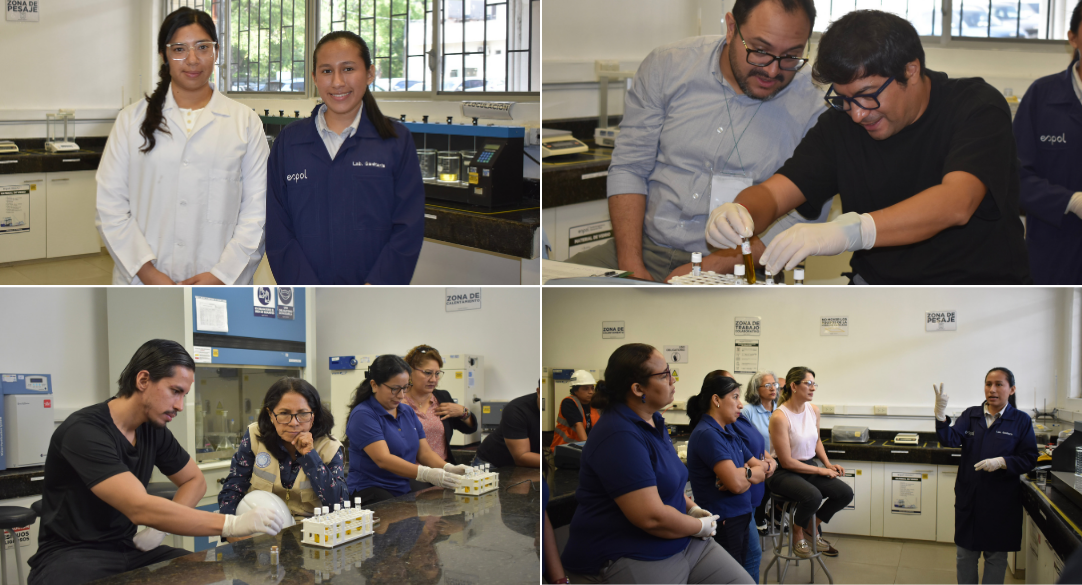
At the Sanitary Engineering Laboratory, located in Building 13D, Ph.D. Priscila Valverde, M.Sc. (c) Sandra Paguay, and M.Sc. Karla Villamar presented the laboratory’s capabilities in water quality analysis, conventional wastewater treatment, and hydrogeological and isotopic assessment, highlighting its contribution to academic training and the development of applied research. During the visit, high-impact projects developed by the laboratory were showcased, including initiatives carried out in Santa Rosa, Santa Elena, and Milagro, funded by the International Atomic Energy Agency with over $320,000, as well as more than 12 students and faculty members trained abroad. This research reflects the laboratory’s commitment to generating scientific solutions for the sustainable management of water resources and the protection of the environment. Attendees learned about some of the analyses and tests conducted there. Among these, a demonstration was given on the determination of Chemical Oxygen Demand (COD), a parameter used to quantify the load of biodegradable and non-biodegradable organic matter present in water samples. They also observed the jar test, a procedure through which students determine the optimal dose of coagulant for coagulation and flocculation processes. This test allows for the removal of contaminants (colloidal material) from water, incorporating criteria of technical efficiency, cost-effectiveness, and minimization of sludge generation in water treatment plants.
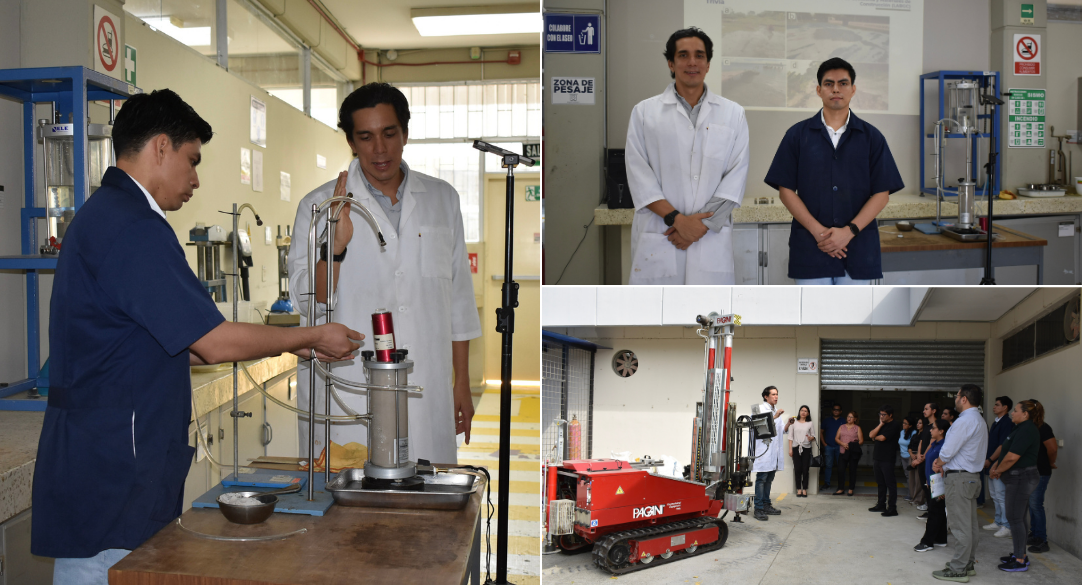
At the Geotechnical, Construction, and Surveying Laboratory (GCT), located in Building 13E, Ph.D. Davide Besenzon, the laboratory director, along with analyst M.Sc. Daniel Falquez, and technicians M.Sc. Jordan Aguilar and Eng. Kevin Padilla, presented the unit’s technical capabilities for conducting geotechnical studies, testing various construction materials, surveying, and research focused on infrastructure projects and site investigations. During the visit, the importance of their research for preventing risks associated with soil behavior was emphasized, including studies on liquefaction—a phenomenon of particular interest in areas such as Guayaquil. Likewise, the specialized services the laboratory provides to public and private institutions were highlighted; among them are geophysical tests for the geotechnical design of the new pier on Isabela Island in the Galápagos, and studies for the design of seismic monitoring networks at dams. In addition to these capabilities, the laboratory conducts field tests using push penetrometers with the SDMT measurement methodology, which allow for direct investigation of the subsoil to depths of up to 20 meters. Finally, the center demonstrated its extensive operational capacity in the academic sphere, as evidenced by its support for approximately 350 students in 2025, who made more than 3,700 visits to conduct laboratory experiments using specialized equipment.
At each station, laboratory directors conducted demonstrations, shared research experiences, and explained the impact of the projects carried out at the school, highlighting how FICT’s scientific infrastructure helps address challenges in the productive sector, strengthen academic training, and generate knowledge that contributes to the country’s development. At the end of the tour, Paúl Carrión, Ph.D., Dean of FICT, expressed his gratitude to all attendees who gathered at the school to visit the laboratories, hoping to foster future collaborations through outreach and research projects.
LAB CONNECT is part of an institutional strategy led by the OTRI to bring the university community closer to the technological capabilities available at ESPOL, promoting interaction among researchers, faculty, administrative staff, students, and laboratories, as well as identifying opportunities for collaboration and technology transfer. Among its objectives are to publicize the range of specialized services available, strengthen internal networks, and maximize the use of the university’s scientific infrastructure.
Through its participation in this initiative, FICT reaffirms its commitment to academic excellence, applied research, and innovation, establishing its laboratories as strategic hubs for knowledge generation, technological development, and the provision of specialized services that address the needs of society and the productive sector.
Sustainable Development Goals (SDGs)
SDG 4: Quality Education
SDG 9: Industry, Innovation, and Infrastructure
SDG 17: Partnerships for the Goals.