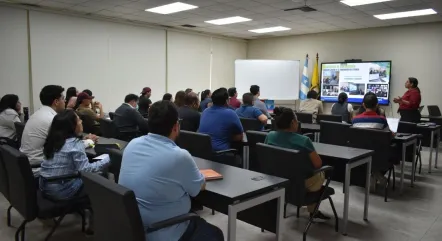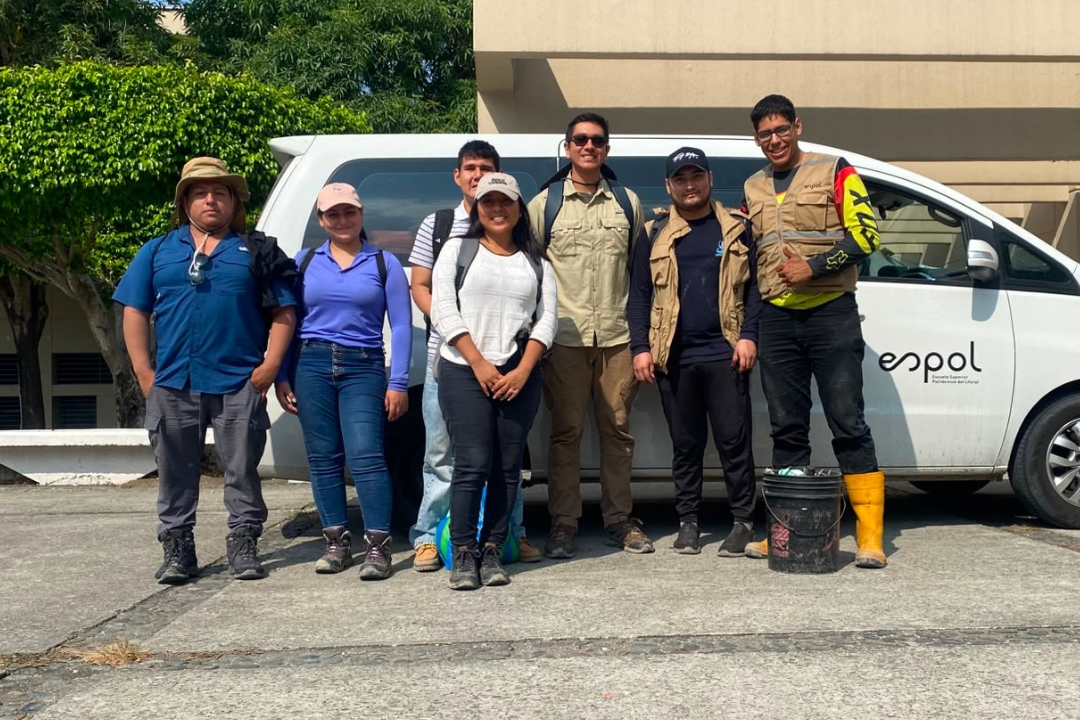
ESPOL’s Faculty of Geosciences Engineering (FICT) conducted an interdisciplinary field trip to the Punta de Piedra district, in the Gulf of Guayaquil, to collect hydrological and geophysical data that will contribute to characterizing subsurface conditions and promoting sustainable water resource management in this community.
The activity took place on July 31, 2026, as part of the project “Nature-Based Solutions for Integrated Water Management (Phase III),” led by Sebastián Suárez, M.Sc., a professor at FICT-ESPOL, and coordinated by CIPAT under the direction of Lady Bravo-Montero, PhD (c). The initiative aims to generate technical and social data to analyze sustainable alternatives for water supply, storage, monitoring, and management in the municipality.
Punta de Piedra faces difficulties in accessing drinking water and relies primarily on transported water, rainwater, and artisanal wells that suffer from salinity issues. In this context, the field data collection effort aims to provide information on hydrogeological conditions and needs related to water use.
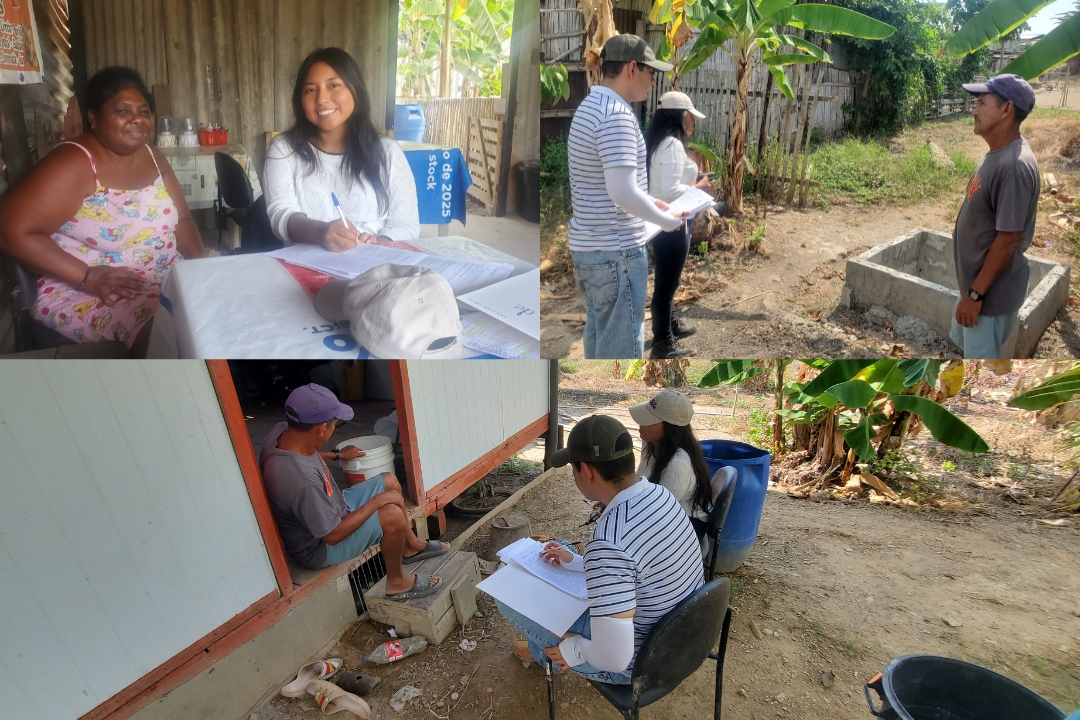
During the event, civil engineering students conducted surveys of local residents to gather information on water sources, consumption habits, frequency of use, and storage conditions. This data will enable a preliminary estimate of domestic water demand.
Meanwhile, geology students conducted geophysical surveys to characterize subsurface conditions and help identify areas with potential groundwater resources. Students from the civil engineering, graphic design, and chemical engineering programs, along with geology students, are also participating in the project, integrating different disciplines into the technical and community activities. The activities were supervised by the technical team, which coordinated the work of the various disciplines throughout the day.
The field trip was led by Robert Brito, M.Sc., and included Civil Engineering students Jesús Chiriguaya and Gloria Cuñishpuma, as well as Geology students Jesús Zambrano and Doménica Idrovo. Joao Córdova and Christian Bravo, representing CIPAT, also participated.
The collaborative effort between students, faculty, and technical staff from ESPOL and CIPAT made it possible to integrate social, hydrological, and geophysical data into a single survey process. This experience enhances the students’ practical training and generates information that can contribute to the analysis of water management options in Punta de Piedra.
Sustainable Development Goals
SDG 6: Clean Water and Sanitation. For generating information on water supply sources, demand, and water resource conditions, as a basis for analyzing sustainable water management alternatives.
SDG 11: Sustainable Cities and Communities. For providing technical and social information for the sustainable planning and management of resources in a community facing difficulties in accessing drinking water.