

ESPOL’s Faculty of Geosciences Engineering (FICT) and the University of Oviedo (UNIOVI) are moving forward with plans for new academic and research initiatives in geosciences, based on coordination meetings held in June and July, with a focus on the 2026–2027 period.
Among the key agreements is the organization of a series of six joint keynote lectures, scheduled to begin in October 2026. The sessions will address topics related to DINSAR techniques, isotopic hydrochemistry, and geological engineering, and will also include an opportunity to discuss the opportunities offered by the current student exchange agreement.
In the field of applied research, both institutions laid the groundwork for developing international co-supervision of undergraduate thesis projects (integrative projects). The first collaborative project will focus on analyzing mass movements caused by neotectonics and will pave the way for future research on subsidence in other locations along the Ecuadorian coast.
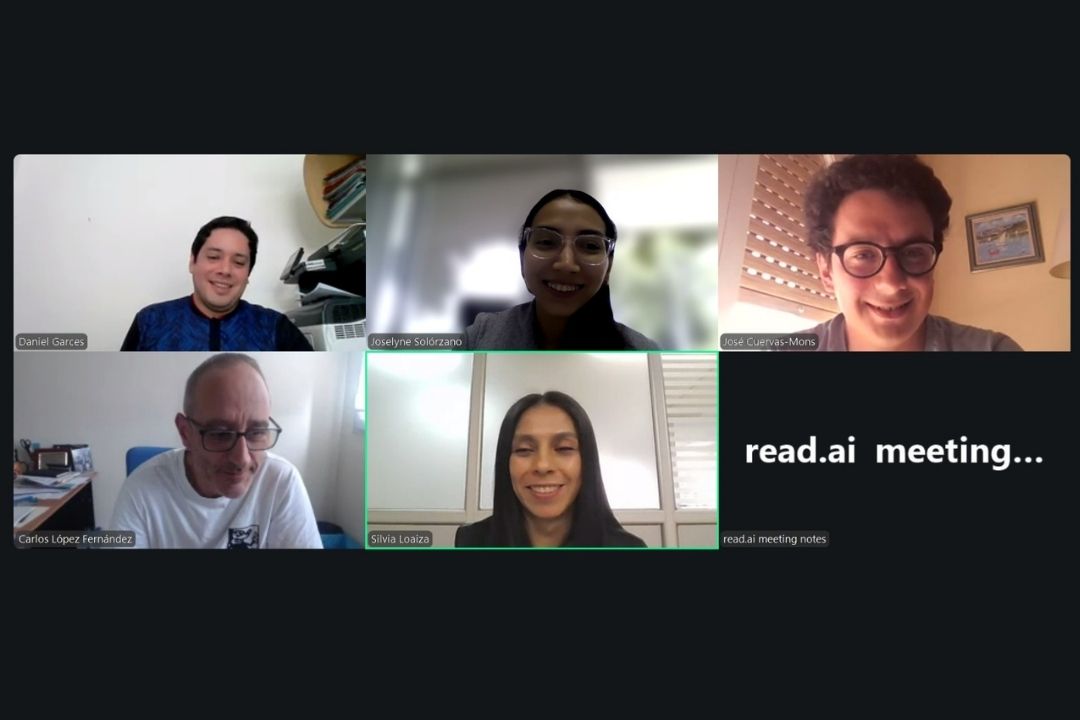
At the same time, FICT-ESPOL and UNIOVI are moving forward with the administrative processes to renew their inter-institutional agreement, with the aim of facilitating new cooperation and exchange initiatives. The working group included Daniel Garcés, M.Sc., Silvia Loaiza, Ph.D., and Joselyne Solórzano, M.Sc., representing FICT-ESPOL, and José Cuervas-Mons, Ph.D., and Carlos López, Ph.D., dean of the UNIOVI Faculty of Geology.
This work agenda demonstrates how FICT coordinates with international universities to expand opportunities for training, research, and exchange in the field of geosciences. The planned activities strengthen knowledge exchange and the creation of joint projects with academic and scientific impact.
Sustainable Development Goals - SDGs
SDG 4: Quality Education. For promoting academic exchange, specialized lectures, and international training opportunities for students.
SDG 9: Industry, Innovation, and Infrastructure. For promoting applied research and the development of knowledge in the geosciences.
SDG 12: Responsible Consumption and Production. For incorporating scientific and technical knowledge as the basis for analyzing processes related to the land and its resources.