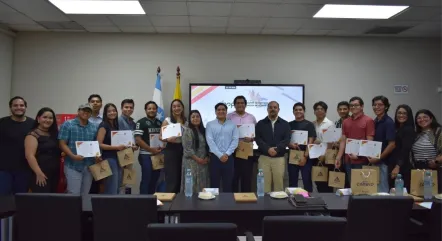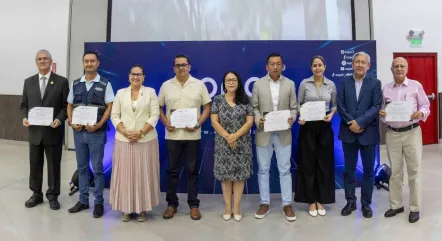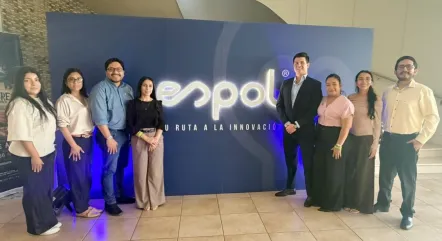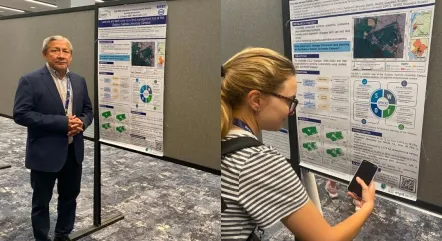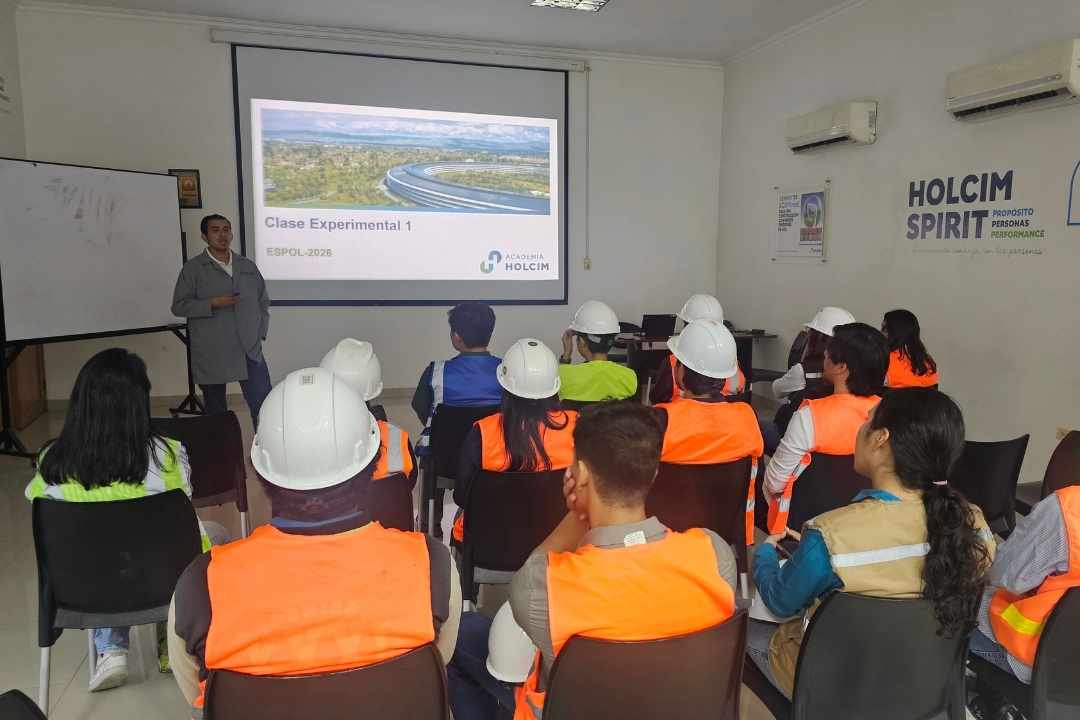


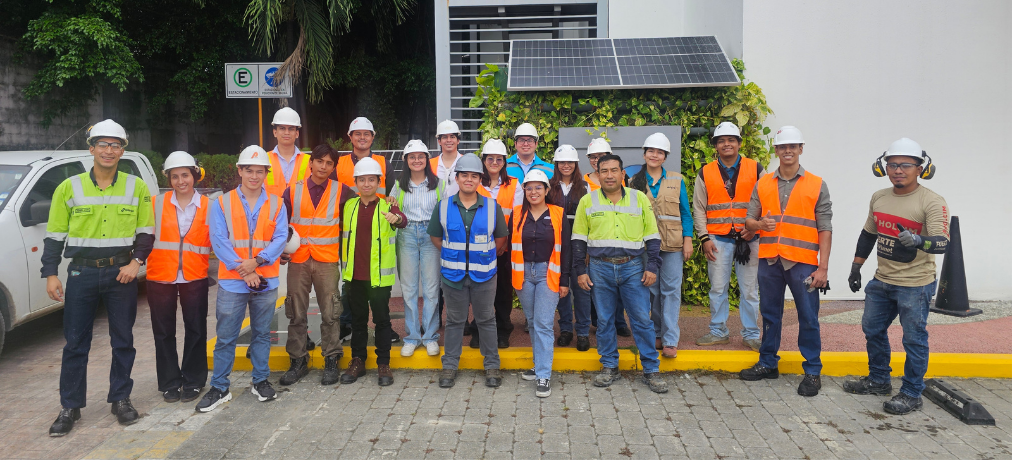
The Faculty of Geosciences Engineering (FICT), in partnership with Holcim Ecuador, conducted the experimental class as part of the Holcim Academy’s eighth cohort, an initiative that exposes civil engineering students to real-world industry scenarios to strengthen their practical training. The activity took place on June 12, 2026, at the Holcim Innovation Center, located at the San Eduardo Concrete Plant.
The session was attended by civil engineering students from FICT and was led by Henrry Zambrano, M.Sc., an innovation specialist at Holcim, who shared his knowledge and experience regarding the evaluation of fresh concrete, emphasizing the importance of applying standardized procedures to ensure the quality of materials used in construction.
During the session, students learned best practices for dosing and mixing materials, identifying the characteristics that influence concrete production on-site. They also conducted tests to evaluate fundamental properties of the material, such as its appearance, workability, slump, and temperature, thereby strengthening their technical skills through an applied learning experience.
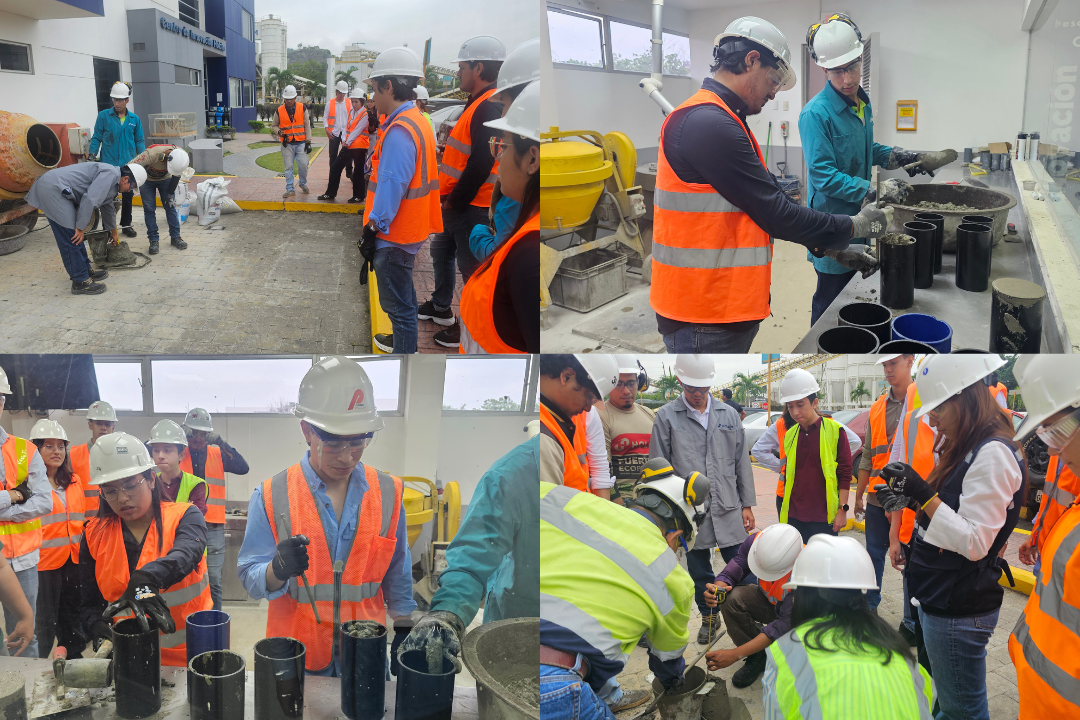
As part of the quality control process, participants prepared concrete specimens that will later be used to evaluate the material’s strength once it has reached its hardened state. This exercise is a fundamental step in the training of future civil engineers, as it allows them to understand the relationship between manufacturing processes and the structural performance of concrete.
The HOLCIM Academy serves as a bridge between the university and the industry, promoting hands-on learning, knowledge exchange, and technical development for students. These experiences strengthen the professional skills of future engineers and help prepare them to meet the challenges of the construction industry.
Through initiatives such as this, FICT reaffirms its commitment to quality education, innovation in professional training, and collaborative work with strategic partners such as Holcim, in line with ESPOL’s vision of training professionals capable of generating sustainable solutions for the country’s development.
Sustainable Development Goals (SDGs)
SDG 4: Quality Education
SDG 9: Industry, Innovation, and Infrastructure
SDG 17: Partnerships for the Goals