
La reunión contó con la participación de Virgilio Benavides, subsecretario de Gestión de la Información y Análisis de Riesgos de la SNGR; Erwin Larreta, director de Análisis de Riesgos; Ricardo Rodríguez, analista de Análisis de Riesgos Hidrometeorológicos; y Jorge Coronel, Director de gestión de la información. En representación de ESPOL-TECH participaron Maurizio Mulas, director del proyecto, junto con Daniel Garcés, Victoria Rosado, Valeria Vaca, Erika Serrano, Jesús Zambrano, Karelys Tomalá y Josthin Pozo, integrantes del equipo técnico responsable del desarrollo de la investigación. Se contó, además, con la presencia del Decano de la FICT, Dr. Paul Carrión Mero, y del Subdecano de la FICT, MSc. Kenny Escobar.
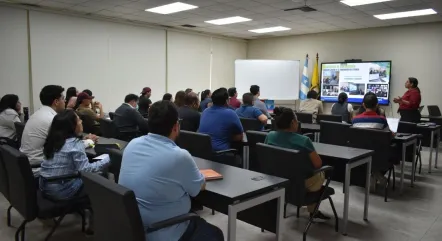
The Faculty of Geosciences Engineering (FICT) hosted the first semiannual meeting of the project “Assessment of the Volcanic Risk Index in Ecuador,” a forum in which ESPOL-TECH and the National Secretariat for Risk Management (SNGR) presented the progress made during the first semester of the initiative’s implementation. The event took place on June 22, 2026, in the FICT Conference Room and helped strengthen technical coordination between the two institutions.
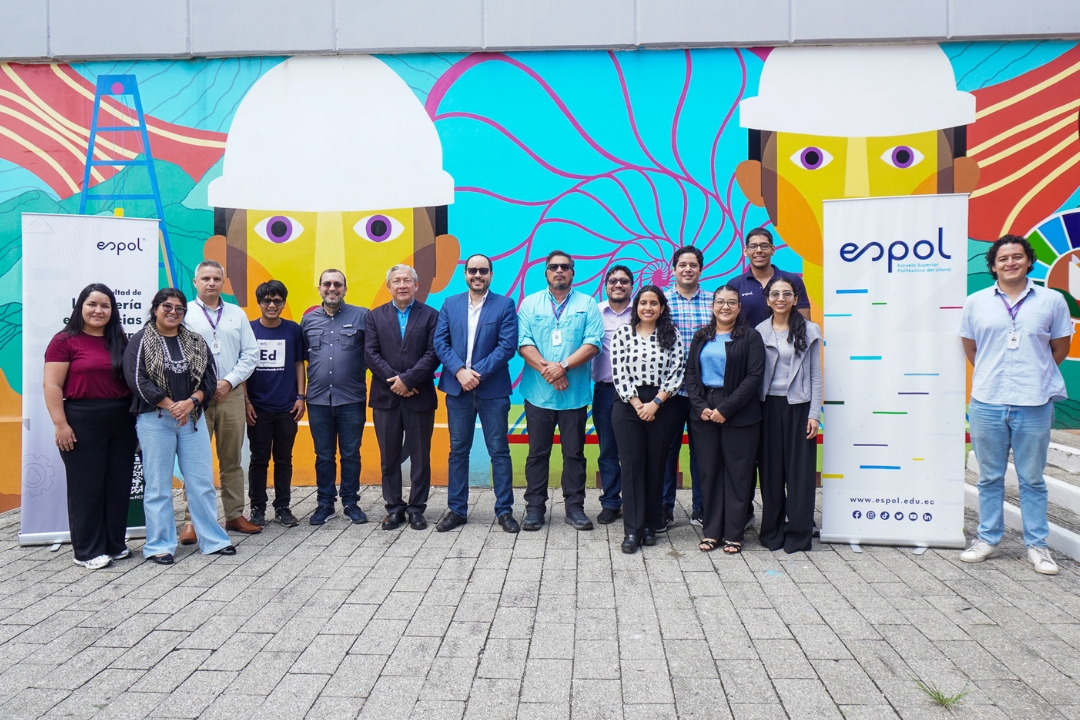
The meeting was attended by Virgilio Benavides, Undersecretary of Information Management and Risk Analysis at the SNGR; Erwin Larreta, Director of Risk Analysis; Ricardo Rodríguez, Hydrometeorological Risk Analysis Analyst; and Jorge Coronel, Director of Information Management. Representing ESPOL-TECH were Maurizio Mulas, project director, along with Daniel Garcés, Victoria Rosado, Valeria Vaca, Erika Serrano, Jesús Zambrano, Karelys Tomalá, and Josthin Pozo, members of the technical team responsible for conducting the research. Also in attendance were the Dean of FICT, Dr. Paul Carrión Mero, and the Associate Dean of FICT, MSc. Kenny Escobar.
During the session, the project’s main methodological, technical, and operational advances were presented, including the development of methodologies for the quantitative assessment of volcanic hazard, the systematization of geoscientific information, and the design of geospatial tools that will serve as the basis for the development of Ecuador’s Volcanic Risk Index.
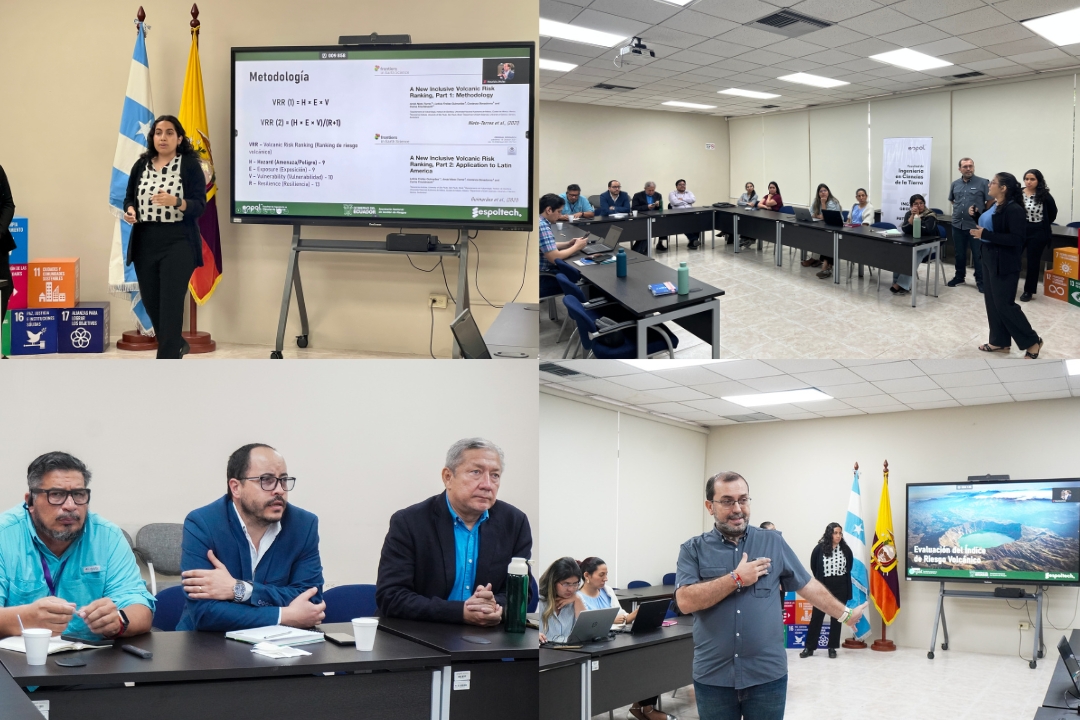
The meeting also provided an opportunity for technical feedback among the working groups to review progress made and align criteria for the next phases of the project. The National Secretariat for Risk Management, as the lead agency for comprehensive disaster risk management in the country, is promoting this initiative with the aim of gathering technical information that will contribute to decision-making and territorial planning in response to volcanic hazards.
The project integrates the technical and scientific capabilities of ESPOL-TECH, with academic support from FICT researchers, to develop tools that will enhance understanding and knowledge of volcanic risk in Ecuador. This collaboration demonstrates the value of coordination between academia and public institutions in generating applied scientific information that contributes to territorial analysis and the management of knowledge regarding natural hazards.
Sustainable Development Goals (SDGs)
SDG 4: Quality Education.
SDG 11: Sustainable Cities and Communities.
SDG 15: Life on Land.
SDG 17: Partnerships for the Goals.