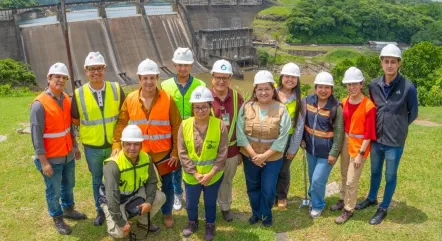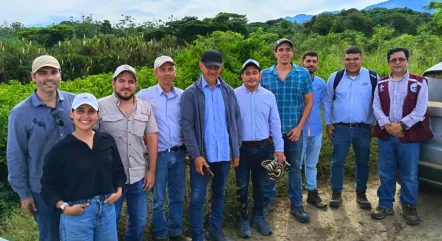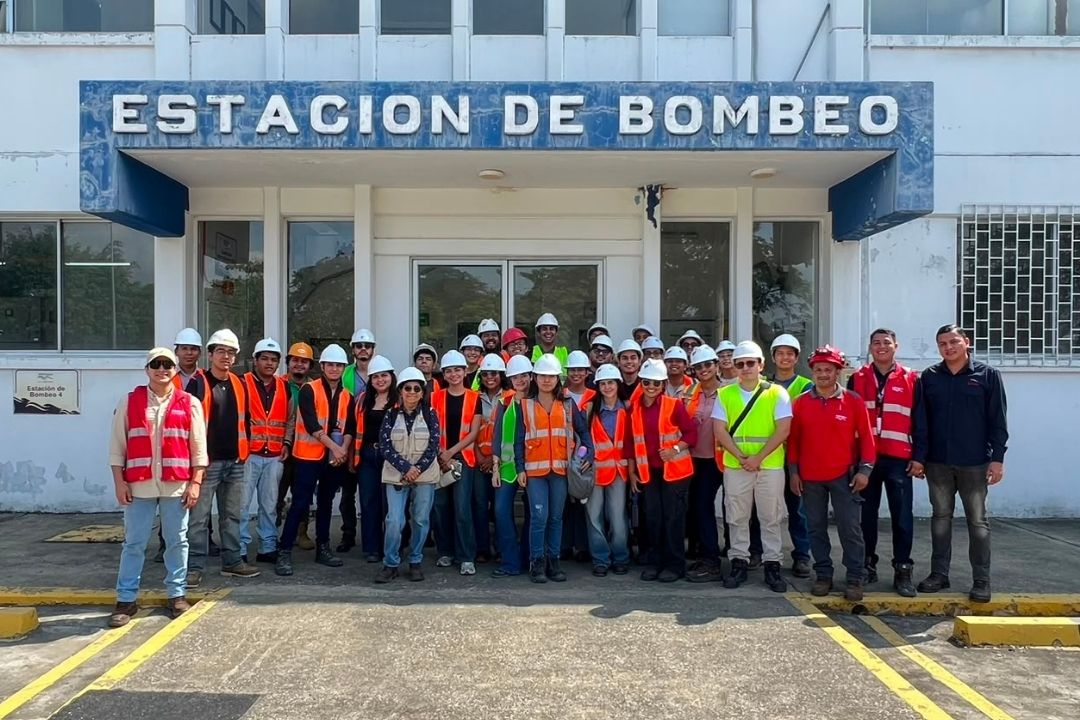


As part of the academic activities for the first semester of 2026 at ESPOL’s Faculty of Geosciences Engineering (FICT), 32 students enrolled in the Water Purification and Treatment course participated on Friday, July 31, 2026, in a technical visit to the La Toma Complex, Guayaquil’s primary drinking water production system. The day’s activities also included a tour of Interagua’s quality control laboratory and a monitoring station of the SAICA Network, operated by Veolia.
The activity was organized by Bethy Merchán, M.Sc., a professor teaching the course, in coordination with the ESPOL IAHR Student Chapter and its president, student Sebastián Miñán. During the field trip, the civil engineering students were accompanied by engineers from Veolia and Interagua, who shared information about the operation of the facilities and the processes related to water management.
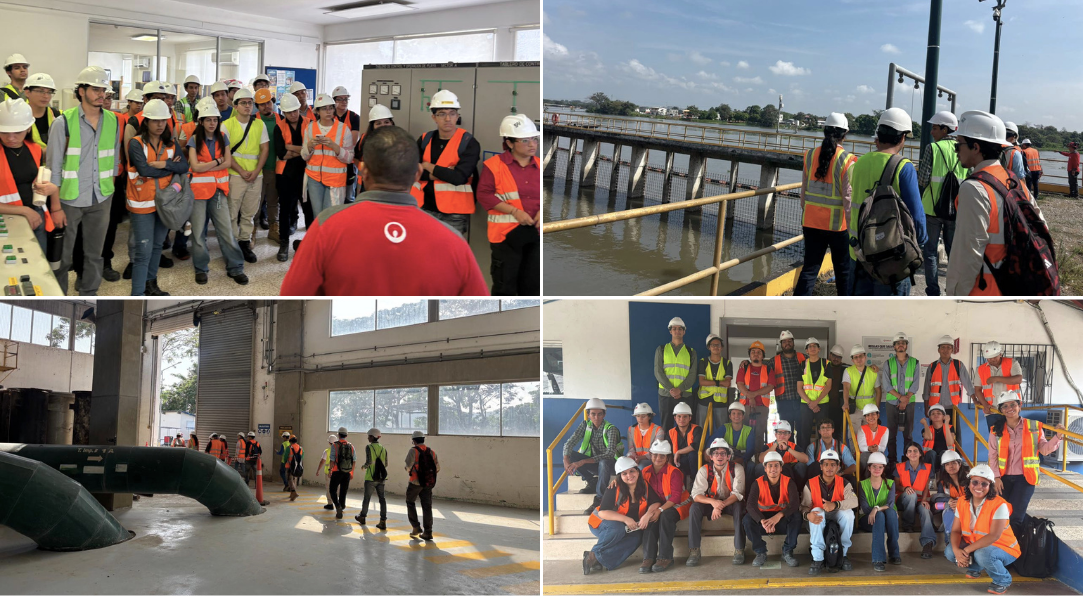
The tour of the La Toma Complex allowed the students to learn about the raw water intake and pumping system from the Daule River, which has four pumping stations. They also observed the Conventional, Lurgi, and New 10 m³/s plants, which represent different generations of water treatment technology and, together, have an operational capacity of approximately 1.4 million m³ per day (16.2 m³/s).
During the visit, the group identified the processes of mixing, coagulation, flocculation, sedimentation, filtration, and disinfection, relating them to the knowledge they had acquired in the classroom. The experience allowed them to observe how different technologies form part of a single water supply system and how its operation meets the needs of a city like Guayaquil.
The day continued at Interagua’s quality control laboratory, where the students learned about the use of physical-chemical and microbiological analyses to verify water quality. Later, at a location within the SAICA Network, they explored systems designed to monitor water quality.
The visit integrated three components of water management: water sources, water treatment, and quality monitoring. This perspective contributes to the training of future civil engineers by exposing them to the processes and infrastructure involved in water security and the sustainable provision of drinking water services.
The activity strengthened the link between university education and the operational sector through a hands-on experience that allowed students to observe the application of engineering principles in real-world facilities. In this way, the visit contributed to the development of skills needed to address challenges related to the responsible management of water resources and the sustainability of drinking water services.
Sustainable Development Goals (SDGs)
SDG 4 – Quality Education: for strengthening the hands-on learning of 32 students through direct observation of real-world facilities and processes.
SDG 6 – Clean Water and Sanitation: for training related to the water treatment, quality control, and monitoring processes necessary for the safe management of water resources.
SDG 9 – Industry, Innovation, and Infrastructure: for providing exposure to large-scale water infrastructure and various technologies applied to water treatment, control, and monitoring.
SDG 11 – Sustainable Cities and Communities: for highlighting the importance of drinking water supply systems to the functioning and sustainability of cities.