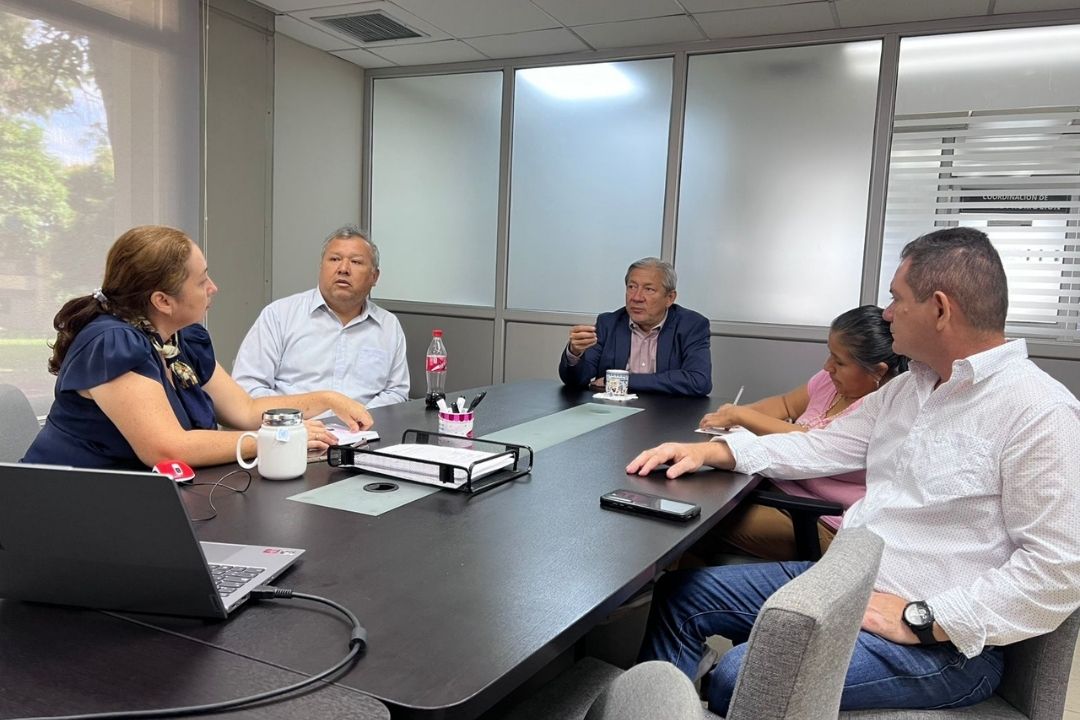


Guayaquil, August 25, 2026. In the meeting room of the Dean’s Office of the Faculty of Geosciences Engineering (FICT) at ESPOL, a presentation was held on the research project “Assessment and Zoning of Critical Flood-Prone Areas in the City of Guayaquil” (Project FCI-028-2026), approved by University Higher Council Resolution No. R-CSU-UG-SE14-114-30-06-2026 of the University of Guayaquil.
The event took place as part of efforts to strengthen academic and scientific cooperation between the University of Guayaquil and ESPOL, in line with the Framework Agreement on Scientific Cooperation signed by both institutions, whose purpose is to promote joint research projects, specialized training, knowledge transfer, and innovation aimed at addressing strategic issues for the country’s development.
During the meeting, Manuel Gómez de la Torre Gómez, M.Sc., a professor at the University of Guayaquil and director of the project, presented the objectives, scope, and potential contributions of the research, highlighting its focus on identifying, evaluating, and characterizing urban and rural areas susceptible to flooding through the use of geographic information systems, hydrological analysis, monitoring of climate variables, and advanced territorial analysis tools.
The initiative was warmly welcomed by Paúl Carrión Mero, Ph.D., Dean of FICT, who highlighted the importance of strengthening collaborative ties between the two institutions of higher education to generate applied scientific knowledge and contribute to sustainable solutions for the territorial and environmental challenges facing the city of Guayaquil.
During the meeting, participants explored opportunities to develop joint activities in research, academic training, student engagement, scientific publications, and technology transfer in the field of comprehensive flood risk management and climate change adaptation.
The expected outcomes of the project will assist institutions such as EMAPAG in strengthening territorial and urban planning, reducing vulnerabilities, and designing strategies for the prevention and mitigation of flood-related disasters. Furthermore, the project will generate high-value technical and scientific information for institutions responsible for urban drainage management, land-use planning, and disaster risk reduction, directly benefiting communities exposed to flooding and contributing to the sustainable development and resilience of the city of Guayaquil.
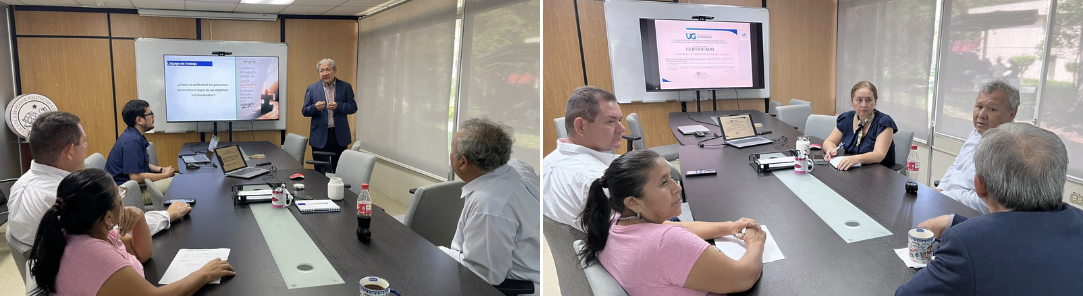
Participants
Paúl Carrión Mero, Ph.D., Dean of FICT-ESPOL.
Manuel Gómez de la Torre Gómez, M.Sc., Professor at the University of Guayaquil.
Patricia Villa, M.Sc., Professor at the University of Guayaquil.
Josué Briones, M.Sc., Coordinator of the Master’s Program in Geosciences at ESPOL.
Silvana Zambrano García, M.Sc., laboratory technician at FICT-ESPOL.
Related Sustainable Development Goals
SDG 11: Sustainable Cities and Communities.
SDG 13: Climate Action.
SDG 17: Partnerships for the Goals.