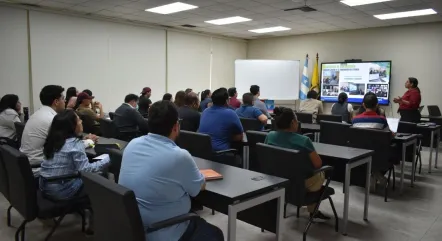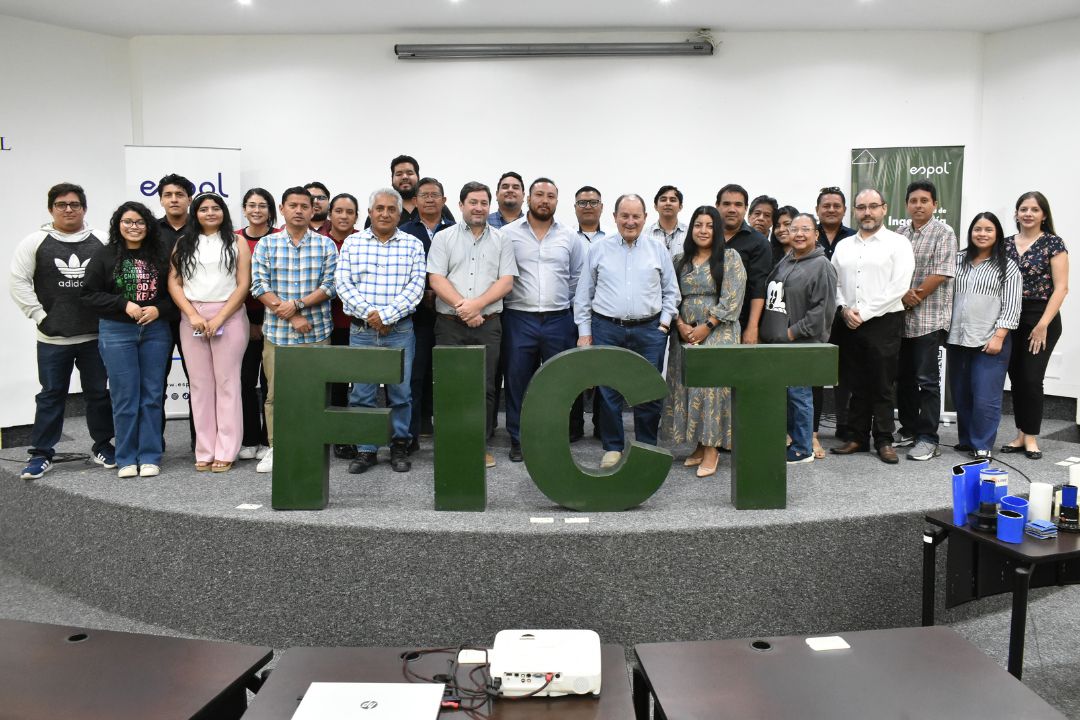

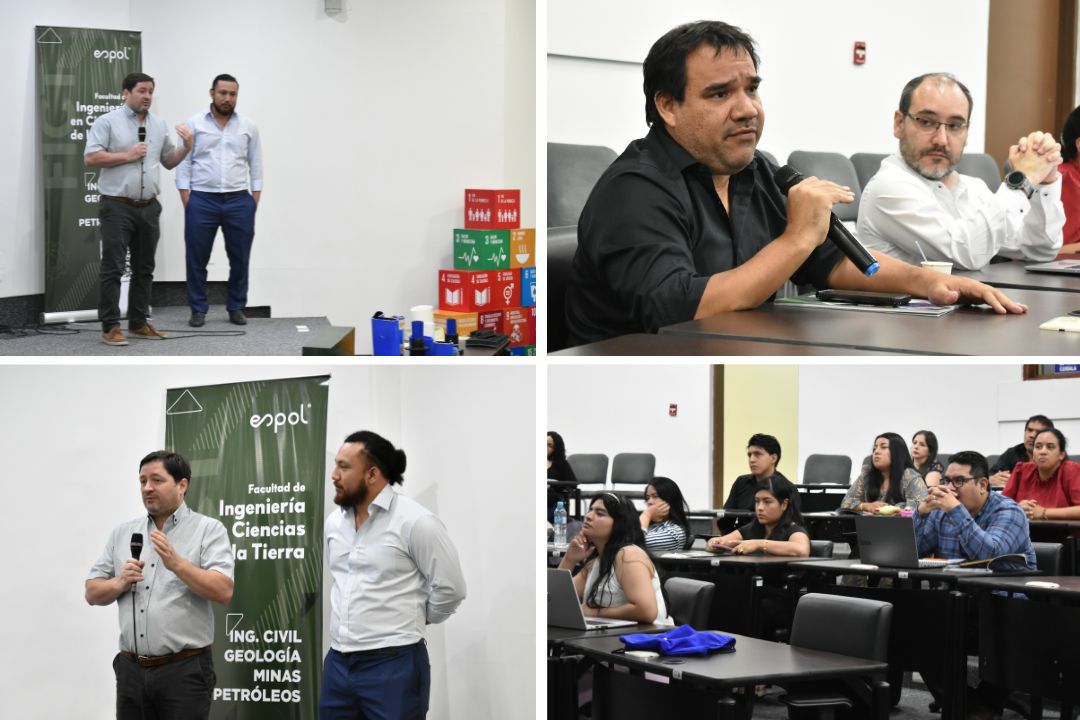
ESPOL’s Faculty Geosciences Engineering (FICT) hosted the technical conference “Rehabilitation of Water and Sanitation Networks Using Trenchless Technologies: Modern Solutions for Sewer Rehabilitation,” held on Friday, August 7, 2026. The event brought together students, professionals, and attendees interested in learning about alternatives for the restoration and management of sanitation infrastructure.
The conference aimed to present technologies designed to reduce intervention times, minimize disruption to the urban environment, and lessen the environmental impact associated with sewer rehabilitation, as well as to optimize resources and extend the useful life of existing infrastructure.
During the event, Santiago Lazzaro, technical manager at Reconstrucción Caños S.A. / Forever Pipe and a specialist in hydraulic infrastructure rehabilitation, presented various alternatives for working on sewer networks, including Cured-in-Place Pipe (CIPP), spiral winding, flexible liner, pipe bursting, and horizontal directional drilling. His presentation also covered the inspection, cleaning, and installation processes required for the application of these technologies.
In addition, Luis Villacreses, M.Sc., a hydraulic engineer with the General Coordination Office for Externally Funded Projects of the Municipality of Guayaquil, discussed aspects related to sanitary infrastructure management. As an example, he presented the project to rehabilitate the Parson Sur sanitary sewer, approximately 1,200 meters long, using it to explain some of the technical and urban challenges facing Guayaquil and the importance of implementing intervention alternatives with less surface impact.
The event was coordinated by Carlos Quishpe, M.Sc., as part of the Civil Engineering program’s initiatives aimed at providing technical training to its academic community. The Argentine company Forever Pipe participated in the event as a contribution to academia within the Strengthening CAF Programs component of the General Coordination of Externally Funded Projects—General Directorate of Public Works of the Decentralized Autonomous Municipal Government of Guayaquil. The event concluded with a question-and-answer session and discussion between the presenters and attendees, who were able to delve deeper into the technical aspects of the technologies presented.
Sustainable Development Goals (SDGs)
SDG 6: Clean Water and Sanitation: for its connection to the management, rehabilitation, and sustainability of sanitation infrastructure.
SDG 9: Industry, Innovation, and Infrastructure: for the dissemination of innovative technologies applied to the rehabilitation of water infrastructure.
SDG 11: Sustainable Cities and Communities: for providing solutions that aim to minimize the impact on urban areas during work on water and sanitation networks.