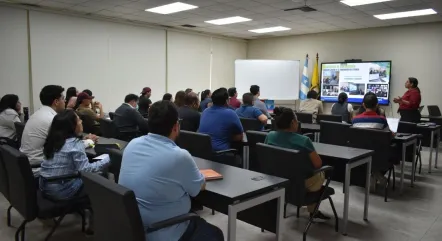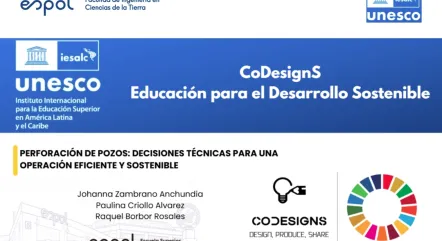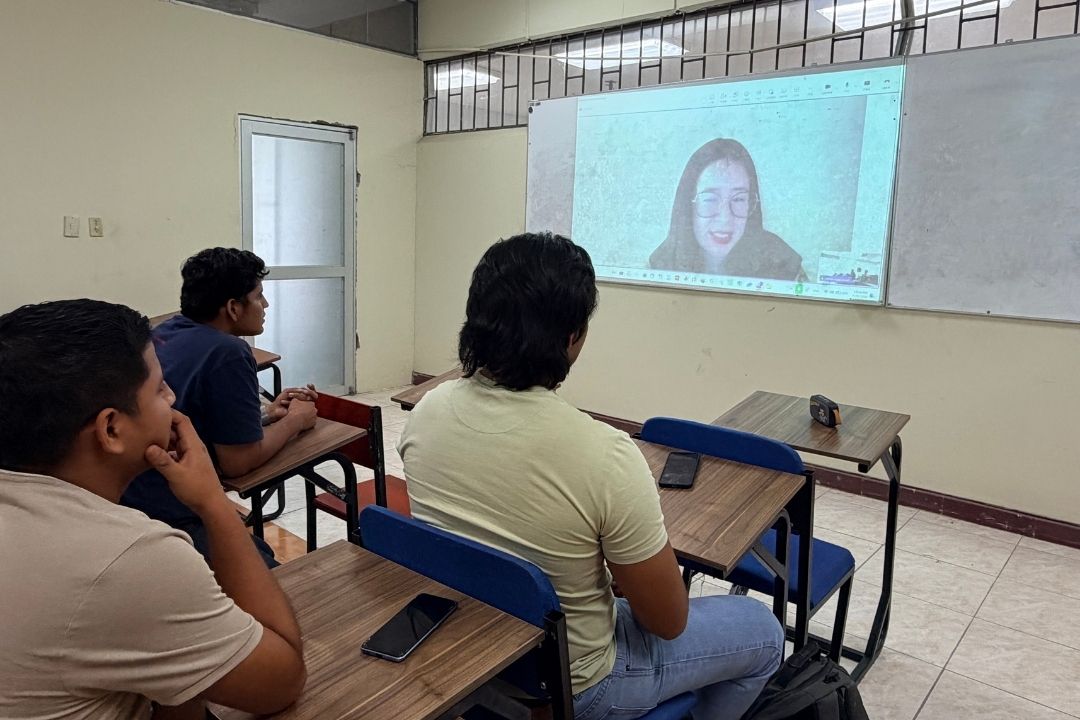

Students enrolled in the Environmental Engineering course as part of the Civil Engineering program at the Faculty of Geosciences Engineering (FICT) participated in a technical presentation given by Johanna Zambrano Ph.D. of CAMBIAMO, Spain, on the use of microalgae and bacterial consortia for the biological treatment of wastewater. The event took place on July 28, 2026, in a hybrid format: students participated in person at ESPOL, while the speaker delivered her presentation virtually from Spain.
Titled “Biological Treatment of Swine Manure with Microalgae-Bacteria Consortium. Removal and Fate of Emerging Pollutants Present in Pig Manure Wastewater,” the talk gave students insight into real-world research and experimentation conducted in Spain and helped them relate these to the treatment processes studied during the course.
During her presentation, Dr. Zambrano explained how biological technologies based on the interaction between microalgae and bacteria work for the treatment of wastewater from swine operations. The presentation provided an opportunity to analyze the potential of these systems for removing chemical contaminants and to delve deeper into the behavior and fate of emerging contaminants present in this type of effluent.
Based on hands-on experiences and experimental results, the students were able to observe the practical application of concepts studied in environmental engineering and learn about treatment alternatives that utilize biological processes to address challenges associated with water pollution.
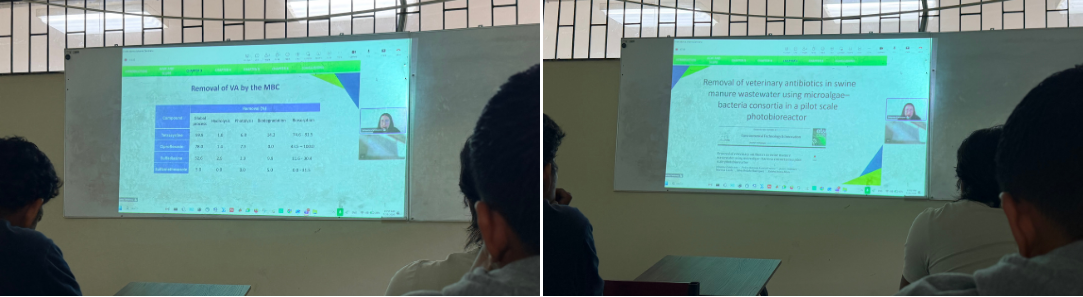
The talk also provided an opportunity for discussion and exchange between the speaker and the students, who had the chance to delve deeper into the processes presented and connect the research findings with the knowledge they had acquired during the course.
Incorporating these types of activities into academic training allows for a connection between classroom content and current research and professional practice. The hybrid format also facilitated academic exchange with a specialist based in Spain, exposing students to international experiences and developments in the field of wastewater treatment.
Through these initiatives, FICT-ESPOL continues to promote an educational model that integrates technical knowledge, research, and professional experience, contributing to the development of skills for finding innovative and sustainable solutions to challenges related to wastewater treatment and the protection of water resources.
Sustainable Development Goals - SDGs
SDG 4 - Quality Education
SDG 6 - Clean Water and Sanitation
SDG 9 - Industry, Innovation, and Infrastructure
SDG 12 - Responsible Consumption and Production