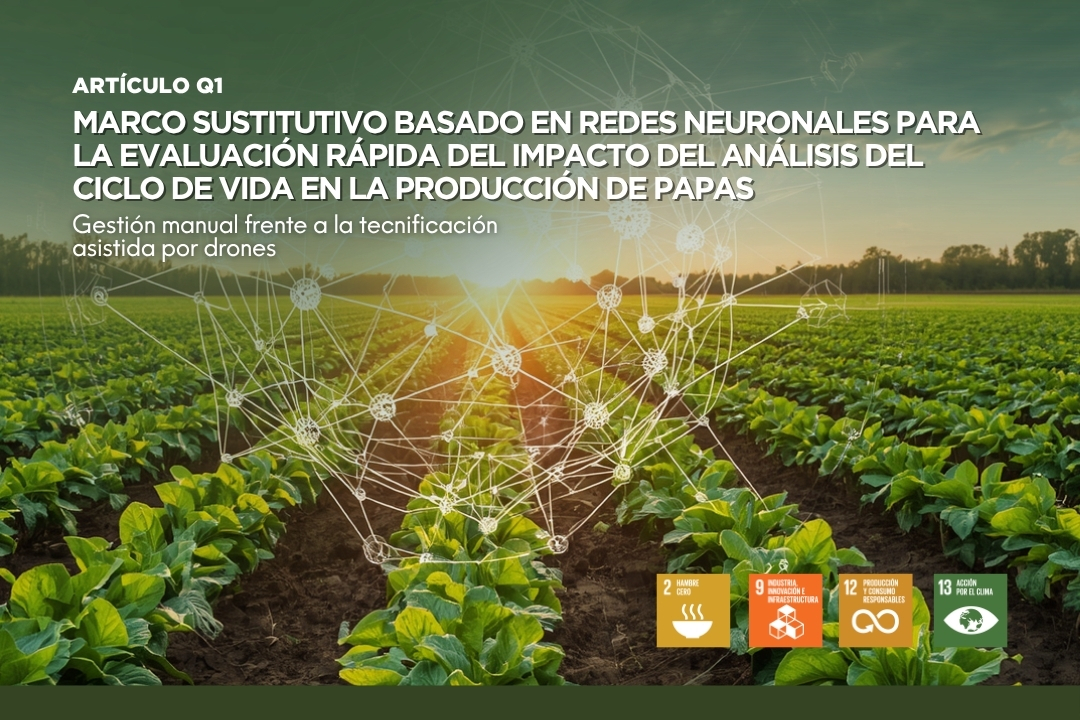



The Faculty of Geosciences Engineering (FICT) promotes research aimed at developing technological solutions for agricultural sustainability. A recent study developed an alternative framework based on neural networks and life cycle assessment (LCA) to rapidly evaluate the environmental impacts associated with different potato production scenarios in Ecuador.
The study compared conventional manual management with a technology-based system assisted by unmanned aerial vehicles (UAVs), focused on agricultural monitoring and selective fertilization. The goal was to quantify differences in environmental indicators and facilitate the exploration of scenarios without the need to continually recalculate complete life cycle assessment models.
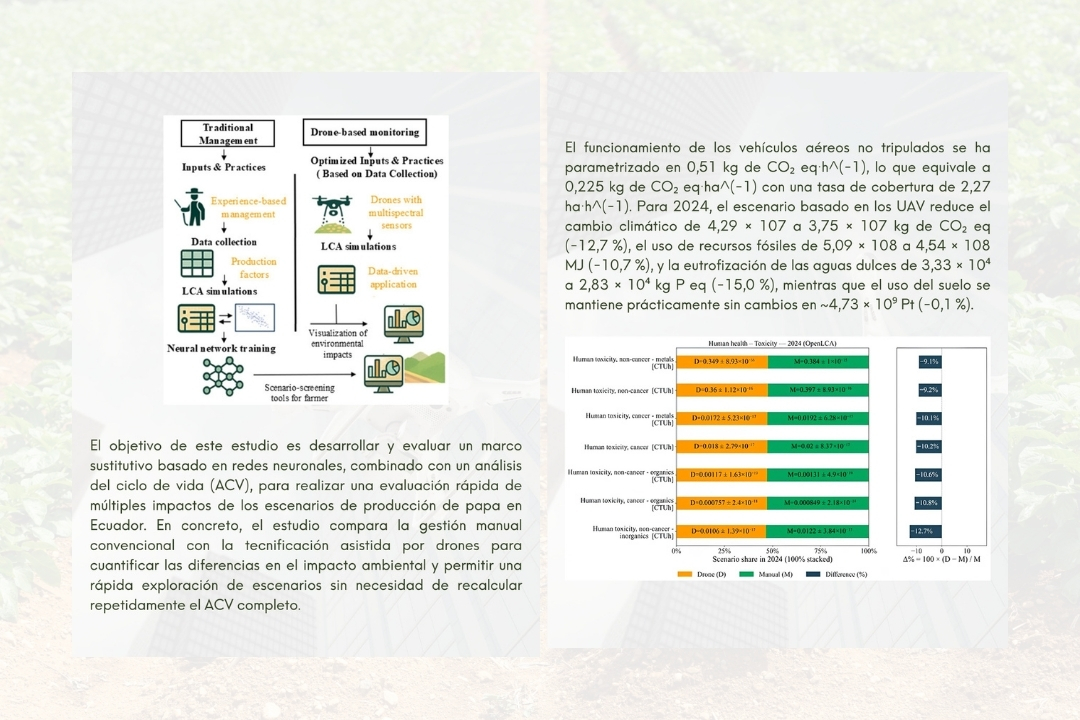
The results showed significant benefits in the drone-based scenario. By 2024, the study recorded a 12.7% reduction in climate change-related impacts, a 10.7% decrease in fossil fuel use, and a 15% reduction in freshwater eutrophication, while keeping land use virtually stable.
UAV operations were parameterized at 0.51 kg CO₂ eq·h⁻¹, equivalent to 0.225 kg CO₂ eq·ha⁻¹, with a coverage rate of 2.27 ha·h⁻¹. These results demonstrated that drone-based monitoring represents a more technically and environmentally efficient alternative to traditional agricultural management models.
The research provides tools to strengthen decision-making processes in the agricultural sector, promoting sustainable practices, resource optimization, and the reduction of environmental impacts. Furthermore, it highlights the potential of artificial intelligence and emerging technologies to transform national agricultural production.
Such initiatives reflect FICT and ESPOL’s commitment to applied research, interdisciplinary work, and the development of innovative solutions aligned with the country’s needs and global sustainability challenges.
Participating researchers
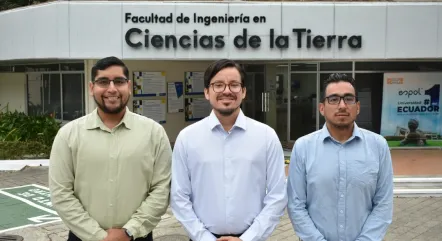
FICT – ESPOL
- Danilo Arcentales, Ph.D.
Collaboration
Faculty of Mechanical Engineering - National Polytechnic School (EPN)
- Juan Carlos Almachi, Ph.D. (c)
- Edwin Amaguaña, M.Sc.
- Esteban Valencia, Ph.D.
Department of Basic Education - National Polytechnic School (EPN)
- Jessica Montenegro
DOI: https://doi.org/10.3390/drones10050382
Sustainable Development Goals
SDG 2: Zero Hunger
SDG 9: Industry, Innovation, and Infrastructure
SDG 13: Climate Action