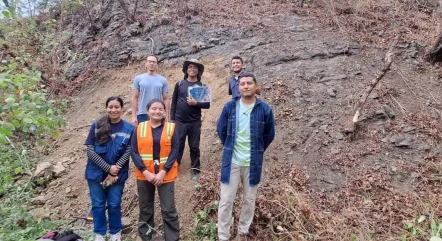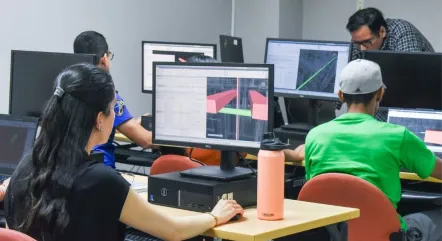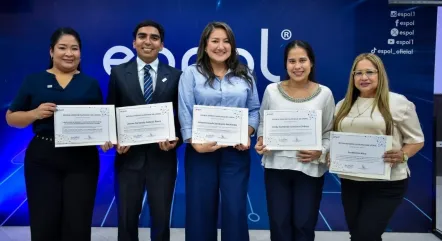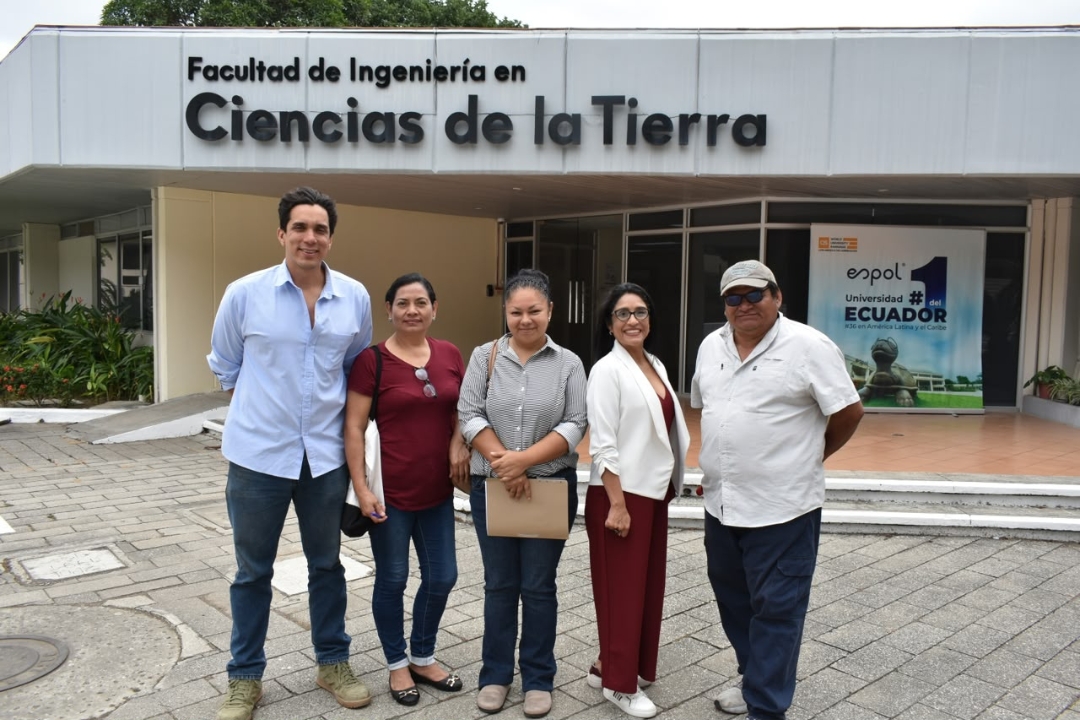

On August 25, 2026, ESPOL’s Faculty of Geosciences Engineering (FICT) welcomed representatives from the Association for Chemical-Free Cacao Production (ASOPROACAORG) to learn about the technical needs of the project “El Gavilán Caracolero: Conservation, Reforestation, and Sustainable Production” and to explore mechanisms for academic support. The meeting took place at the FICT Soil Laboratory on the Gustavo Galindo Velasco campus.
During the visit, the group discussed the requirements for characterizing the land where the Association plans to establish a nursery, a community center, and a shed for storing agricultural machinery and equipment.
This collaboration identified an opportunity to link this local need with the education of civil engineering students. It was proposed to explore incorporating this initiative as an Integrative Course project, with support from FICT faculty, to progressively address aspects related to geotechnical characterization and develop technical solutions tied to a specific need of an agricultural organization.
The “El Gavilán Caracolero” project is aimed at small-scale farmers and coordinates efforts in environmental conservation, sustainable production, and agricultural infrastructure. Its components include the establishment of a community nursery, reforestation with native species, a shed for managing agrochemical waste, and a space for storing agricultural machinery and equipment.
The initiative is being carried out in coordination with the DESATAR Project—Sustainable and Appropriate Development in Rural Areas—which aims to strengthen agricultural organizations and improve the productive conditions of their members. The project also includes a business plan based on the use of community-owned machinery and environmental actions to create biological corridors and promote the presence of the snail hawk.
This initial approach demonstrates how a need identified by small-scale farmers can become an opportunity for applied learning for ESPOL students. Such collaboration would allow for the integration of civil engineering knowledge with local needs, strengthening the connection between academic training, sustainable production, and addressing social and environmental needs.
Key individuals and institutions involved:
Association for Chemical-Free Cacao Production - ASOPROACAORG
Mary Elizabeth Llerena González – Legal Representative of ASOPROACAORG.
Fanny Lucrecia Llamuca Castañeda – Coordinator of UGAA.
Luis Eloy Illescas Echeverría – Communications Officer for ASOPROACAORG.
Escuela Superior Politécnica del Litoral – ESPOL / FICT
Daniel Falquez, M.Sc., Eng. – Technical Analyst, Soil Laboratory, FICT.
Carlos Quishpe, M.Sc., Eng. – Professor of Civil Engineering, FICT.
Carola Gordillo, M.Sc., Eng. – Professor of Civil Engineering, FICT.
Participating institutions and organizations:
Faculty of Geosciences Engineering – FICT.
Association for Chemical-Free Cacao Production – ASOPROACAORG.
DESATAR Project.
Sustainable Development Goals (SDGs)
SDG 2: Zero Hunger. For contributing to the empowerment of small-scale producers and the creation of conditions for sustainable agricultural production.
SDG 9: Industry, Innovation, and Infrastructure. For linking technical knowledge in civil engineering with the development of infrastructure necessary for an agricultural organization.
SDG 12: Responsible Consumption and Production. For incorporating actions related to the responsible management of agricultural waste, sustainable production, and the proper use of resources.